Mwinyi’s five-year plan to transform Zanzibar
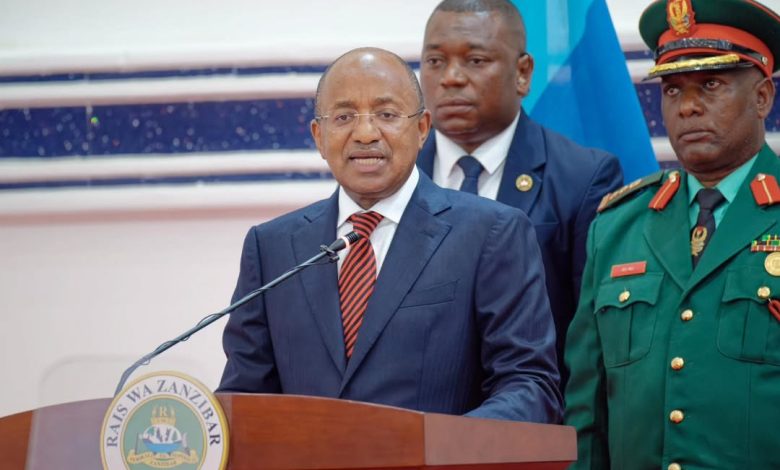
WHEN President Hussein Ali Mwinyi stepped before the newly inaugurated 11th House of Representatives on November 10, 2025, his message to the nation was clear: Zanzibar is entering a new phase of stability, ambition and economic transformation.
Fresh from a decisive victory in the October 29 General Election, securing 74.8 per cent of the presidential vote, the President outlined an expansive five-year plan that signals the most aggressive development agenda in the archipelago’s recent history.
The tone of the speech blended gratitude, political reassurance and a firm declaration of intent. It was, above all, a message of renewed hope, not just for CCM supporters, but for all Zanzibaris eager to see a peaceful and prosperous second term under Mwinyi’s leadership.
A Mandate rooted in stability and unity Dr Mwinyi opened by reaffirming the central pillar of his administration: peace and unity.
“Our greatest priority remains maintaining harmony, national unity and solidarity,” he emphasised, noting that Zanzibar’s recent election, widely commended by observers for its calm and orderly conduct, was itself proof of how far the islands have come.
In a symbolic and politically significant gesture, he praised opposition candidates who publicly accepted the results, singling out ADC presidential candidate Hamad Rashid for pledging cooperation.
Mwinyi doubled down on his commitment to the Government of National Unity (GNU), assuring Zanzibaris that inclusion, reconciliation and fairness will guide all appointments and public service opportunities.
This, he stressed, is not merely political courtesy, it is the foundation on which Zanzibar’s next chapter must be built. Ambitious economic target: Aiming for 10 per cent Annual Growth Perhaps the most striking part of Mwinyi’s roadmap is its bold economic targets.
The government plans to raise GDP growth from seven to ten per cent annually, create 350,000 new jobs, and push average per-capita income from USD 1,241 to USD 1,880 by 2030.
ALSO READ: Zanzibar tourism soars 24pc in October
The strategy to reach these goals is anchored in four pillars: Modernising key production sectors; deepening private sector participation; expanding investment opportunities; and strengthening financial systems and access to capital.
Mwinyi promised reforms in financial regulations, improved bank access in rural and urban areas, and expanded use of digital finance systems to reduce reliance on cash. Low-income Zanzibaris, he said, “Will be empowered through affordable credit schemes and protected from inflation, which the government aims to keep below five per cent.”
Driving Growth Through the Blue Economy Zanzibar’s prized blue economy remains the centrepiece of Mwinyi’s transformation agenda. Having championed the sector throughout his first term, the President now plans to accelerate it dramatically.
Tourism: The goal is to move from 800,000 to 1.5 million visitors per year while increasing average daily spending from USD 418 to USD 506.
High-end tourism capacity will be expanded to 10,000 premium rooms, alongside aggressive promotion of conference tourism, sports tourism, cultural festivals and medical tourism. Pemba—long overshadowed by Unguja, will receive targeted investment to boost annual tourist arrivals from 200,000 to 300,000.
Fisheries and marine products: Plans include the construction of two major fish-landing and commercial centres at Fungurefu (Unguja) and Mkoani (Pemba), plus five smaller markets.
Two state-of-the-art fishing ports will rise at Ngalawa and Shumba-Mjini, supported by new fish-processing factories and deep-sea fishing vessels. Seaweed remains a key export priority. Mwinyi pledged to raise annual dryseaweed production from 19,715 tonnes to 40,000 tonnes, with processing hubs to improve product value and international competitiveness.
Oil and Gas Prospects: With 10 exploration blocks already advertised, Zanzibar aims to finalise legal and taxation frameworks that will attract major investors while safeguarding national interest. A new national data centre for oil and gas samples will also be established. Ports and Maritime Transport: Mwinyi outlined sweeping port modernisation plans—including the multipurpose Mangapwani Integrated Port, new passenger ports at Mpigaduri, Kizimkazi, Shumba and Wete, and upgraded tourism infrastructure at Malindi.
ALSO READ: How Zanzibar’s clove farmers will benefit from land ownership
Two new high-speed ferries will link Zanzibar, Pemba, Tanga and Dar es Salaam, easing trade and movement. Revolutionising production sectors: Agriculture, livestock, forestry and manufacturing, long overshadowed by tourism, received a detailed action plan aimed at reducing imports, creating jobs and stabilising food security.
Agriculture:The government will expand irrigation systems, invest in modern farming technologies, repair warehouses and build two national grain silos at Dunga (Unguja) and Chamanangwe (Pemba) capable of storing 60,000 tonnes.
A national programme to boost production of cloves, fruits, spices, vegetables and high-value horticulture, especially involving youths, will be rolled out, along with guaranteed agricultural input supply and market linkages.
Livestock and Animal Health: The plan includes new veterinary centres in every district, incentives for private investors to establish hatcheries and feed factories, and tight controls on imported animal products to protect local producers.
Forestry and Climate Action: Zanzibar aims to plant millions of new trees, expand nature reserves, promote climate-smart livelihoods such as commercial beekeeping, and accelerate adoption of clean cooking energy through subsidies and public education.
Industrialisation and Trade Expansion: Industrial growth is another critical component. The government aims to raise the industrial sector’s contribution to GDP from 20.8 per cent to 25 per cent, prioritising value-addition industries—especially spices, seaweed and essential oils.
Special Economic Zones in Chamanangwe and Dunga will be equipped with modern infrastructure to support local manufacturers. On trade, a new International Trade Centre at Dimani will be built, while harmful fees and charges on traders will be reviewed.
Modern testing laboratories will be constructed to ensure product quality and eliminate counterfeits. To support all sectors, President Mwinyi announced major energy investments: new power generation from solar, wind, and waste-toenergy; Gas and electricity service hubs; expansion of fuel-storage facilities; promotion of electric vehicles; and increased use of renewable energy in agriculture, health, water and education services. A Second Term Defined by Delivery.
As Mwinyi concluded his speech, he reminded legislators that the overwhelming mandate given by Zanzibaris carries immense responsibility.
The next five years, he said, must translate promises into tangible change. With a strong political foundation, renewed legitimacy, and an ambitious development blueprint, President Mwinyi now enters what could become a defining term, one that aims to shift Zanzibar from a tourism-dependent economy to a diversified, modern and inclusive island state.
If delivered, his vision could place Zanzibar on a path toward unprecedented growth and stability, reshaping livelihoods and securing a prosperous future for generations to come. Mwinyi’s legacy is ‘leadership that leaves mark.’