Msuya’s legacy lives on in grassroots banking
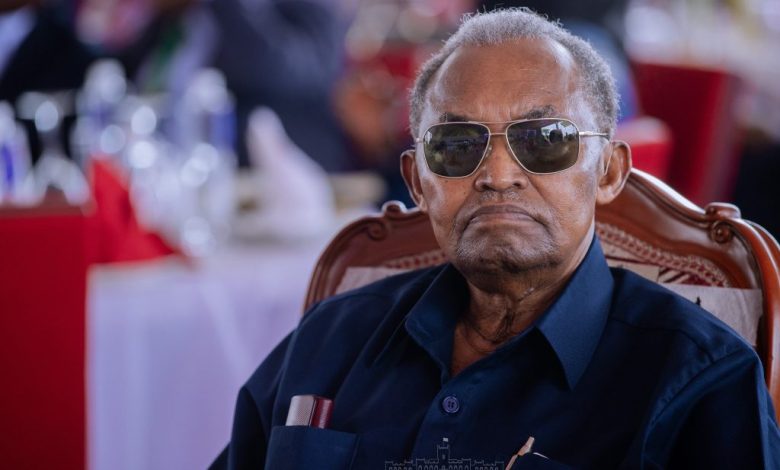
KILIMANJARO: CLEOPA David Msuya, Tanzania’s former First VicePresident and Prime Minister, is being remembered not only for his political legacy but also for his contribution to the grassroots financial sector.
\Most notably, he played a key role in the establishment of Mwanga Hakika Bank (MHB), a regional lender rooted in community development.
At his funeral held Tuesday at Chomvu village, Usangi, Mwanga District in Kilimanjaro Region, MHB’s senior management described Mzee Msuya as a statesman who championed inclusive economic empowerment and financial access.
“In all the years we worked with him, what we saw was a leader committed to people’s development, particularly in education, agriculture and small enterprise,” said Projest Massawe, MHB’s Head of Commercial, during the service.
“He advised and mobilised the community towards establishing Mwanga Community Bank—an institution that would later evolve into Mwanga Hakika Bank,” he said.
Mzee Msuya played an instrumental role in the early 2000s in rallying over 5,000 local residents to purchase shares in the then Mwanga Community Bank.
His grassroots mobilisation laid the foundation for what would later become MHB in 2020, following a strategic merger with Hakika Microfinance Bank and EFC Tanzania Microfinance Bank.
According to Mr Massawe, Mzee Msuya remained actively involved in the bank’s development long after its founding.
ALSO READ: President Samia eulogizes Cleopa Msuya
He encouraged management to keep their focus on underserved rural communities, urging the bank to bring services closer to people rather than waiting for clients to come to them.
One of his lasting contributions, according to the bank, was advocating for educational loans and small-scale financing, particularly for start-ups and micro enterprises.
“His view was that small loans are seeds that grow into strong enterprises, which in turn become pillars of the bank’s future,” Mr Massawe said.
A believer in innovation, Mzee Msuya also pushed for the digitisation of banking services as a means to expand reach and operational efficiency.
His final counsel to the bank’s leadership, according to Mr Massawe, was to fully embrace digital platforms as a bridge to the unbanked and underbanked.
“He often said digital banking is not just a tool for convenience it’s a strategy for inclusion,” Mr Massawe recalled.
MHB’s leadership has since pledged to implement Mzee Msuya’s vision in full, describing him as “not just a founder, but a guiding compass for the institution.”
Job Msuya, one of the late leader’s children, echoed the sentiment. “One of the things he often repeated was his dream for Mwanga Hakika Bank to grow into one of the country’s leading financial institutions,” he said.
Mzee Msuya’s legacy, both political and financial, may yet shape the contours of Tanzania’s rural banking landscape for years to come.