Mpango and Majaliwa: Samia’s power advisors
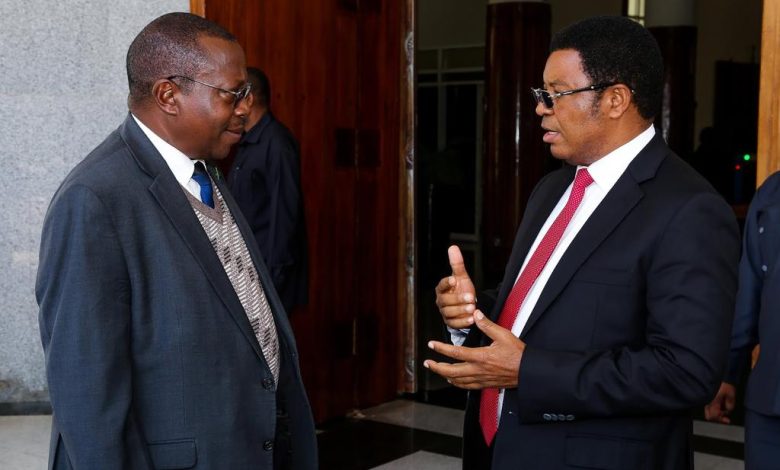
DAR ES SALAAM: RECENTLY, President Samia made a move that may look political, but it is deeply financial in its logic: She brought Dr Philip Mpango in as senior advisor on economic affairs and projects and Kassim Majaliwa as senior advisor on social affairs.
If you think of government like a big investment fund, it is like placing two seasoned “portfolio stewards” beside the main decision-maker, one to sharpen how major economic bets are picked and delivered and the other to keep social pressures from turning into costly risks that derail the whole plan.
The timing is key because the country enters this period with strong macro stability. Inflation was about 3.6 per cent in December 2025 and the policy rate stayed at 5.75 per cent for Q1 2026, signalling manageable price pressures.
Growth has also been steady around the mid-5 per cent range in recent quarters, with some readings above 6 per cent yearon-year in 2025. In simple terms, the engine is running; the real challenge now is converting that stability into higher productivity and better living standards without weakening the state’s balance sheet. That balance sheet is the first reason these advisory roles can pay off.
By June 2025, government debt was about 109.4tri/- (roughly 41.6 billion US dollars), nearly 13 per cent higher than a year earlier. Around two-thirds was external and one-third domestic.
That is not automatically a problem, but it does raise the stakes: Tanzania is running a big development programme, so outcomes depend on smart financing, smart project choices and strong execution.
With debt at that level, you do not need a headline crisis to lose fiscal space, you just need a few years of weak project returns, costly delays and procurement that rewards speed or politics over value.
ALSO READ: Vijana Platform underscores Tanzania’s drive for inclusive, youth-led growth
That is why Mpango’s portfolio, economic affairs and projects matters. In many governments, macro policy and project delivery sit in separate lanes: One side watches inflation, revenues, deficits and debt limits; the other builds infrastructure, often with weak appraisal and overruns.
When those lanes do not connect, the country can look stable upfront while the investment portfolio quietly becomes inefficient. By pulling “projects” into the economic advisory role at State House, Samia is signalling a tighter link between macro stability and the quality of capital spending.
And this is not theoretical, the country’s budget is big money. A reported 2025/26 plan is about 57.04tri/-, with roughly 40.97tri/- from domestic revenue and the rest coming from borrowing and other flows. On top of that, external borrowing is projected around 8.7tri/-, alongside grants and concessional funds.
That is normal for a country building infrastructure, but it also means the government is constantly balancing a tough puzzle: How much to borrow at home versus abroad, how to time cash releases, how to avoid squeezing private credit, and how to ensure projects become productivity boosters, not “debt-funded maintenance problems.” This is the real upside of having Mpango close to the president: Improving “growth per shilling.” With stricter project selection, proper cost–benefit checks, realistic demand estimates, full life-cycle costs (including maintenance) and smarter sequencing, the same public spending can unlock more private investment and more productivity.
You do not need every project to be perfect; you need the portfolio to be smart, focused on removing business bottlenecks, cutting logistics costs, stabilising energy, supporting industry and expanding trade capacity.
And then there is speed, not headline speed, but the kind that protects value. Projects often stall on land, permits, procurement disputes, coordination failures, or delayed funds.
Each month of delay raises costs and pushes returns further out, which basically lowers the project’s payoff. If better coordination shortens timelines by even six months to a year, you can save serious money and get the benefits earlier without increasing the budget.
Now, it is easy to assume “economic advisor” means the job is only about growth numbers and investor meetings. But that is only half of what makes an economy investable. The other half is social stability and human capital, and that is why Majaliwa’s appointment is financially relevant. Social affairs can sound soft until you do the math on social failure.
When services break down, or when inequality in delivery becomes too visible, governments end up doing expensive firefighting: Rushed subsidies, politically driven transfers, sudden regulatory shifts, emergency spending and sometimes heavyhanded responses that scare businesses.
That is how social pressure becomes fiscal risk. Majaliwa’s advantage is practical: After a decade running government, he understands what can actually be implemented at district level, where reporting is weak, where coordination breaks down and how good policies get lost on the way to execution.
If his advisory role is set up properly, he can help State House treat social policy the way an economist should, not as charity, but as productivity infrastructure. Better health and education outcomes lift labour productivity and participation. Better targeting reduces leakage, so each shilling does more.
And a stable social climate lowers the risk premium that businesses price into hiring, lending and investing. The two-advisor setup can be stronger than relying on one economic voice, because the economy is not just a spreadsheet, it is people, delivery and incentives.
Mpango can push hard on project discipline and macro credibility, while Majaliwa can reality-check plans against what can actually be implemented on the ground and what communities will accept. When those two perspectives stay in sync, Tanzania is more likely to get growth that lasts without the social pushback that later forces expensive U-turns.
It also helps during leadership transitions, even if most citizens do not think about it daily. With big top-level changes thus far, keeping experienced leaders close to the president sends a continuity signal to markets and partners, and that can reduce “transition risk”, the kind that slows decisions and makes investors sit on their hands.
If this setup should work, Tanzania won’t need speeches to convince anyone, we shall see it in results: Priority projects finishing on time and nearer to budget, fewer overruns, borrowing that clearly turns into productive assets, steadier fiscal execution and fewer policy zigzags driven by social pressure and that is the simple point.
Tanzania’s macro base is stable, but with a big investment-and-debt portfolio, the biggest gains usually come less from new laws and more from upgrading how decisions are made and how delivery actually happens.