Laja school improves girls’ safety

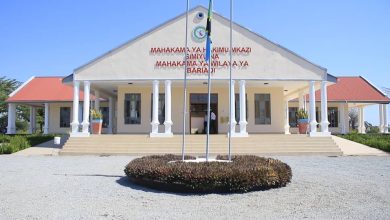
KARATU: THE construction of Laja Secondary School under the Tanzania Social Action Fund (TASAF) through the fourth Tanzania Poverty Reduction Project (TPRP IV) has improved access to education and enhanced student safety at Laja Village in Karatu District, Arusha Region.
Before the school was built, students selected to join secondary education were forced to walk more than eight kilometres to attend classes, a situation that contributed to truancy, fatigue and exposure to various risks, particularly among girls.
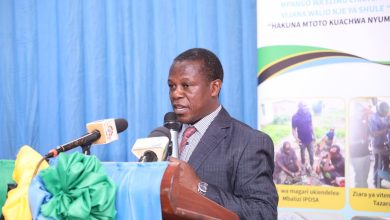
Speaking during an inspection visit by the Executive Director of TASAF, Shedrack Mziray, residents of Laja Village said the project had addressed long-standing education challenges by bringing secondary education closer to their community.
Village resident Christina Lucas said that before the school was built, students especially girls faced serious difficulties due to the long distance and unsafe conditions along the route to school.
She said that the inclusion of boarding facilities in the school has greatly improved student safety and reduced school absenteeism.
“The construction of this school has reduced truancy, which before this, some students were escorted by motorcycle riders, which was not always safe,” she said.
She added that boarding facilities have helped parents and teachers closely monitor students, contributing to better discipline and increase focus on their studies.
“Since the school was established, no cases of student pregnancy have been reported and parents are now at peace knowing their children are safe,” she said.
Another resident, Andrea Mtupa, said that the project has eliminated the daily burden of long-distance travel for students and has given hope to children in nearby primary schools that they can easily go to secondary education within their own village.
Laja Village Executive Officer, Daniel Mpigachai said that the construction of the school cost a total of 774.9m/-.
ALSO READ: UNFPA calls for global action to protect, empower girls in crisis
TASAF, through TPRP IV, contributed 659.5m/-, while the community provided a contribution worth 115.4m/- in the form of sand, gravel, stones, water and labour.
He further said that the school was officially registered in November 2023 and began operations in 2024 with an initial intake of 26 Form One students.
Currently, the school has 63 students in Forms One and Two, all of whom are accommodated in boarding facilities.
According to Mpigachai, the project has significantly reduced truancy, increased students’ motivation to learn and expanded access to education for children from neighbouring villages.
“We still need more infrastructure, including laboratories, a library, more classrooms and additional teachers’ houses,” he said.
Head Master of Laja Secondary School Daniel Panga said that beyond addressing the challenge of long walking distances, the modern school has inspired primary school pupils, who now believe they too will one day they will get a chance to join the school.