Kagera opens doors to dairy, beef investors as meat demand set to triple
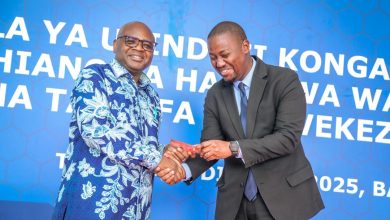
BUKOBA: THE Minister for Livestock and Fisheries, Dr Bashiru Ally has urged dairy investors to focus more on animal feed production for increased milk and meat production, due to a growing demand for meat at domestic and international markets.
Equally, he highlighted the significant potential of dairy farming in creating employment opportunities in the country.
He made the remarks on Friday when he visited a Farmers’ Field School (FFS) in Muleba district, during his working tour in Kagera region.
Dr Ally explained that Kagera has significant potential to boost revenue from its livestock sector, leveraging favourable conditions for both traditional (cattle, goats) and exotic breeds due to its strategic location in the Great Lakes region for market access.
Existing resources like pasture and water, through improvements in productivity, technology and infrastructure are key to unlocking this potential beyond smallholder limitations.
“Kagera region has a good climate that can be a source of quality beef and ranching. Commercial beef ranches exist in the region. A keen investor can go into public–private partnership to optimise commercial beef ranching in these facilities,” Dr Ally said.
He added: “Livestock keepers should avoid having big herd of unproductive cattle. Instead, they should adopt modern dairy keeping which is more productive and economically viable.”
He said the government has prioritised the dairy sector as a driver of industrialisation, food and nutrition security and income.
Dairy is a key sector in Tanzania, contributing 30 per cent of domestic production in the livestock sector and about 1.2 per cent of national Gross Domestic Product (GDP),” Dr Kakurwa said.
Dr Ally highlighted that Tanzania’s per capita consumption of meat is expected to triple by 2030, while an increasing population size, urbanisation and rising income levels across Africa have boosted the demand for meat.
“Current increases in livestock supply will not be able to meet future demand and large-scale investment is needed to provide technical skills and capital to run ranches, feedlots, abattoirs, meat processors and tanneries. There is a huge demand for quality livestock produce in both local and international markets. Tanzania’s livestock exports have increased substantially in recent years,” said the Minister.
Elaborating, he said during 2024, Tanzania’s meat export recorded 14,000 metric tons while the target was to reach 50,000 metric tons.
ALSO READ: Simiyu: Tanzania’s best-kept economic secret
Assistant Secretary (Economy and Productivity) at the Regional Secretariat, Mr Isaya Tendega, informed the Minister that Kagera region has set aside about 66,215.7 hectares for diary industry development under Mwisa 1l Project, thus inviting local and foreign investors to capitalise the opportunity through establishing milk and beef factories.
“The eight Councils had set aside 255,741.2 hectares for pasture areas while 179,067 hectares (70 per cent) is under the National Ranching Company (NARCO). Local and foreign investors should tap the economic benefits by establishing beef, milk and hides factories. Kagera region is suitable for large investments basing on its geographical location, “he said.
Kagera region shares borders with four East African Community (EAC) nations-Rwanda, Burundi, Uganda and Kenya across Lake Victoria.
Kagera Region comprised five Ranches under the National Ranching Company (NARCO), namely Kitengule (41,700 hectares), Missenyi (60,851 hectares), Mabale (14,026 hectares), Kagoma (50,690 hectares) and Kikulula (12,700 hectares).
The Ranches have been leased to 87 block owners out of whom 47 possess longterm contracts while 40 others had short-term contracts with a total of 49,212 cows, 4,207 goats and 928 sheep.
According to Mr Tendega, the region had a total of 714,779 indigenous cows, 638,102 goats, 66,054 sheep, 71,261 pigs and 1,048,122 chickens.
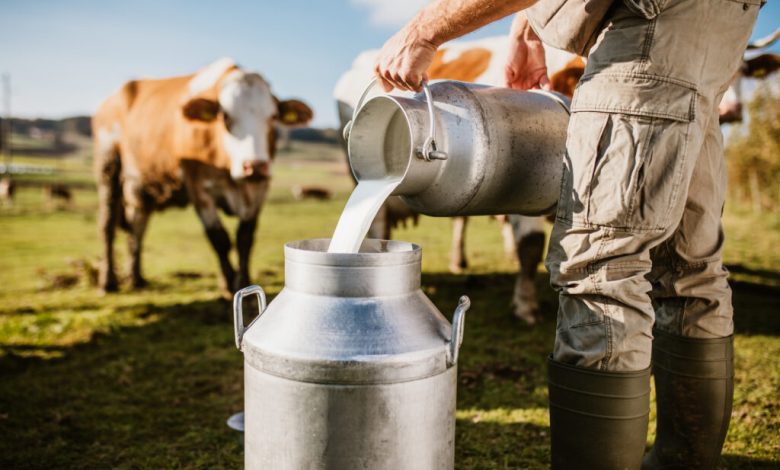
Elaborating, he said the region had about 20,438 dairy cows with annual production of 46 million litres of milk, with each cow producing about 5 litres of milk per day while beef production stood at 5,000 tonnes per year.
Despite the potential of livestock resources available in the country, the sector contributed only 7.6 per cent to GDP, which is very little to economic growth.