How private sector inks renewable energy
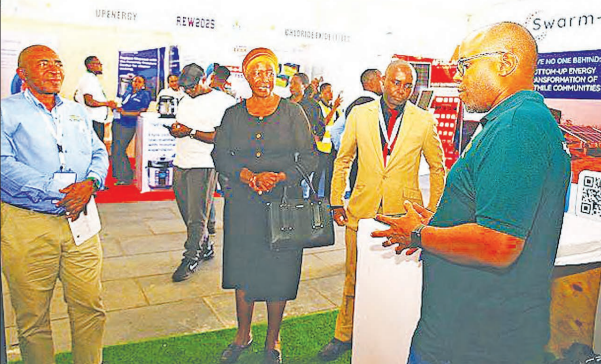
DAR ES SALAAM: AS Tanzania accelerates its shift to renewable energy, the private sector is stepping up as a powerful engine driving growth and adoption in this critical sector.
Through investments in clean energy projects, development of innovative technologies, job creation, support for government initiatives and community education, private companies are helping to build a more sustainable and equitable energy future.
However, for these efforts to be sustainable, supportive policies, favourable investment environments and strong collaboration among stakeholders are essential.
The transition to renewable energy is not only an environmental imperative it is also a pathway to inclusive economic development and long-term resilience.
In the 21st century, renewable energy adoption has become a global priority due to challenges such as climate change, environmental degradation and depletion of nonrenewable energy sources like oil, coal and natural gas.
In Tanzania, the private sector plays a vital role in supporting governments and communities to transition to sustainable energy sources such as solar, wind, hydro and biogas.
One of the primary contributions is direct investment in clean energy projects, many of which are implemented in rural or underserved areas where the national electricity grid is inaccessible.
These investments reduce dependence on costly and environmentally harmful fossil fuels and improve energy access for lowincome populations.
During Renewable Energy Week in Dar es Salaam, Energy Commissioner Mr Innocent Luoga announced that Tanzania aims to mobilise 32 trillion (approximately 12 billion US dollars) to scale up renewable energy projects and achieve the ambitious goal of generating 75 per cent of electricity from renewable sources by 2030.
So far, the government has secured 61 per cent of the needed investment and is working closely with stakeholders to raise this share to 75 per cent within the next five years.
ALSO READ: EU reaffirms support for renewable energy development in Tanzania
To successfully implement projects geared toward this target, substantial funding is required.
“We are working in partnership with the private sector to mobilise these resources,” Mr Luoga said.
The government intends to contribute 8 billion US dollars with the remaining 4 billion US dollars expected from private sector investment.
Development partners are also actively exploring funding opportunities and supporting the rollout of renewable energy initiatives.
Tanzania’s installed electricity generation capacity currently stands at 4,031 megawatts (MW).
Of this, 2,700 MW (67 per cent) comes from hydropower, 1,198 MW (28 per cent) from natural gas, while solar energy contributes just 5 MW (0.26 per cent) and biogas around 10.5 MW.
The completion of the Julius Nyerere Hydropower Project in March 2024 significantly increased the country’s power generation capacity from about 2,000 MW.
With over 5.4 million electricity customers and annual demand growth exceeding 10 per cent, Tanzania aims to harness its substantial renewable energy potentials including large hydro, solar PV, wind, biomass and geothermal to meet growing needs.
Energy losses in the system currently total 14.54 per cent, comprising 8.68 per cent in distribution and 5.86 per cent in transmission.
To address this and improve reliability, the government is implementing National Grid Stabilisation and Network Reinforcement projects.
Private companies often lead the way in adopting and deploying cutting-edge technologies that reduce the cost of renewable energy and increase its accessibility and reliability, especially in remote areas.
This agility accelerates the country’s transition to clean energy.
The Tanzania Renewable Energy Association (TAREA) has urged the government to honour its commitment to revise the Small Power Projects (SPP) framework by 2026 to establish cost-reflective tariffs and update net-metering regulations by 2027.
Speaking at Renewable Energy Week 2025, TAREA Chairman Mr Prosper Magali emphasised their role in supporting decentralised renewable energy deployment, especially where the grid is not yet accessible and increasing the renewable energy share in the national grid while improving energy efficiency.
TAREA also helped develop the National Clean Cooking Strategy, launched in 2023, which aims for a transition to modern clean cooking energy by 2034.
Member companies such as Ensol (T) Limited, ENGIE Energy Access, AG Energies Company Limited, Energy Plus, TRí – Tanzania, Envotec Services Ltd., Millennium Engineers / Ecolibri, Davis & Shirtliff (T) Ltd, Sescom, Helvetas, REX Energy, UpEnergy Sayari Safi and D Light (T) Ltd actively participate in various renewable energy initiatives and contribute to sustainable energy development across Tanzania.
The association promotes sustainable clean cooking initiatives including electric cooking, improved biomass cooking technologies and biofuels.
With electricity reaching nearly every village and biofuels being the most affordable fuel for rural Tanzanians, these solutions can accelerate the transition to clean cooking by 2034.
However, high prices remain a barrier To address this, TAREA submitted a tax reform proposal for clean cooking solutions to the Presidential Commission for Tax Reform in January 2025, hoping the government will adopt it to facilitate uptake.
ALSO READ: Tanzania, China to focus on renewable energy, climate change
The European Union (EU), a key clean cooking partner, reaffirmed its commitment to leading global climate action and supporting sustainable energy initiatives in Tanzania.
Mr Maximilian Peddret, Head of Sector at the EU Delegation in Tanzania, highlighted the EU’s leadership through the European Green Deal and Global Gateway strategy, underscoring the importance of collaboration among governments, international partners, the private sector and financiers to create a cleaner, more sustainable energy future.
The EU’s support spans investments in clean cooking, renewable power generation, hydropower projects, rural electrification plans and regional power trade facilitation.
It also works to unlock investment opportunities and promote an enabling environment for private sector growth.
Private sector involvement in renewable energy significantly contributes to job creation and capacity building.
As companies develop and implement renewable projects, they create employment for technicians, engineers, project managers and local labourers.
Many also collaborate with vocational and training institutions to equip youth with skills needed in the renewable sector, supporting maintenance and expansion of clean energy systems while reducing unemployment and poverty.
TAREA’s mission remains to promote and advocate for increased renewable energy use by fostering an effective network of members and stakeholders and emphasising quality and best practices throughout the sector.