

How cage farming revives fish stocks, jobs
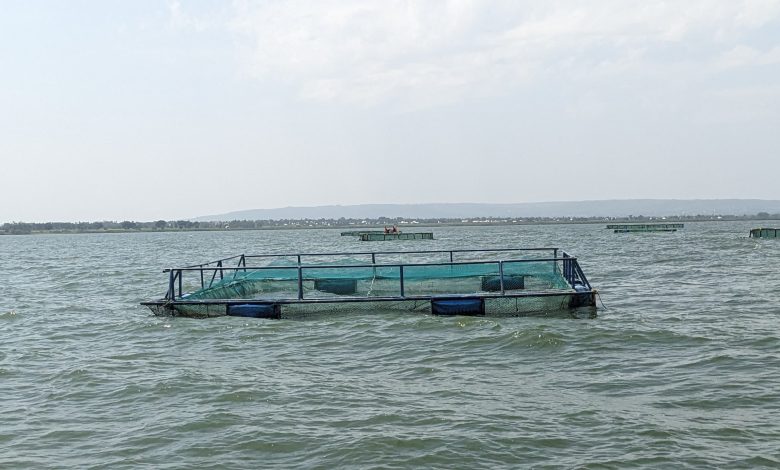
Emerging evidence from fish farming communities around Lake Victoria indicates that cage aquaculture is not only a profitable enterprise for farmers, but also an unexpected ally in restoring and protecting natural fish breeding grounds that have been severely degraded by illegal fishing practices over the years.
According to practitioners involved in cage fish farming, the structures placed on the lake have inadvertently become safe havens for indigenous fish species. These natural species increasingly seek refuge beneath and around fish cages, where traditional fishing methods are absent and security is assured.
As a result, these areas are evolving into natural spawning grounds, supporting the regeneration of fish stocks in the lake.
Fish farmers explain that the cages create a unique ecological environment. Feed provided to farmed fish penetrates the water and settles below the cages, creating a rich nutritional zone. Wild fish attracted by this food source remain close to the cages, benefiting from both abundant nutrition and protection from illegal fishing gear such as beach seines and undersized nets.
This environment, farmers say, supports natural reproduction. Adult fish are able to spawn safely, while juvenile fish—commonly known as fingerlings—find shelter within and beneath the cages. The cages thus function as natural nurseries, offering protection from predators and human interference.
Mr Mselikale Mkiju, Secretary of the Chembaya Fish Farm Group in Nyakaliro Ward, Buchosa Council, Mwanza Region, explains that fingerlings easily move into the cages due to their small size. Weighing approximately 0.1 grams, they can freely penetrate the cage structures, unlike the farmed fish, which typically weigh around 0.3 grams at early stages.
“These cages have unintentionally become breeding and shelter zones for wild fish,” Mr. Mkiju said.
“The fingerlings are naturally protected here, and the environment supports faster growth.” Mr. Mkiju was outlining the advantages of the government-sponsored Fish Cage Farming Project, which was officially launched by President Samia Suluhu Hassan in January last year.
The initiative is implemented by the Tanzania Agricultural Development Bank (TADB) in collaboration with the Ministry of Livestock and Fisheries.
The project aims to modernize the fisheries sector, enhance productivity, increase incomes, and formalize employment—particularly for young people and women who previously relied on informal fishing activities.
Through the project, TADB provides interest-free loans to organized fish farming groups, enabling them to acquire cages, fingerlings, feed, and other essential inputs. Under this arrangement, the Chembaya Fish Farm Group received a loan of Sh117 million last year, which enabled them to establish cage farming operations on Lake Victoria.
Since then, the group reports multiple benefits beyond initial expectations.
“Initial observations show that wild fingerlings inside the cages are not only surviving but thriving,” Mr. Mkiju said. “Some even grow faster and become larger than the farmed fish due to the high-quality feed available in the cages.”
He added that the naturally occurring fingerlings exhibit bright, glittering colors that are visually striking, suggesting they could potentially attract tourists interested in ecological and aquaculture-based tourism.
“These fingerlings maximize our income. This is an unexpected gain for us,” he noted, emphasizing that the cages support both farmed fish production and natural stock regeneration.
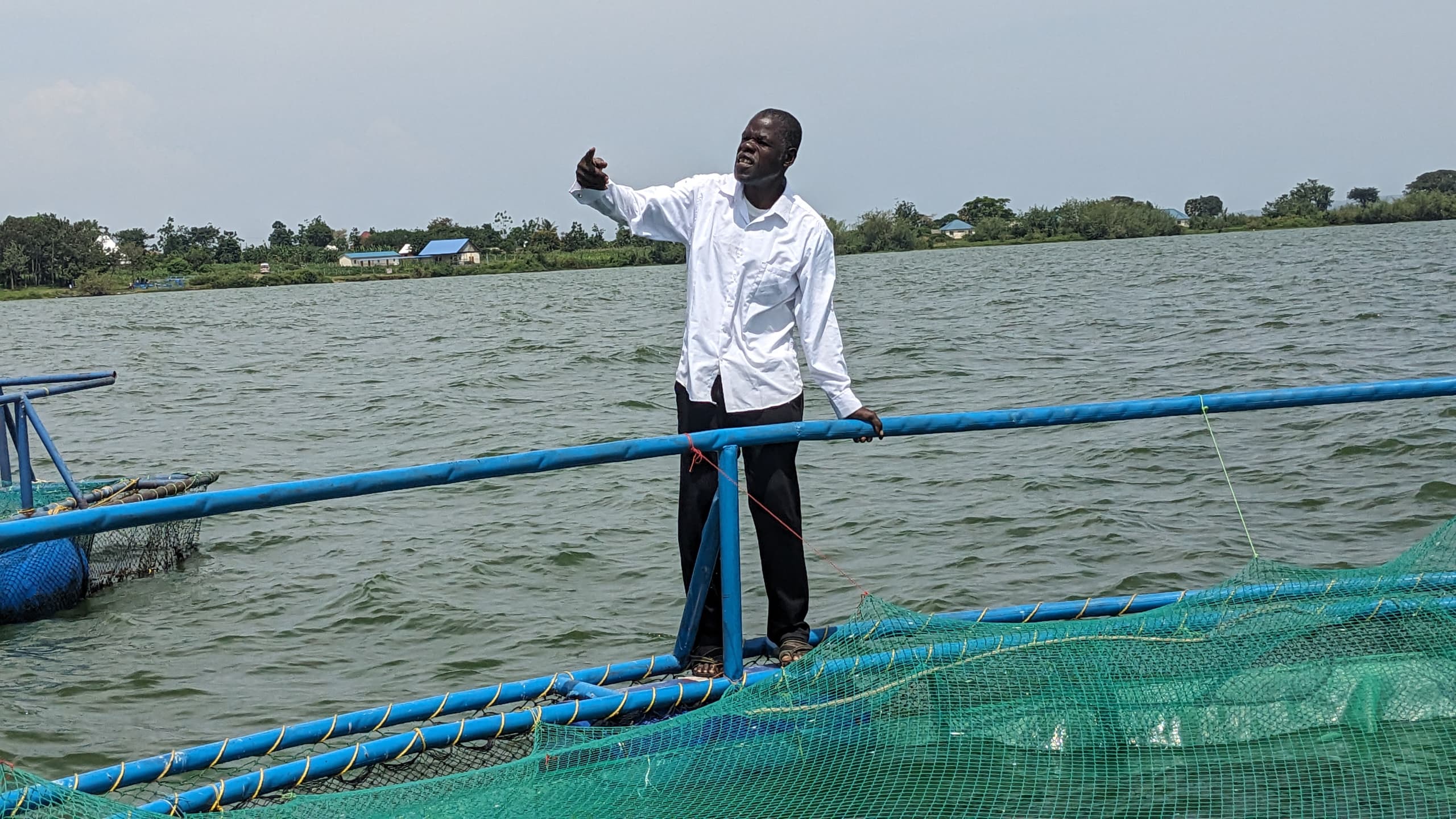
However, Mr. Mkiju stressed the need for enhanced security around cage farming areas. He called on the government to strengthen patrols and enforcement to prevent traditional fishers from approaching the cages, arguing that improved security would further encourage wild fish to congregate and reproduce around the structures.
According to his observations, stronger security measures would significantly increase the creation of natural hatchery grounds, as more fish seek shelter in protected areas. He also proposed that scientific research be conducted to explore the possibility of reproduction between farmed fish species and wild fish inhabiting the cages.
Such research, he suggested, could lead to the development of hybrid fish varieties with unique taste, faster growth rates, or higher market value.
“This is how the value chain can be expanded,” he said. “It would also help address unemployment challenges. Our group alone has created jobs for youth as security guards, cooks at cage sites, fish feeding attendants, and workers who transport harvests to markets.”
The Chembaya Group has already completed its first harvest and managed to repay approximately 80 percent of its loan to TADB. The group is now preparing for a second harvest, with expectations of clearing the remaining debt while retaining surplus income to be distributed among members.
Mr. Mkiju, who also serves as Chairperson for Cooperatives in Buchosa District, confirmed that both local and international markets for cage-farmed fish are readily available. He cited confirmed monthly orders of 40 tonnes from Kenya and 23 tonnes from Rwanda.
Despite this strong demand, farmers are currently unable to meet market needs due to persistent operational challenges. Chief among these are delays in the supply of fingerlings and fish feed.
Farmers question these delays, noting that the government makes direct and timely payments to suppliers. According to Mr. Mkiju, there are numerous private fingerling producers who can supply quality fingerlings at a lower price—approximately Sh120 per fingerling—compared to the Sh180 paid under current arrangements.
“This means the government is incurring unnecessary losses,” he said.
“We should be allowed to source fingerlings and feed from alternative suppliers who are readily available and affordable.” He emphasized that the fish farming value chain is expanding rapidly, attracting more
stakeholders and innovation.
Allowing flexibility in sourcing inputs would stimulate competition, reduce costs, and improve efficiency. Similar concerns were raised by Mr. Albert Rusasim, Chairperson of the Kasarazi Fish Farm Group in Buchosa. He said government-contracted suppliers were slowing down operations, recounting that his group installed cages in January this year but only received fingerlings in June.
This delay, he said, resulted in unnecessary expenses, including prolonged security costs for idle cages.
“All these costs come from the group’s funds, which are loans that must be repaid,” he complained. “Without production, what exactly are we expected to repay?”
Mr Rusasim also criticized inadequate insurance services. He reported that his group lost 50,000 fingerlings earlier this year, but no replacements have been provided despite evidence that the bank promptly notified the insurer.
Furthermore, he noted that council-level extension officers have not been adequately involved in the project. This, he argued, has contributed to delays and miscommunication between farmers, suppliers, and implementing authorities.
Responding to these concerns, TADB Business Officer Ms. Gracia Marugujo said the bank had allocated Sh12 billion in loans to support 1,904 beneficiaries in the Lake Zone.
So far, approximately 401 tonnes of fish have been harvested under the program.
She explained that 507 cages valued at Sh1.1 billion were procured, of which 452 have already been distributed. In Buchosa District alone, Sh705 million was disbursed, with Sh329 million already repaid to the bank.
“Some funds have been retained to reach more beneficiaries, as expanding access remains one of the project’s core objectives,” Ms. Marugujo said.
As cage fish farming continues to expand on Lake Victoria, it is increasingly clear that the initiative is reshaping both livelihoods and the lake’s ecological dynamics. What began as an economic intervention is now emerging as a powerful tool for conservation, regeneration, and inclusive growth—demonstrating that, when properly managed, aquaculture can serve both people and nature.



Around 9 million people die from hunger and hunger-related causes each year, with roughly one-third being children under 5, making malnutrition a leading cause of child mortality. This translates to about 25,000 deaths daily