Govt eyes skilled workforce in agriculture

LINDI: THE government is set to nurture a new generation of highly skilled professionals in agriculture, agricultural research and agribusiness to boost crop production and value addition, create employment opportunities for young people, raise farmers’ incomes and strengthen the national economy, following the establishment of a University of Dar es Salaam campus in Lindi Region.
This initiative forms part of the practical implementation of the National Development Vision 2050, which focuses on building citizens’ intellectual capacity, creativity and analytical skills to address development challenges, while enhancing expertise and competence across various sectors.
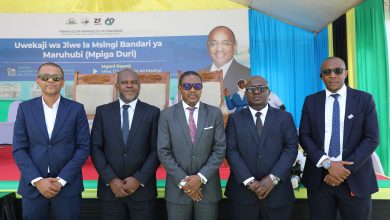
Speaking yesterday during the ceremony to lay a foundation stone for the construction of the University of Dar es Salaam (UDSM) campus in Lindi Region, Prime Minister Dr Mwigulu Nchemba said the establishment of the agriculture-focused campus demonstrates the government’s strong commitment to using higher education as a key driver of economic and social transformation.
“The sixth phase government has prioritised reforms in the agricultural sector, including increasing the agriculture budget fivefold from about 200bn/- to over 1.2tri/- between 2020 and 2025,” said Dr Nchemba.
He noted that the significant budget increase has created a growing demand for skilled professionals and will drive major transformations that cannot be achieved without quality education, indepth research and the application of modern technology.
Dr Nchemba explained that agriculture, in its broad sense, remains a fundamental sector for economic growth, poverty reduction and job creation, particularly for young people.
The Prime Minister directed UDSM, in collaboration with the Ministry of Education, Science and Technology, to strengthen partnerships with the private sector, agricultural research institutions and local government authorities to ensure that research outputs and knowledge generated at the university are translated into economic productivity and social development.
ALSO READ: AfCFTA powers TZ trade
He also instructed the university leadership and the ministry to ensure effective use of Information and Communication Technology (ICT) and modern teaching and learning systems, alongside strong resource management, to make the campus sustainable and internationally competitive.
Furthermore, he called upon the ministry and development partners to continue working together to ensure the project is completed on time and to the required standards so that citizens can begin benefiting from the investment as early as possible. He directed the contractor to complete the construction within ten months.
Dr Nchemba commended UDSM for expanding higher education services to strategic areas such as Lindi Region, noting that southern Tanzania has fertile land, adequate human resources and favourable conditions for commercial and food crop production. He said the new campus will bring higher education services closer to the people of the southern regions while promoting education, research and innovation in agriculture, the backbone of the national economy.
He added that the investment will significantly strengthen the sector through modern research, technology and practical solutions to challenges faced by farmers. Meanwhile, the Minister for Education, Science and Technology, Prof Adolf Mkenda, described the establishment of the UDSM campus in Lindi as a historic milestone for the Southern Zone regions.
He said the project is part of the Higher Education for Economic Transformation (HEET) programme, which is being implemented in nearly all regions of the country, with a total of 47 construction sites nationwide. On his part, UDSM Chancellor and former President, Dr Jakaya Kikwete, said the foundation stone laying ceremony was evidence of the implementation of the HEET project under the directives of President Samia Suluhu Hassan.
Dr Kikwete expressed his appreciation to the Lindi regional leadership for allocating land for the construction of the campus in Ruangwa District, Lindi Region. He also called on the government to support the development of essential infrastructure, including roads, staff housing, libraries and cafeterias.