‘Global collaboration key to cyberspace peace’
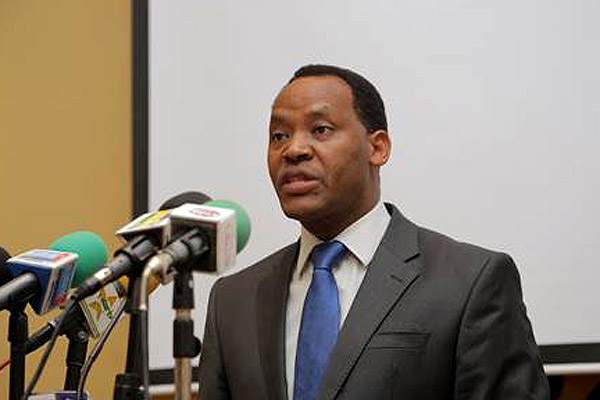
DAR ES SALAAM: ACADEMICIANS and a senior diplomat have called for strengthened global collaboration to enhance cyberspace security and promote digital inclusivity as a foundation for peace in the digital era.
The call was made recently during an International Online Conference on cyberspace, organised jointly by the East Africa Research Centre for a Community with Shared Future (EACSF) and the School of Communication Studies at Saint Augustine University of Tanzania (SAUT).
Speaking at the conference, Presidential Advisor on Diplomatic Affairs, Ambassador Lazaro Nyalandu, underlined the importance of cooperation among nations and international technology players in creating an enabling environment for responsible use of cyberspace and addressing the persistent digital divide to foster global peace and shared prosperity.
“Peace today is no longer confined to land, sea, air or outer space. Cyberspace has emerged as the fifth domain of peace and security,” Amb Nyalandu said.
He warned that the militarisation of cyberspace poses serious risks to international stability.
“We must collectively reject the militarisation of cyberspace. Cyber weapons, digital espionage and information warfare undermine international trust and risk escalating conflicts beyond control,” he said.
Amb Nyalandu noted that in the digital age, no country can operate in isolation, as cyber threats transcend borders and can disrupt systems across continents.
“In this new frontier, no nation is an island. A cyber-attack in one country can disrupt systems across continents. A digital divide in one region weakens global development. Therefore, our digital destiny is shared, and so must be our responsibility,” he emphasised.
The conference was held under the theme ‘Cyberspace Sovereignty for a Peaceful, Inclusive and Sustainable Global Community of a Shared Future’.
ALSO READ: Tanzania calls for global collaboration to protect ecosystems
Amb Nyalandu explained that cyberspace sovereignty guarantees the right of every state to govern its digital space in line with its laws, values and development priorities, while respecting international law and the rights of others.
“Cyberspace sovereignty is not about closing doors; it is about building secure bridges grounded in mutual respect, trust and cooperation,” he said.
He further elaborated that cyberspace sovereignty entails protecting national digital infrastructure and citizens’ data, safeguarding cultural diversity and social values online, ensuring that digital technologies serve development rather than domination, and upholding peace by preventing cyberspace from becoming a battlefield.
According to the diplomat, maintaining a peaceful cyberspace requires the establishment of international norms against cyber aggression, confidence-building measures among states, as well as transparency, dialogue and crisis communication mechanisms.
“Let cyberspace be a space for innovation and dialogue, not confrontation,” he urged.
On her part, the Deputy Dean of the Institute of a Community of Shared Future and Director of African Media Research at the Communication University of China, Professor Zhang Yanqiu, stressed the need for a balanced approach to regulation and deregulation of cyberspace to facilitate inclusive development, particularly for young people.
She said China has made significant progress in empowering its citizens, including youth, by equipping them with digital skills and promoting digital awareness programmes.
Prof Zhang added that China has also been promoting local-led innovations in cyberspace to ensure ownership of technologies, while encouraging other countries to expand investment in the digital sector.
Similarly, the Director of the Asian Research Centre for a Community with Shared Future, Dr Chin Mun, cited Malaysia as one of the Asian countries that has placed strong emphasis on cyberspace literacy as a blueprint for peace and inclusive socioeconomic development.
Meanwhile, Executive Director of the Pakistan Research Centre for a Community with Shared Future, Mr Khalid Akram, said Pakistan has also been advocating for the responsible use of cyberspace to ensure emerging technologies contribute positively to citizens and the global community.
Presenting on ‘Media Institutions and Digital Narratives for a Global Community of a Shared Future’, a journalism lecturer at SAUT, Dr Dotto Bulendu, urged Tanzanian media outlets to intensify efforts in telling their own stories rather than allowing the country’s reality to be defined by foreign media in the digital era.