GBV dialogue calls for justice, reform
A NATIONAL dialogue on Gender-Based Violence (GBV) in Tanzania has underscored the urgent need for comprehensive measures to address this pervasive issue.
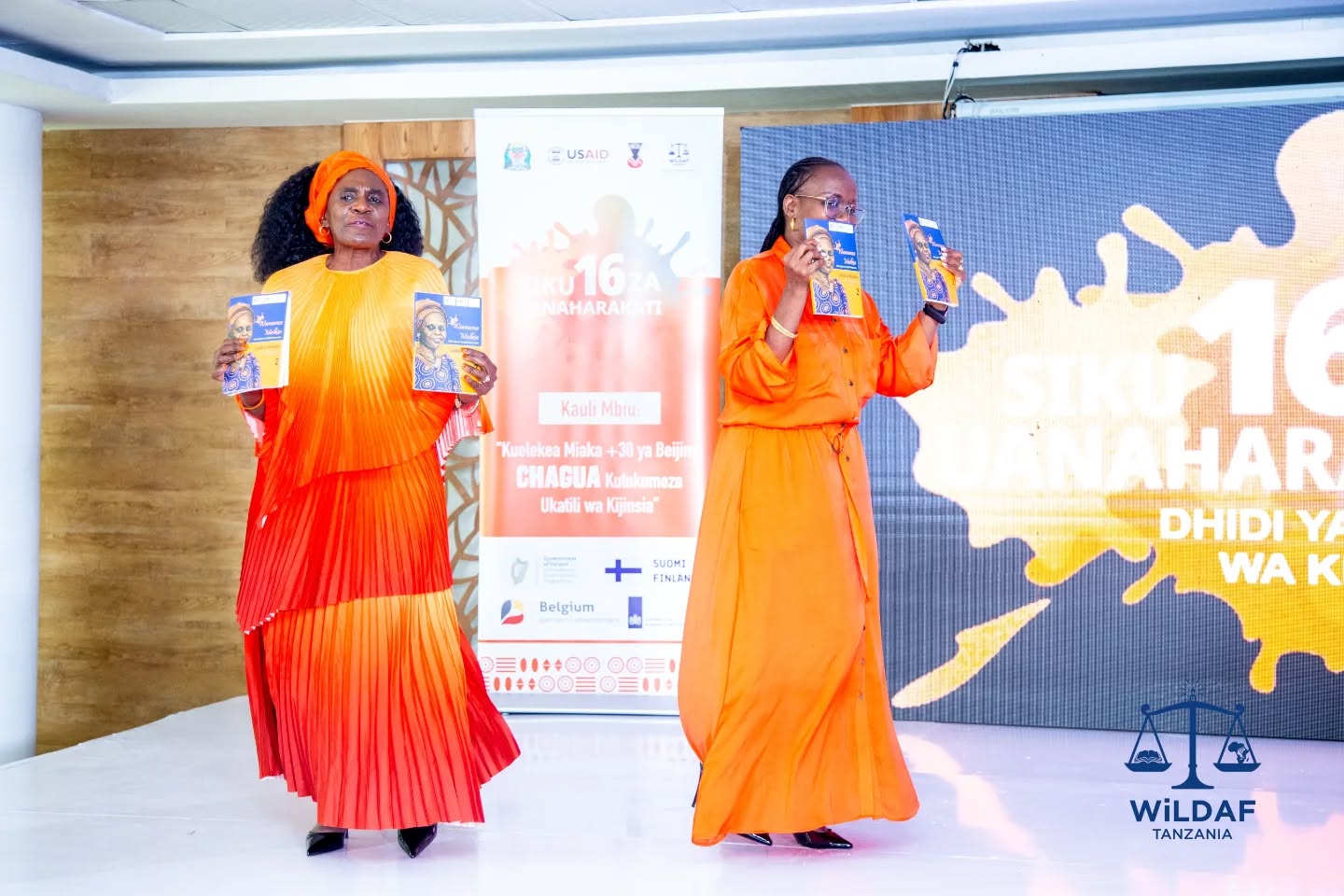
Organized by Women in Law and Development in Africa (WiLDAF) Tanzania, the dialogue was held during the 16 Days of Activism against GBV and brought together government officials, civil society organizations, and legal experts to discuss challenges and propose solutions.
Advocate Anna Kulaya, the National Coordinator of WiLDAF Tanzania, outlined several key challenges hindering the fight against GBV.
“These include delayed justice, harmful cultural practices, the lack of specific compensation mechanisms for victims, discriminatory laws, and insufficient specialized training for judges and magistrates,” she said.
Advocate Kulaya said there is a need for a dedicated GBV law, strengthening community-based structures, and increasing the number of safe houses for survivors.
She also highlighted progress made by the government, citing the Sexual Offences Special Provisions Act (SOSPA), which criminalizes various forms of sexual violence and prescribes stringent punishments.
Additionally, the National Plan to Combat Violence against Women and Children (NPA-VAWC) provides a robust framework for addressing GBV.
The establishment of gender desks in police stations, one-stop centres for survivors, and a child helpline further exemplify the government’s commitment.
The dialogue also celebrated advancements in women’s leadership. Tanzania has seen a significant increase in women’s representation in parliament and is led by its first female president, signalling the country’s dedication to gender equality.
Renatus Mkude, Deputy Director of Public Prosecutions, said his office has established liaison officers nationwide to handle GBV cases.
“With government support, we have opened public prosecution offices in most districts and aim to complete the network by covering the remaining 47 districts. Additionally, we are working on a comprehensive GBV law inspired by the Southern African Development Community (SADC) model,” he said.
ALSO READ: Zanzibar oceans, women get EU funding
ENABEL Gender and Social Inclusion Specialist Jovitha Mlay stressed the need for sustained efforts beyond the 16 Days of Activism. “We need collective efforts from all sectors to eradicate GBV,” she said. Deputy Registrar of the High Court, Dar es Salaam Zone, Aziza Mbajo, highlighted the progress made in handling GBV cases.
“This year, Dar es Salaam courts received 467 cases of violence. Of these, 421 have been concluded. This is a significant achievement,” she said.
The dialogue concluded with the launch of the second edition of the Herstory journal, celebrating Tanzanian women who have made remarkable contributions to society.
While the dialogue highlighted notable progress, participants acknowledged that more efforts are needed to ensure justice and support for all survivors of GBV.