Education first for every girl in our nation
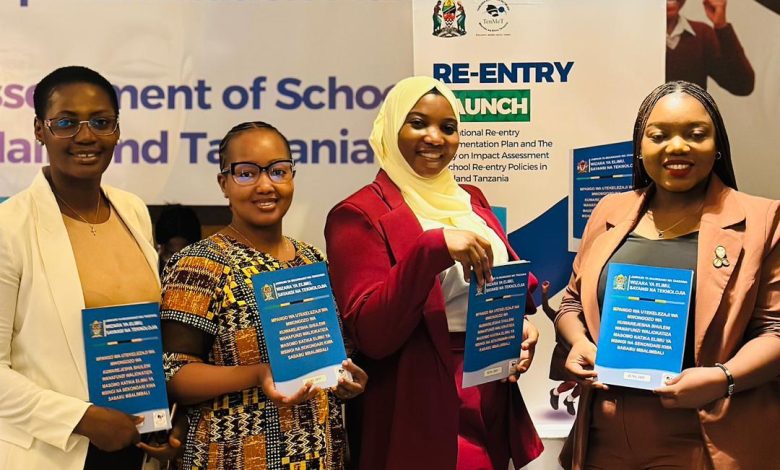
Education stakeholders in Tanzania have issued a renewed and passionate call urging girl students across the country to remain fully focused on their studies so they can achieve their dreams and build secure, bright futures.
Their message follows increasing concern that many girls continue to face pressures, distractions, and social challenges that undermine their education journey and limit their long-term opportunities.
Speaking during the launch of the National Re-entry Implementation Plan held in Dar es Salaam recently, African Child Projects Communication Officer Ms Sophia Msuya stressed that the academic environment must remain a place where girls can concentrate on learning without avoidable disruptions.
She explained that every girl who steps into a classroom does so with a purpose of acquiring knowledge, developing skills, and laying the foundation for a better life. With that purpose in mind, she urged girls to remember why they are in school and to avoid activities that derail them from their primary mission.
Ms Msuya emphasized that one of the major threats to girls’ education continues to be the pressure to engage in premature romantic relationships, which often introduce emotional stress, distraction, and in worst cases, lead to unintended pregnancies.
According to her, such relationships not only conflict with the purpose of schooling but also expose girls to serious risks that can jeopardize their entire academic journey. She explained that when a girl becomes pregnant while still in school, her education is almost always interrupted, and the path toward completing her studies becomes far more difficult.
She noted that pregnancy among students does not only disrupt academic momentum but also affects self-esteem, confidence, and future aspirations. Many young girls, once confronted with pregnancy, feel embarrassed, ashamed, or unsupported. Too often, they fear returning to school due to stigma, ridicule, or lack of guidance.
Ms Msuya insisted that society must help girls avoid such painful situations by encouraging them to prioritize their education and resist pressures that do not align with their long-term goals.
Beyond urging the girls themselves, Ms Msuya directed a strong message to communities, parents, and guardians. She emphasized that the responsibility of protecting girl students does not lie with the girls alone; it is a shared obligation that requires commitment from every member of society.
She called on communities to treat girl students with the same support, respect, and encouragement they extend to boys, instead of promoting outdated attitudes that place girls at a disadvantage. Discrimination and that is whether subtle or blatant creates invisible barriers that make it harder for girls to succeed academically.
Ms Msuya highlighted that communities should work together to create safe, nurturing environments where girls feel valued, protected, and motivated to pursue their education. This includes safeguarding them from harmful cultural practices, early marriages, harassment, and exploitation.
She pointed out that when communities stand firmly behind girls and advocate for their success, it becomes
significantly easier for these students to stay in school, remain focused, and complete their education without unnecessary challenges.
Parents and guardians, she said, carry one of the most important roles in ensuring girls complete their studies. They must provide guidance, emotional support, and a stable home environment that reinforces the importance of education.
She urged parents to speak positively to their daughters, reminding them that school is the gateway to independence, empowerment, and opportunity. Encouragement from home can greatly increase a girl’s confidence, discipline, and determination.
Addressing the sensitive issue of girls who become pregnant while still in school, Ms Msuya reminded parents not to react with anger or harshness.
Instead, she urged them to comfort their daughters, speak to them with compassion, and reassure them that pregnancy does not mark the end of their education or dreams.
She advised parents to avoid discouraging or judgmental words that could push girls into despair or force them to abandon their aspirations. Instead, they should guide them through recovery, help them understand their options, and ensure they return to school when ready.
Ms Msuya applauded the government for establishing the Re-entry Policy, which provides a structured and compassionate path for students especially girls who drop out due to pregnancy or other challenges to return to school.
She stated that the policy reflects a national recognition that every child deserves a second chance. Education, she noted, should not be a privilege reserved only for those who never face obstacles; it must remain a right accessible to all children, regardless of the difficulties they encounter.
She emphasized that the Re-entry Policy not only restores hope but also aligns with Tanzania’s broader commitment to protecting children’s rights and promoting gender equality. By enabling girls to continue their education after giving birth, the government is ensuring they can still reach their potential, support themselves
economically, and contribute meaningfully to national development.
She encouraged stakeholders to work together to ensure the policy is effectively implemented and widely understood so that no girl feels excluded or hopeless after facing life’s challenges.
In closing, Ms Msuya reiterated that Tanzania’s future is brighter when every girl is given the chance to learn, grow, and thrive. With commitment from families, communities, institutions, and policymakers, the nation can empower its girls to rise above obstacles and achieve the promising futures they deserve.