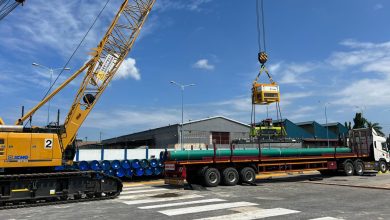
East Africa’s EACOP shapes regional economy

DAR ES SALAAM: THE East African Crude Oil Pipeline (EACOP) is steadily transitioning from an ambitious regional vision into a tangible economic asset, positioning itself as one of the most significant infrastructure investments in East Africa’s modern history.
With construction now 79 per cent complete and final commissioning scheduled for July this year, the project is rapidly emerging as a central driver of economic growth, industrial development and cross-border integration for both Tanzania and Uganda.
Beyond its role in trade and logistics, EACOP has already delivered measurable social and economic benefits, most notably through employment creation.
Tanzania’s Minister for Energy, Mr Deogratius Ndejembi, said the project has generated substantial opportunities for citizens in both countries while laying the foundation for long-term industrial participation.
According to data presented by Minister Ndejembi, more than 120,000 jobs have been created across Tanzania and Uganda since implementation began.
Of these, approximately 12,000 positions have directly benefited youth and local communities, offering not only income but also entry into formal, skills-based industrial employment.
For many communities along the pipeline route, EACOP represents the first large-scale exposure to structured industrial work, helping to raise productivity standards and integrate local labour into national development agendas.
Minister Ndejembi consistently emphasised that the economic impact of the project will be particularly pronounced on the Tanzanian side, given that more than three-quarters of the pipeline’s total length is located within the country.
He noted that EACOP is already stimulating economic activity along its route through increased demand for construction services, transport and logistics, accommodation, catering and locally sourced materials.
Over the medium to long term, the pipeline is expected to boost government revenues through transit fees, taxes and service-sector growth, while strengthening Tanzania’s position as a strategic energy transit and export gateway for East and Central Africa.
At the same time, the pipeline provides Uganda Africa’s newest oil producer with a secure and cost-effective route to international markets.
Reliable export infrastructure is a critical determinant of whether natural resources translate into sustained national wealth, and EACOP significantly reduces risk for Uganda’s upstream oil investments by guaranteeing access to global buyers.
This interdependence has created a mutually reinforcing economic relationship, with Uganda’s oil production driving throughput volumes while Tanzania’s infrastructure facilitates storage, commercialisation and export.
The scale of the project underscores its strategic importance.
Once operational, EACOP will be the world’s longest electrically heated crude oil pipeline, stretching 1,443 kilometres from Hoima in western Uganda to the Indian Ocean port of Chongoleani in Tanzania’s Tanga Region.
ALSO READ: EACOP project set for July completion
Of this total length, 296 kilometres lie in Uganda, while 1,147 kilometres pass through Tanzania, firmly establishing Tanzania as the project’s primary transit country and a key energy logistics hub.
The pipeline will be supported by six pumping stations, four in Tanzania and two in Uganda, designed to ensure the smooth and continuous transportation of Uganda’s waxy crude oil, which must be heated to maintain flow efficiency.
Once completed, EACOP will have the capacity to transport up to 246,000 barrels of crude oil per day, positioning East Africa as a meaningful contributor to global oil supply chains and enhancing long-term planning for producers, port operators, shipping companies and financial institutions.
Crucially, the employment generated by EACOP extends well beyond short-term, low-skill construction roles.
Thousands of workers have received specialised training in welding, pipe laying, electrical and mechanical systems, pipe coating, insulation technology, environmental management, safety compliance and logistics coordination.
This deliberate emphasis on skills transfer and local content reflects a shared policy objective by both governments to ensure the project leaves behind a lasting human capital legacy.
By developing a technically competent workforce, EACOP is strengthening the foundation for future investments in oil and gas, electricity generation, manufacturing and large-scale infrastructure across the region.
The project’s progress was recently reaffirmed during an official inspection visit by a high-level Ugandan delegation led by the Minister for Energy and Mineral Development, Dr Ruth Nankabirwa, alongside their Tanzanian counterparts.
The delegation toured key sections of the pipeline and associated facilities, allowing Ugandan officials to assess firsthand the level of completion and technical readiness on the Tanzanian side.
For Uganda, EACOP is a central pillar of a broader economic transformation agenda. Dr Nankabirwa has repeatedly highlighted that Uganda aims to expand its economy from approximately 40 billion US dollars today to 500 billion US dollars by 2040, driven by strategic resource utilisation, industrialisation, technological advancement and regional cooperation.
The oil and gas sector and particularly transportation infrastructure such as EACOP is expected to play a decisive role in financing this transformation while catalysing growth in supporting industries.
From a cost perspective, the pipeline significantly enhances Uganda’s export competitiveness.
Transportation costs are projected at 12.77 US dollars per barrel, a rate that enables Ugandan crude to reach international markets profitably while maintaining predictable revenue flows.
Dr Nankabirwa noted that the benefits extend beyond Uganda, with Tanzania gaining from transit revenues, infrastructure development, employment creation and expanded expertise in the energy sector.
A defining feature of EACOP’s implementation has been its focus on technology transfer and compliance with international standards.
Workers from both countries have been trained in advanced oil exploration methods, electrically heated pipeline operations, refinery technologies and environmental protection systems.
Facilities such as the pipe coating and insulation plants in Tabora demonstrate the growing technical sophistication within the regional industrial ecosystem.
Given the waxy nature of Uganda’s crude oil, maintaining temperature throughout transportation is essential, making insulation and heating technologies critical for efficiency and environmental safety.
Environmental considerations have been integrated into the project from the outset.
Route selection, insulated piping, controlled construction practices and continuous monitoring systems have been designed to minimise ecological risks while ensuring operational reliability.
According to Dr Nankabirwa, these measures show that large-scale energy infrastructure in Africa can be developed responsibly and in line with internationally accepted standards.
Upstream oil development in Uganda is progressing in parallel with pipeline construction.
International oil companies, including TotalEnergies and CNOOC, continue to drill and appraise wells, with production performance reportedly exceeding initial expectations.