EAC centre of excellence to boost specialised care

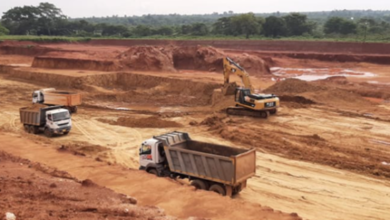
DAR ES SALAAM: RESEARCH and medical specialisation are set to gain fresh momentum in the country and across the East African region following notable progress in the construction of the East African Community (EAC) Centre of Excellence at the Mloganzila Campus of the Muhimbili University of Health and Allied Sciences (MUHAS).
The Government said the centre will enhance innovative research aligned with prevailing health challenges, while offering specialised treatment for cardiovascular diseases as well as oral and dental services to both local and foreign patients.
Speaking recently during an inspection tour of infrastructure projects under the Higher Education for Economic Transformation (HEET) Project at MUHAS–Mloganzila in Dar es Salaam, the Minister for Education, Science and Technology, Prof Adolf Mkenda, said the investment would position Mloganzila as a major academic and medical hub in East and Central Africa.
He said that through arrangements under the East African Community, patients and health specialists from member states will access advanced medical services at affordable costs, reducing the need for Tanzanians to seek treatment abroad and promoting medical tourism.
“I would like everyone to see how extensive this area is, from the hospital already constructed to the East African Centre of Excellence for cardiovascular diseases. Under EAC agreements, patients and specialists from member states will come here for services at affordable costs, while we significantly reduce the number of patients travelling abroad for treatment,” Prof Mkenda said.
He added that the EAC has also agreed to establish another Centre of Excellence for oral and dental services at the same location, alongside additional centres aimed at strengthening research capacity and training of health professionals.
Prof Mkenda underscored the importance of prioritising education in science, technology and research, noting that available scholarship opportunities, including the Samia Scholarship, should be utilised to prepare young people for research-driven careers that address societal challenges.
He stressed that research efforts should be rooted in local realities and health challenges, rather than replicating studies conducted in different environments, citing traditional medicine research as one of the areas requiring clinical trials to support evidence-based healthcare.
MUHAS Vice-Chancellor Prof Apollinary Kamuhabwa said the project will significantly improve the quality and competence of health professionals graduating from the university, while expanding academic programmes in disciplines currently facing shortages of specialists.
He said the Government has allocated 45.5 million US dollars for the project, with 30 million dollars directed to the Mloganzila Campus and 15 million dollars to the Kigoma Campus.
At Mloganzila, Prof Kamuhabwa said the university is constructing female student hostels, 20 laboratories, a building for the preservation of human bodies for training purposes, an Information and Communication Technology facility, a library, administrative offices and other supporting infrastructure.
He added that construction has reached 50 per cent completion and is expected to be finalised by June 2026, while the Centre of Excellence for cardiovascular diseases is already complete and ready to commence services.
“In addition, we plan to build an oral and dental diseases hospital next year, with funds already secured. All these facilities will be developed on 380 hectares of land, positioning Mloganzila as a regional hub of excellence in health training, research and service delivery once this phase is completed,” he said.