DSE market capitalisation jumps 34 per cent
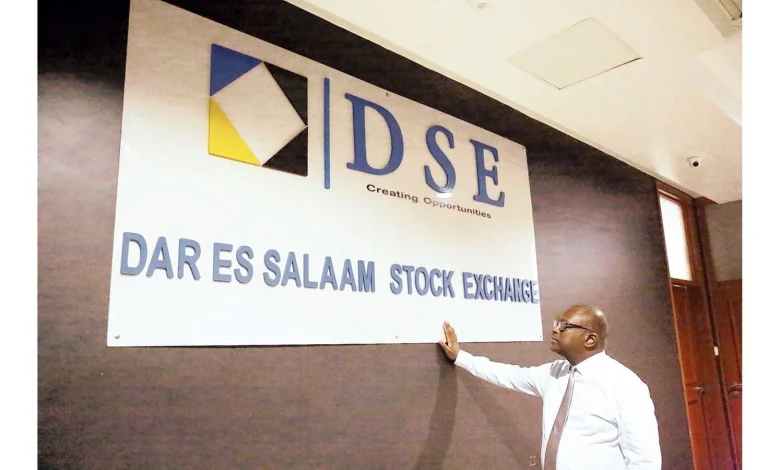
DAR ES SALAAM: THE Dar es Salaam Stock Exchange (DSE)’s market capitalisation soared by 34.3 per cent at the end of last year, buoyed by favourable macroeconomic conditions, regulatory reforms and growing investor participation particularly among the youth.
The DSE’s Annual performance report released recently showed the bourse’s market capitalisation increased to 23.99tri/- by the end of December 31 last year up from 17.86tri/- posted in the same period of the preceding year.
The latest report showed domestic companies accounted for a significant share of the growth, with their combined market value rising by 27.08 per cent to 15.55tri/- compared to 12.24tri/- posted in 2024 at the closure.
Speaking during a media briefing held in Dar es Salaam, the DSE Chief Executive Officer Mr Peter Nalitolela said the stock market had significantly outperformed the broader economy, reflecting rising investor confidence in the country’s capital markets.
“The stock market is often described as a barometer of the economy. When the economy performs well, we expect to see that strength reflected in market activity and this is exactly what we saw in last year,” Mr Nalitolela told journalists.
The market performance comes against a positive economic backdrop revealed by the Bank of Tanzania (BoT)’s latest Monetary Policy Statement which showed Tanzania’s Gross Domestic Product (GDP) is estimated to have grown by 5.9 per cent during the year, close to the national target of 6.0 per cent.
He attributed that the strong performance partly to regulatory reforms introduced mid-year, following approval from the Capital Markets and Securities Authority (CMSA).
The reforms focused on improving market liquidity, particularly for stocks that had remained dormant despite being listed.
NMB Bank emerged as the largest listed company on the exchange, reaching a market capitalisation of 4.2tri/-, surpassing several major regional banks in East Africa.
Other top performers included CRDB Bank, Tanzania Breweries Limited (TBL), Vodacom Tanzania, Tanga Cement Company, Tanzania Cigarette Company (TCC), as well as cross-listed firms KCB Group and East African Breweries Limited.
“After extensive consultations with brokers and investors, we revised our trading rules. As a result, counters such as TBL, TCC and Vodacom became actively tradable again,” he said, describing the reforms as a major milestone for the Exchange.
ALSO READ: DSE records exponential surge in market turnover
Additionally, DSE Investor numbers according to the report released grew steadily, rising to 75,069 at the closure day from 61,792 recorded in 2024.
Notably, 40 per cent of new investors were aged between 21 and 30, underscoring the growing role of technology in widening access to capital markets.
Despite the milestone, number of listed companies in the bourse remained at 28 comprising 22 domestic and six foreign firms but the range and value of listed securities expanded.
In addition, market intermediaries also increased, with the number of licensed brokers rising to 21 and investment advisers to 24.
Furthermore, liquidity also improved markedly with the total equity turnover surged to 663.75bn/- in 2025, nearly triple the 228.63bn/- recorded in 2024 while trading volume more than doubled to 477.81 million shares.
A major driver of increased participation was the Hisa Kiganjani mobile trading platform, which accounted for 106.68bn/- in trades representing 47 per cent of normal market activity.
Also, the number of platform users jumped from about 4,500 in 2024 to nearly 140,000 by the end of 2025