Digital transformation: Mobile payments to economic empowerment
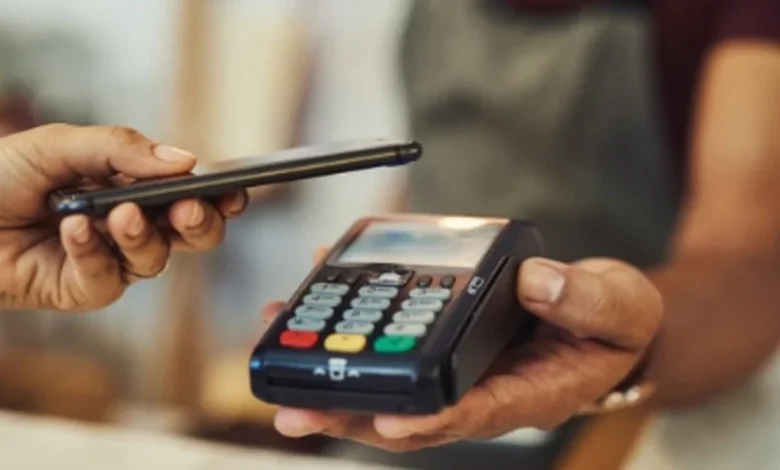
WHEN people ask me about the most profound revolution in Tanzania’s economy, I do not point to factories or startups; I point to the phone in someone’s hand.
Not because I lead a mobile financial services company, but because the data tells a powerful story: Mobile financial services have become the new engine of inclusion, transforming lives, unlocking access and redefining economic empowerment across communities.
What began as a simple remittance service, a way to send and receive money has evolved into a comprehensive financial ecosystem weaving inclusion, innovation and opportunity into the everyday lives of millions of Tanzanians.
We no longer see mere transactions; we see dreams being fulfilled one digital payment at a time. By listening closely to our users, we learned that affordability and trust weren’t just expectations, they were foundational.
As we evolved, it became clear we weren’t merely creating products but responding to a deep, unspoken need. People yearned for simpler, safer and more trusted ways to manage their money.
Guided by that insight, we built solutions that are relevant, reliable and accessible, making everyday financial life easier for everyone. The results speak for themselves: Usage and adoption have soared.
In 2021, when we relaunched merchant payments interoperable with all Mobile Network Operators (MNOs), just over 100,000 merchants were on our platform. Today, more than 350,000 merchants actively transact on Mixx, a clear testament that when innovation is driven by people and purpose, growth is inevitable.
Interoperability: The game-changer for inclusive growth
In 2014, interoperability was introduced in Tanzania, spearheaded by Yas—then Tigo allowing customers to send and receive funds across MNOs and banks. This was redefined in 2023 with the Bank of Tanzania’s introduction of the Tanzania Interbank Settlement System (TISS) and the TanQR standard.

This was not just a technical upgrade; it was a transformational shift uniting banks, fintechs and mobile operators on a single connected platform. For merchants, it meant accepting payments from any customer, regardless of wallet provider or bank acquirer. For the economy, it meant faster transactions, stronger security and reduced costs. This advancement has positioned Tanzania as a regional leader in digital inclusion, proof of what’s possible when innovation and policy align for the common good (BoT, March 2025).
Beyond payments: Empowering livelihoods
The next frontier is not just transactions,it is transformation. That is why we have expanded into micro-loans, agricultural and health insurance and savings wallets with interest, targeting rural and low-income communities. Our work aligns with the National Financial Inclusion Framework (NFIF), promoting inclusive, sustainable and green finance.
Through partnerships with banks, cooperatives and fintechs, we ensure that digital infrastructure delivers real value, not just access. Agriculture, often seen as risky for investment has become one of our most impactful focus areas. Through products like Lipa kwa Simu, KilimoPesa and AfyaMkulima, we go beyond payments.
We give them access to credit, savings and insurance tools that empower them to invest confidently and protect their livelihoods. Take cashews, one of Tanzania’s top exports, earning about 598 million US dollars in 2024. The sector still relies heavily on cash payments, exposing farmers to fraud and loss. Our digital solutions in Mtwara address these vulnerabilities directly, while our financial literacy programmes help farmers embrace safer, more transparent systems.
Partnerships that drive shared prosperity
But this cannot be achieved alone, strategic alliances with banks, cooperatives and government agencies are vital to digitising value chains and designing tailored solutions for different sectors. Increasingly, we are focusing on digital credit scoring that uses alternative data to assess creditworthiness, giving previously “invisible” citizens access to working capital and emergency funds.
In Zanzibar, our partnership with the Zanzibar State Trading Corporation (ZSTC) has streamlined payments for clove farmers and extended health insurance to protect them during the high-risk harvest season.
By addressing real challenges and prioritising farmer welfare, we’ve earned their trust as a true partner in progress. This is how we move from mobile payments to true financial empowerment creating new pathways for entrepreneurs, farmers and families to thrive.
Closing the connectivity gap
The numbers speak for themselves: mobile money users have grown from 24.4 million in 2019 to 65.7 million in 2025 (TCRA Quarterly Report, Q4 2024/25). This is not just growth; it is a national transformation. Continued investment in network infrastructure has been crucial to expanding digital access, especially in rural areas.
We also acknowledge the pivotal role of the Universal Communications Service Access Fund (UCSAF), whose partnership with telecom operators has extended connectivity to underserved regions. Together, we are closing the rural connectivity gap, ensuring every Tanzanian can participate in the digital economy.
Our Kila Hatua Mixx is more than a campaign, it’s a commitment to walk every step of this journey with Tanzanians. As a digital ally, we are building a more inclusive, innovative and resilient economy where every Tanzanian, from the farmer in Mtwara to the merchant in Mwanza, can thrive in the digital era. Because in the end, the true power of mobile payments lies not in transactions completed but in lives transformed. By Angelica Pesha, CEO, Mixx