Deadly Brew: Illicit Gongo fuelling kidney disease in Songea
RUVUMA: IN Songea District, nestled within the beautiful landscapes of Ruvuma Region, a not-so-beautiful health crisis is bubbling under the surface and this time, it is not malaria, typhoid, or another textbook tropical disease.
The unlikely villain? A clear, often potent liquid known locally as gongo-a home-brewed alcoholic drink that might just be sending people straight from the barstool to the dialysis chair.
While some residents might raise their glasses to the quick buzz gongo offers, the government is raising red flags.
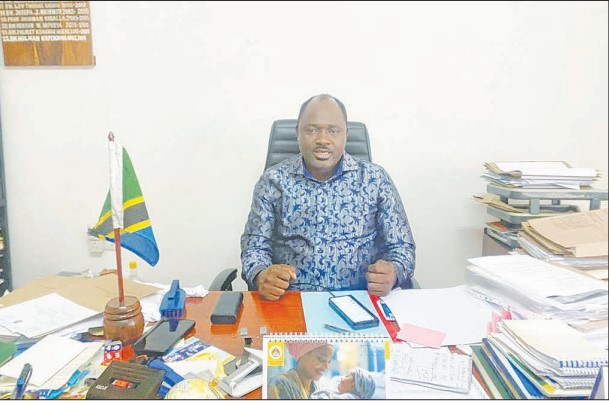
According to the area District Commissioner Wilman Kapenjama Ndile, there has been a significant and worrying rise in kidney disease cases in Songea, and all signs point back to the bottle, more specifically, the bottle without a label, approval stamp, or safety standard in sight. Speaking from his office like a man burdened with secrets the public must hear, DC Ndile didn’t mince words: “Doctors from Dr Samia’s Mukoba Outreach medical team have reported that kidney problems are becoming increasingly common.
While there are other ailments in the district, it is the surge in kidney issues that has alarmed us-and gongo is largely to blame.” What’s so bad about Gongo? Let’s unpack this curious concoction. Gongo is a traditional, home-brewed spirit that’s popular in many rural and urban communities for one main reason, it is cheap and it hits hard.
It is also unregulated, untested, and frequently laced with a surprise menu of harmful additives. It is the kind of drink that makes your chest burn, your knees wobble, and, apparently, your kidneys give up entirely. And unlike your fancy supermarket wine or craft beer, gongo doesn’t come with a disclaimer.
There is no “drink responsibly” message. No serving size. No listed ingredients and unless you count rumors. Is that battery acid in there? Jet fuel? Who knows!
ALSO READ: Boost for kidney treatment
In what might be the largest anti-booze intervention outside of a family meeting, DC Ndile’s office called together over 800 local leaders (known as mabalozi) to identify hot zones where gongo flows freely.
The aim: to clamp down on the distribution, educate communities, and stop people from literally drinking themselves into chronic illness. “Once we were made aware of the scale of the issue,” Ndile explained, “we had no choice but to act. We formed a task force with members from health agencies, law enforcement, and local administration to inspect where gongo and other strong drinks are soldwhether at bars, clubs, pubs, or little home distilleries.” And they are not just blowing smoke.
The task force has already shut down one illegal alcohol factory in Making’inda. While that is a start, it is likely just one drop in a very full barrel. Kidney disease is a silent assassin According to medical professionals, kidney disease doesn’t show up with flashing lights and a drumroll.
It creeps in quietly, often without symptoms until it is too late. When kidneys fail to function properly, they can no longer filter waste from the blood, remove toxins, or produce urine. Over time, patients find themselves tethered to dialysis machines several times a week-an exhausting and expensive treatment.
“Dialysis is not a luxury,” said one health officer. “It is a lifeline and a very costly one at that.” One Songea resident, who chose to remain anonymous (probably to avoid angry relatives), admitted to drinking gongo regularly. “It is cheap and it gets you drunk fast,” he said with a shrug. When asked if he is worried about his kidneys, his response was classic: “If I get sick, it is just an occupational hazard.” Occupational hazard? The man treats gongo like it is part of the job description. It is not just about taste or tradition, it is about cost.
Beer, wine, and regulated spirits are often seen as luxury items in rural areas. Gongo, however, is the common man’s cocktail.
A few coins get you a buzz, and with daily survival already a financial juggling act, the choice feels obvious to many. But while the upfront cost is low, the long-term price is staggering.
Dialysis treatments can cost more than 80,000/- per session, and with patients often requiring two or three sessions each week, the monthly total rivals rent in Dar es Salaam.
Even if someone were lucky enough to receive a diagnosis early, affording consistent treatment is a nightmare. Many simply go untreated until the symptoms become unbearable or fatal. A national perspective The crisis is not isolated.
Speaking during a 2024 visit to Namtumbo District, World Health Organization (WHO) Africa Regional Director Prof Mohamed Janabi stressed the importance of prevention over cure.
“I see far too many patients admitted to Muhimbili National Hospital with kidney complications,” he said.
“Most are avoidable through proper diet and by avoiding harmful substances like unregulated alcohol.” Prof Janabi emphasized that the cost of dialysis, not to mention the physical toll that is too high for a country like Tanzania to ignore. “It is not sustainable,” he added.
ALSO READ: Tanzania, Japan sign MoU to construct kidney transplant facility in Dodoma
Government response To combat the growing problem, Deputy Minister of Health Dr Godwin Mollel announced in April 2025 that over 100 dialysis machines had been distributed across the country. These machines, along with essential test kits, were sent to regional and zonal hospitals to reduce treatment backlogs and ease financial pressure on patients.
“We have ensured that services are now available in 15 regional referral hospitals and all zonal hospitals,” Dr Mollel told Parliament.
“It is part of our broader mission to make kidney treatment more accessible.” But even with these efforts, the cost remains steep, and many Tanzanians are still calling for subsidized or free treatment, especially for those from low-income communities. Educating the public While machines and medication help, the root of the issue lies in awareness, or the lack of it.
There is a pressing need for aggressive public education campaigns to shift behaviors and perceptions about alcohol and health. Health officials, community leaders, and even journalists now find themselves taking on dual roles: informers and reformers. From schools to churches, the message is being spread and that is your kidneys are not disposable.
As DC Ndile put it, “We need to remind people that health is not just the government’s responsibility, it starts with individual choices.
Avoiding harmful alcohol like gongo is one step toward a longer, healthier life.” At face value, gongo might look like a poor man’s shortcut to fun. But beneath the surface, it is proving to be a high-speed lane to the hospital. As Songea’s health crisis unfolds, it serves as a national wake-up call.
And a call most urgently to treat every glass of unregulated booze like a loaded syringe is to avoid it. In the end, it is about making a hard choice: another drink, or another day in hospital nursing your kidneys in problem.