CAG highlights strides in 2022/23 audit reports
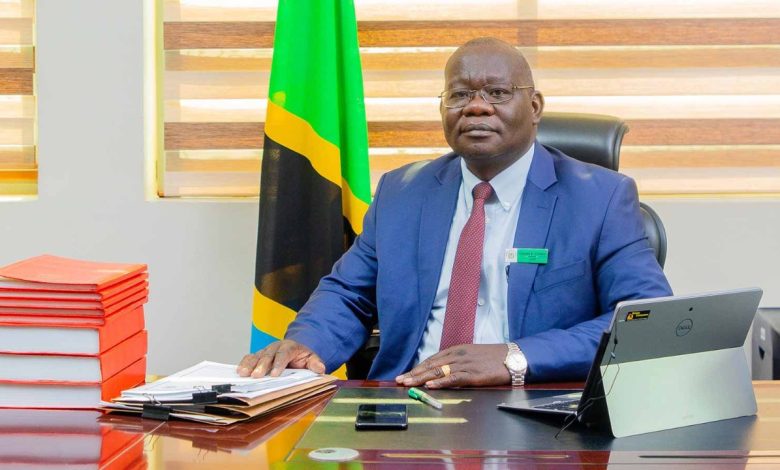
DODOMA: CONTROLLER and Auditor General (CAG) Charles Kichere has highlighted significant improvements in audit reports for the fiscal year 2022/2023. CAG Kichere made the remarks yesterday while presenting 21 Government Audit Reports for 2022/2023 fiscal year at the Chamwino State House in Dodoma.
He emphasised that the majority of audit reports indicate satisfactory compliance with procedures and regulations.
The CAG noted that the audit reports reflect a commendable adherence to international standards. During the presentation, Mr Kichere said the CAG office issued 1,209 financial statements for 2022/2023 financial year where 222 were related to regional administrations and Local Government Authorities (LGAs), 215 to public corporations, 475 to the central government including 19 reports on political parties, and 299 to development projects.
According to CAG Kichere, out of these financial statements, a staggering 1,197, equivalent to 99 per cent, were issued with unqualified opinions.
This signifies a significant improvement compared to the previous fiscal year, where out of 1,045 audited institutions, 1,010 received unqualified opinions, equivalent to 96.64 per cent.
However, Kichere also highlighted areas for concern, noting that nine reports, equivalent to 0.7 per cent, were given qualified opinions, while one report, equivalent to 0.1 per cent, received an adverse opinion.
Additionally, two reports, equivalent to 0.2 per cent, were issued disclaimer opinion. In his analysis, Kichere emphasised, “Overall, the audit reports indicate satisfactory preparation that largely complies with procedures and regulations The emphasis here is that the preparation of audit reports complies with international standards.” Implementation status of past recommendations In previous audit reports, the CAG highlighted several recommendations aimed at enhancing public resource management, improving revenue collection and increasing efficiency in government operations.
These recommendations were crucial for bolstering transparency and accountability within Tanzania’s governmental apparatus. Acknowledging the efforts made by the government in addressing the recommendations, CAG Kichere commended the issuance of various guidelines by the President’s Office to facilitate the implementation process.
The guidelines served as a framework for governmental agencies to navigate and execute the recommended reforms effectively.
However, amidst the progress made, CAG Kichere emphasised the imperative of full implementation of these recommendations. He stressed that complete adherence to the proposed reforms is essential to ensure the optimal utilisation of funds and other resources allocated for government activities.
This comprehensive implementation, according to Kichere, is pivotal in advancing development initiatives that directly benefit citizens.
Government debt trends
Government debt figures as of June 30, 2023, show a significant rise compared to the previous fiscal year. At that point, the total government debt amounted to 82.25tri/-, marking a 15 per cent increase from the 71.31tri/- recorded in the 2021/2022 fiscal year.
The debt is comprised of 28.92tri/- in domestic debt and 53.32tri/- in external debt. He said analysis of the government’s debt-to-GDP ratio suggests a sustainable level, while the ratio of debt servicing to exports slightly falls below the 15 per cent threshold.
Similarly, the ratio of debt servicing to revenue remains marginally below the recommended 18 per cent threshold.
Revenue management
The Tanzania Revenue Authority (TRA) amassed a total of 22.58tri/- during 2022/2023 fiscal year 2022/2023, marking an 8 per cent upsurge compared to the 20.94tri/- collected in the preceding fiscal period. Kichere said despite the augmentation, the collections fell short of estimates by 1.07tri/-, constituting a 4.5 per cent deficit.
“The audit uncovered a range of challenges confronting TRA in its oversight of goods traversing through Tanzania to neighbouring nations, primarily stemming from deficiencies in e-sell systems. These shortcomings have hampered efforts to effectively monitor export activities, hindering the agency’s ability to ensure proper regulation,” CAG Kichere said.
Additionally, he said there have been delays in cargo release due to missing e-sell bills in the Electronic Cargo Tracking System (ECTS), inaccurate e-sell information stored in inappropriate systems, and a lack of coordination between auxiliary and primary equipment within the system.
“I recommend that the government undertake regular assessments of e-sell deficiencies and implement remedial measures,” he said.
Another significant concern lies in the collection of non-tax revenues, with eight public entities amassing 23.27bn/- outside the Government e-Payment Gateway (GEPG) framework, contravening Treasury Circular No. 3 of 2017. Failure to utilise the GEPG system for revenue collection risks revenue losses and undermines efforts to bolster transparency in government revenue management, he explained.
Moreover, local authorities have struggled to collect revenues totalling 61.15bn/- from major sources, with 6.19bn/- of the collected amount remaining unbanked.
“This adversely affected their capacity to execute development projects and deliver quality services to the community.” Furthermore, he said, 184 local government authorities failed to allocate 20.23bn/- of internal revenue for designated development projects and operational activities, including funding for village, ward, agriculture, fisheries, livestock, and infrastructure initiatives through Tanzania Rural and Urban Roads Agency (TARURA).
He recommended that these authorities adhere fully to government directives by appropriately allocating internal revenues and ensuring their utilisation as intended.
Expenditure management The audit revealed that the Medical Stores Department (MSD) awarded a tender for Covid-19 testing laboratory equipment from a non-manufacturing company, in breach of tender terms. This resulted in a loss of public funds.
Subsequently, MSD proceeded to procure equipment from the company without seeking sufficient technical advice. Upon examination, it was determined that the acquired equipment was incompatible with existing machinery.
Nevertheless, MSD disbursed all funds for the purchase. CAG Kichere advised that appropriate measures be taken against the responsible employees and that the funds be recovered. Inadequate procedures in government institutions for project implementation According to Mr Kichere, in Arusha, the government allocated 194.53bn/- for a road construction project.
However, subsequent to the completion of the road project, it suffered damage due to water authority activities. Consequently, the authority will need to allocate extra funds to repair the road damage caused during the installation of water infrastructure.
Highlighting a deficiency in communication and collaboration among government agencies involved in public projects, Mr Kichere pointed out instances of losses, such as the destruction of the newly constructed road by the water authority.
He recommended the establishment of a transparent communication and collaboration system between relevant institutions to mitigate such occurrences in the future.
Contract management
The audit conducted by the CAG unveiled inefficient utilisation of public funds across multiple government entities, leading to loss exceeding 222.34bn/-. This loss stemmed from delays in payments to contractors for road projects, consequently incurring high-interest charges.
“I recommend that the government devises a comprehensive strategy to facilitate prompt payments to contractors,” stated the CAG. Additionally, he suggested that the government should prioritise the completion of ongoing road projects over initiating new ones to minimise interest expenses.
Performance of public enterprises
Commercially operated public enterprises experienced financial losses during 2022/2023 fiscal year. Some notable losses include the following: Tanzania Airline Company (ATCL) recorded a loss of 56.64bn/-, marking a 61 per cent increase from the previous year’s loss of 35.24bn/-.
Tanzania Telecommunications Company Limited (TTCL) reported a loss amounting to 894m/-, reflecting a significant 94 per cent decrease from the previous year’s loss of 19.23bn/-.
The Tanzania Railways Corporation (TRC) incurred a loss of 100.70bn/-, representing a 47.32 per cent decrease from the previous year’s loss of 190.01bn/-.
Tanzania National Oil (TANOIL) suffered a loss of 76.56bn/-, marking a substantial increase of 68.72bn/- from the previous year’s loss of 7.84bn/-.
This increase was primarily attributed to the seizure of imported fuel due to TANOIL’s failure to settle supplier payments. CAG Kichere recommended that public authorities take decisive measures to enhance operational efficiency, bolster revenue collection, reduce expenses, and devise strategies to reallocate resources from inefficient investments.