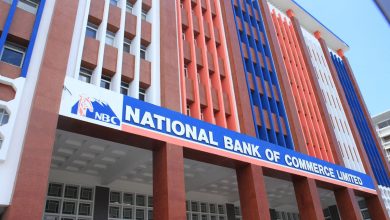
BoT: Financial sector remains stable, resilient

DAR ES SALAAM: THE financial sector remained stable and resilient, with all indicators within desirable thresholds, the Central Bank has said.
According to the Bank of Tanzania’s July Monetary Policy Statement, the banking sector, which is the largest part of the financial sector, was well-capitalised, liquid and profitable, leveraging technology for service delivery.
The core capital adequacy ratio was 20.2 per cent, above the minimum regulatory requirement of 10 per cent.
The quality of banks’ assets improved, with the nonperforming loans (NPL) ratio falling to 3.5 per cent in April from 4.1 per cent in June last year, below the 5 per cent tolerable threshold.
This decline is expected to continue, boosting private sector lending and lowering borrowing costs.
The BoT supported this trend through policies and regulatory reforms to enhance risk management.
Additionally, the BoT advanced system modernisation by implementing phase III of the Tanzania Payment System (TIPS) and migrating to ISO 20022 standards.
These initiatives aim to enhance the efficiency, reliability and interoperability of both domestic and cross-border high-value and retail payments.
To promote a cash-lite economy through greater digital adoption, the Bank reviewed transaction fees for interoperable transfers such as bank-to-wallet and wallet-tobank processed through TIPS. Transaction bands were introduced, capping the maximum fee at 5,000/-.
Banks and Electronic Money Issuers (EMIs) were directed to align their fees with this guidance.
ALSO READ: BoT: Financial sector stable, resilient
To further reduce reliance on cash, the Bank approved additional digital payment providers, raising the number of licensed fintech companies to 60.
This supported notable growth in digital payments, with increased use of Electronic Fund Transfers (EFTs) and a decline in cheque usage.
The volume and value of EFTs rose by 7.34 per cent and 16.12 per cent, respectively, while cheque volumes processed through the Tanzania Automated Clearing House (TACH) declined by 15.91 per cent (Shilling) and 24.87 per cent (USD).
Corresponding cheque values dropped by 6.03 per cent and 19.05 per cent, respectively, due to increased adoption of EFTs, internet and mobile banking and other digital payment tools.
Regional cross-border systems—the East African Payment System (EAPS) and Southern African Development Community (SADC) Real-Time Gross Settlement (SADC-RTGS) support seamless settlement between domestic and foreign banks. However, their usage remains low.
The SADC-RTGS usage is limited due to participation by only six local banks and the exclusive use of the South African Rand.
In the EAC region, low usage of EAPS is attributed to limited local currency acceptability, lack of awareness and differing levels of economic development.
Mobile phones remain vital in bridging infrastructure gaps, enabling the unbanked to access financial services.
Mobile payment transaction volume and value increased by 27.75 per cent and 29.53 per cent, respectively, driven by a supportive payment environment marked by affordable fees, consumer trust and reliable digital infrastructure.