Bagamoyo’s old Catholic Church: Where history, faith and culture meet
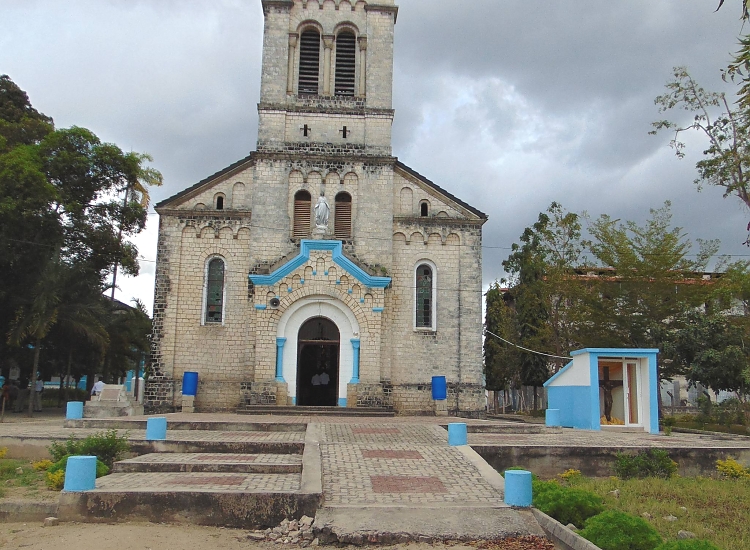
BAGAMOYO, COAST REGION: THE history of the Old Catholic Church in Bagamoyo dates back to the late 19th century stands as one of Tanzania’s most important historical and religious landmarks.
The Church is one of Tanzania’s oldest and most significant heritage sites, the Old Church and Museum blends history, spirituality and artistry into an immersive experience that attracts both devout pilgrims and history enthusiasts alike.
More than just a museum, it is a living testament to the intertwining of religious faith and cultural fusion, offering a rare glimpse into the region’s colonial past and the spread of Christianity across East Africa.
In 1868, Father Antoine Horner of the Holy Ghost Fathers, a French missionary group, arrived in Bagamoyo.
He sought a location to establish the first Roman Catholic mission on the mainland of East Africa. At that time, Bagamoyo was a thriving, cosmopolitan town, known for its diverse population, which included local ethnic groups, Arabs, Indians and Europeans.
It was also a major trade hub and an infamous centre for the East African slave trade.
The Holy Ghost Fathers were granted land by the Sultan of Zanzibar, Sultan Majid, for the mission and the first church, a simple structure built in 1872, was constructed using local materials in a French Gothic style, according to Mr Michael Pengo, a catholic tour guide.
He said that this early church was known for its squat tower, which resembled a minaret and was later renamed the Livingstone Tower in honour of the British explorer David Livingstone.
Mr Pengo said the church’s tower became an iconic part of the mission complex, with historical significance due to Livingstone’s association with the site.
He explained that in 1874, David Livingstone after passing away during his travels, was briefly interred at the mission.
“His body, carried by his devoted servants, was brought to Bagamoyo, where it was kept overnight in the Livingstone Tower before being shipped to Zanzibar and then to England, where he was buried in Westminster Abbey,” he said.
“This event is an important part of the church’s history, as 700 slaves gathered to pay tribute to the explorer before his body was taken away, marking a symbolic moment in the region’s history.”
The mission continued to grow and by 1892, Mr Pengo said the mission received a large donation of land from a Muslim philanthropist, Sewa Haji, which helped expand the mission complex.
The church building itself was expanded between 1910 and 1914, with a new, larger Romanesque-style church built using dressed coral stone blocks.
This church, which still stands today, became known as the New Holy Ghost Church, Mr Pengo said. The mission was not just a place of worship but also a centre for education and the fight against the slave trade.
Many of the slaves freed by the missionaries found refuge and care at the mission, a good example being Maria Ernestina. Maria Ernestina was captured with her mother by the slave traders in 1890 in the Eastern Republic Democratic of Congo and both taken to the Swahili Coast. Her mother died on their long walk to Bagamoyo.
When the caravan arrived in Bagamoyo, slave trade was abolished and the German authorities were in power. The young girl was given to the care of the German family, but she ran away to the Catholic Mission and was educated by the sisters.
ALSO READ: Unlocking East Africa’s energy wealth, sustainability
In 1910, she married Joseph Maganga, but Maganga was a leper and died in 1919. In 1925 married with Victor Kitiza but they did not have children.
On 8th of December 1974, she died in a very great ages of about 85 years old and she was the last known exslave who was given care by the Catholic Missionaries in Bagamoyo.
Mr Pengo said that Bagamoyo was a wealthy and flourishing trading town during the 18th and 19th century. Before the main trading good became ivory, the principal products of Bagamoyo were salt, dried fish and gum copal, a resin of the copal tree.
In the 19th century, he said about 1,487,000 slaves were captured and sold in East Africa. “About 50 per cent of the slaves were forced to work in East Africa on spice, rice and coconut plantations or sugar cane farms. The others were sent to Arabic countries, to Persia and India, to South Africa and to the islands Reunion and Mauritius,” Mr Pengo said.
In 1868 Father Anthony Horner established in Bagamoyo the Christian Freedom Village for ransomed slaves to start a new life.
The Sisters of the Congregation of Daughters of Mary supported the Spiritans. The villagers earned their living as farmers, gardeners, carpenters, tailors and even as printers.
The day was strictly regulated: After morning prayers and the Holy Mass the villagers worked for the Mission or visited workshops.
In the Afternoon they were supposed to be present for religious instructions and singing classes until the day was finished with a common night prayer.
As means of good order and morals, it was not allowed to leave the village after work or to invite people from outside to their homes. The villagers should have the opportunity to find a peaceful life.
The first big steps were taken by a constitution of the USA on the 4th of July 1776 which declared all human beings as created by God and free by birth. In Europe the French Revolution in 1789 was a big attempt of freedom for all.
Also, the Christians stood up against sla- Bany and in 1839 Pope Gregory XVI called all Christians to stop it. The first Catholic Mission in East Africa was started in 1860 in Zanzibar by Father A Fava, Vicar General of Bishop Maupoint.
In 1863 the Spiritans took over under Fr Anthony Horner. The main aim was: “… to fight slavery, the biggest tragedy for the Africans, to ransom as many slaves as possible, to educate them and to bring them to Christianity”.
The Beginning of the Spiritans and the Congregation of the Holy Ghost Fathers, also called Spiritans, started in France on 27th of May 1703.
The initiative was taken by Claude Francis Poullart des Places. In 1848 Rome decided to fuse the Spiritans with the Congregation of Immaculate Heart of Francis Liberman.
Their mission was to help the Church to deal with the most abandoned and marginalised, to bring the good things to the poor.
From Zanzibar to Bagamoyo In 1863 the Spiritans started with their mission work in Zanzibar where they ransomed many slaves.
As Zanzibar was Islamic territory, it was not offering to the Spiritans a promising future for the work they already done. Also, the Fathers intended to open a missionary on the mainland from which they could easily spread out to the centre of Africa.
By the permission granted by Sultan Majid bin Seyyid Bagamoyo was the only possible place for this intention. The Spiritans under Father Anthony Horner was given land for the new missionary and for a Christian Freedom Village for ransomed and liberated slaves.
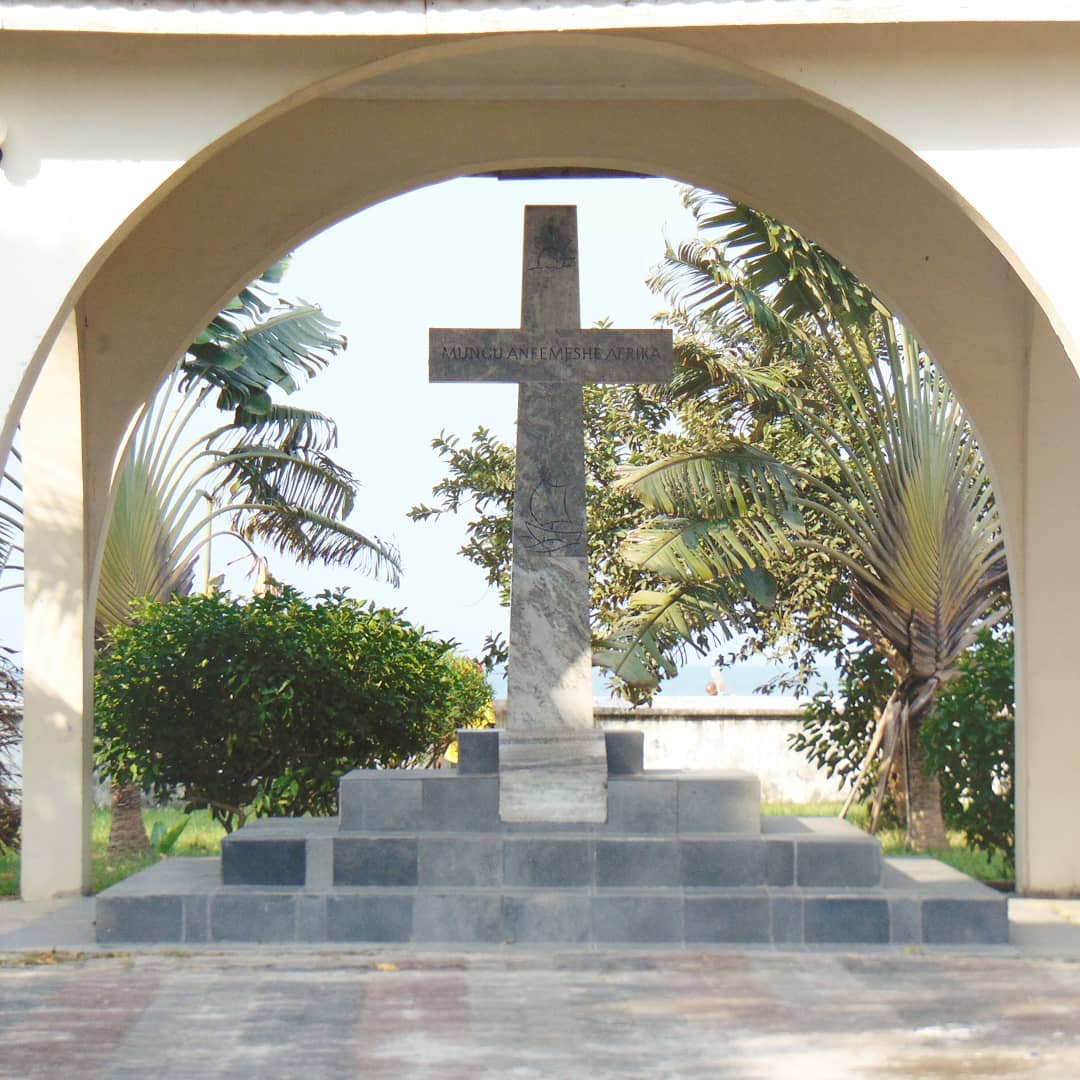
The official celebration took place on the 18th of July 1868: A Cross was built at the beach and a Baobab tree planted close to the new built Father’s House.
The work of the Spiritans in Bagamoyo The attention of the Spiritans was to evangelise and to educate.
They ransomed slaves and gave them the possibility to start a new live in the Christian Freedom Village where they were trained in different skills. But the Spiritans didn’t force the former slaves to become Christians.
Also, the fathers were interested in scientific work like history or geography.
Some of the Spiritans contributed to the promotion and the development of Kiswahili language, example Father Charles J Sacleux who published many famous works on Kiswahili.