African court steps up push to safeguard women’s rights
ARUSHA: THE African Court on Human and Peoples’ Rights has renewed its commitment to advancing women’s rights, pledging to remove barriers that prevent women from seeking justice and ending widespread suffering linked to discrimination and genderbased violence.
“We want to make all women in Africa aware that they have the right and easy access to the Court, notwithstanding the complex procedures and the financial issues that can arise,” said Mary Izobo, Advocacy Programme Manager at the Centre for the Study of Violence and Reconciliation (CSVR).
She noted that women continue to face stigmatiSation and financial constraints whenever they attempt to seek justice.
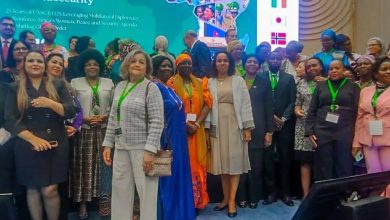
Ms Izobo was speaking during a high-level conference on enhancing women’s engagement with the Court held at its premises in Arusha.
Deputy Registrar of the African Court, Grace Kakai, said the gathering was designed to address barriers limiting women’s access to the Court.
“Among the barriers are lack of awareness and under representation in the legal profession,” she said, presenting a paper on litigating women’s rights cases.
Beyond legal access, the conference aimed to foster networking and partnerships among participants, building on the outcomes of a Judicial Seminar earlier this year under the theme Advancing Justice for Women Through Reparations.
The Arusha conference was opened by the Court’s Vice- President, Lady Justice Chafika Bensaula and drew participants from civil society, NGOs, gender equality experts and African Union organs with human rights mandates.
ALSO READ: Former SA First Lady calls for continuous struggle for women’s rights
World Bank data show that more than 42 per cent of women and girls in eastern and southern Africa experience GBV in their lifetimes.
UN Women reports that nearly 45,000 women and girls are killed annually by intimate partners or family members, averaging more than five deaths every hour. Examples across the continent highlight the devastating impact.
In Morocco, the annual cost of physical and sexual violence against women is estimated at 308 million US dollars while in Egypt, marital violence causes the loss of around 500,000 working days and costs the health sector over 14 million US dollars annually.
In Uganda, nearly half of women report experiencing online harassment.
Mr Michael Gyan Nyarko, Deputy Executive Director of the Institute for Human Rights and Development in Africa (IHRDA), said women still face discrimination, violence, and lack of political participation.
“The Judicial Seminar underscored the need to enhance awareness of the Court’s procedures and increase support for indigent applicants through the Court’s Legal Aid Scheme,” he stressed.
Mr Nyarko urged African Union member states to take responsibility, emphasising that protecting women and children’s rights is both a legal and moral obligation enshrined in AU charters