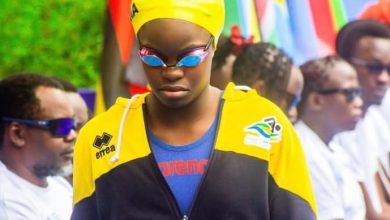
THE BITTER BLOGGERS’ BALLAD: Abigail Chams, BET and the digital meltdown of Tanzanian media

TANZANIA: There’s a peculiar kind of heartbreak that doesn’t arrive when you lose — but when your own people start dancing because you did.
That’s exactly what unfolded across some Tanzanian social media when our own Abigail Chams was nominated — yes, nominated — for a BET Award, and a gang of bitter bloggers reacted like her defeat was some personal spiritual breakthrough.
Mr. Editor, if you happen to be among those selfcertified digital prophets who quietly celebrated her “loss” like football fans popping champagne after their rival team’s elimination, then kindly unplug your ring light, roll up your extension cord, and seriously consider opening a poultry business.
Preferably egg layers — at least then your eggs might be more nourishing than your Instagram posts.
Because journalism — even in this TikTokian era where everyone with a smartphone and a Canva account claims to be a news anchor — still deserves dignity.
And if you’re burning precious data waiting to pounce on a young woman’s career to score a few bitter likes, perhaps you were never meant for journalism.
Perhaps you were meant for weather updates on WhatsApp family groups.
Let’s be honest and call it what it is — not journalism, not opinion, but betrayal.
And not the thrilling, espionage kind with tuxedos and laser beams. No. This was the cheap, pedestrian kind.
The betrayal you find in backroom gossip corners where facts are optional, and envy is the national anthem.
The kind where a 21-yearold girl represents her country on a global platform, and the only thing you manage to post is, “Told you she’s all hype.” Why, jamani, are we like this?
Abigail didn’t get that nomination because she dyed her hair pink. She didn’t trend for slapping a DJ. She didn’t fake a wedding proposal or claim to be dating a Nigerian singer just to stir engagement.
She got it because she can sing — genuinely, clearly, and without vocal autotune crutches. She writes, performs, plays all musical instruments and represents.
And yet here we are. A shameless section of the Tanzanian digital class acting like she violated the constitution by being good at what she does.
Some of these blogs — and I’m using “blog” the same way you might use “garage band” to describe someone clapping spoons on YouTube — couldn’t wait to post vague headlines when she didn’t win.
The tone wasn’t “we’re proud regardless,” but “HA! She lost. Told you she wasn’t all that.”
It was less journalism, more petty revenge from people who once got left behind by a girl who looked like Abigail.
There’s a growing disease in our media space, and it isn’t COVID. It’s envy. An obsession with watching our own fall. A gleeful hunger for failure — as long as it’s someone else’s.
When Brazil’s Ajuliacosta was announced the winner, these outlets didn’t just report it — they threw a silent party.
No pride. No context. Just snarky emojis, empty captions, and screenshots from American blogs they don’t even credit properly.
Let’s just remember what we’re talking about here. Abigail Chams became the first solo female artist from East Africa to receive a BET nomination for “Best New International Act.”
Not because of a TikTok dance. Not because of a Twitter scandal. But because she is immensely talented — vocally gifted, multilingual, committed to her craft, and pushing serious causes like mental health and girls’ empowerment.
But because she didn’t win? Suddenly she’s not worthy?
Some of these so-called journalists can’t spell UNICEF but had the nerve to mock her advocacy. They called her “overrated” while their entire blog is one big spelling error.
They called her “too polished,” like that’s a crime.
They rolled their eyes at her interviews but would sell their laptop for a selfie with Chris Brown.
These are the same people who will post every time a foreign artist blinks at an award show.
But when Abigail performs live on The Kelly Clarkson Show, they act like she went to a talent show at a neighbourhood birthday party.
If Rihanna coughs, they write think pieces. But when Abigail delivers vocals that could clean glass, they pretend they didn’t see it.
Objectivity? Please. Their brand of “journalism” is just bitterness with a lighting ring.
Thankfully, not everyone got it wrong.
There were those who saw the big picture. Who covered her nomination with pride. Who understood that this was bigger than just one name.
That it was a door opening for every girl from Tanga, Iringa, Moshi, or Kigoma who dreams of singing on international stages.
To those journalists — the ones who clapped, covered, and uplifted — we salute you.
You are the true successors of Tanzania’s golden broadcast era.
The heirs of the dignified voices of the past. You remember a time when media was about nation-building, not follower-chasing.
And this is exactly why the newly launched Journalists Accreditation Board (JAB) has arrived like water during a drought.
Established under the 2016 Media Services Act but only recently activated, this Board now has the mandate to draw clear lines: who is a journalist, and who is just a gossip distributor with a watermark.
JAB’s role is simple: raise the bar. Journalists will need real qualifications. There will be ethics, training, accountability, and — finally — consequences.
We cannot continue to have a media space where anyone with an opinion and internet bundle gets to define national narratives.
This isn’t censorship. This is hygiene. Professional, digital hygiene.
If your whole platform consists of stealing memes, writing unverified stories, and tagging everything “BREAKING,” then the only thing breaking is our patience.
BREAKING what? My trust? My attention span? The Media Act? Let’s not pretend the problem is small.
The rise of fake news, misinformation, and malicious content isn’t just annoying — it’s dangerous. It erodes excellence. It rewards mediocrity. It poisons patriotism.
And it turns public discourse into a war of who-canhate-most.
So yes, we welcome the Board. And yes, we want standards. And yes — yes! — we need media houses and training institutions to work together again to build real journalism, not just content farming.
And now, back to our girl, Abigail.
If by some stroke of divine WiFi, you ever stumble upon this piece — maybe while waiting for your next international gig — please know this: we see you.
The real Tanzania sees you. The Tanzania that values excellence. That values multilingual music. That values poise without scandal.
That knows what it means when a 21-year-old girl from East Africa is nominated at one of the world’s most competitive music award shows.
You didn’t take home the trophy this time. But you brought home something bigger: national pride, representation, and a vision of what’s possible.
We see your talent. Your voice. Your advocacy. Your elegance. We see the studio nights, the stage lights, and the inner strength.
We see the courage it takes to speak about mental health in a society that still says, “Just pray it away.”
We see the fire behind your calm.
And to the bloggers who tried to throw shade — don’t worry.
You’ll see her again next year. On a bigger stage. Nominated. Booked. Global. And still too classy to respond.
Because that’s the thing about pioneers — they don’t clap back. They clap forward.
So go on, Abigail Chams. Let them whisper. You will sing. Let them scoff. You will shine. Let them tweet their bitterness. You will tour the world.
And when history is written — because it will be — it won’t mention those passiveaggressive posts or shady captions.
It’ll remember a young Tanzanian woman who walked onto the world stage with two languages, one flag, zero scandals, and a song that carried all of us with her.
One day, we’ll sit with our grandkids under a mango tree and say: “There once was a girl named Abigail. In 2025, she made Tanzania proud on the BET stage.”
Then we’ll hit play on her latest album — and smile.