Ink That Binds a Nation: Answering President Samia’s call for unity and peace.
“If I have the belief that I can do it, I shall surely acquire the capacity to do it, even if I may not have it, at the beginning” Mahatma Gandhi 1962.
In any democracy, sometimes criticism, and anger can be important, and people should be able to challenge, what they do not approve of, people must be able to get angry, but direct their criticism and in a focused way. “A civic dialogue, no matter how critical, but not violence”. Recently, the president has called upon professional journalists and writers, to use their ink to bind the nation.
“Gandhi once said, ‘If I have the belief that I can do it, I shall surely acquire the capacity to do it…’ words that echo in every leader who dares to shape history. Today, President Samia Suluhu Hassan embodies that belief, guiding Tanzania through a transformative era of peace and national dialogue. Her call to writers, lawyers, and journalists is not just a plea for unity it is a presidential invitation to co-author the future. I write in answer to that call, and in doing so, I believe that this writing will remind every Tanzanian, particularly the learned, to keep our country peaceful with their words. a call to skill rooted in courage, clarity, and a shared destiny for all.
Tanzanians are one: Honoring the national Anthem with Ink that binds: Tanzanians are one, regardless of our political differences, when a CCM person loses a loved one, it is CHADEMA friends that show up to the funeral, and when CHADEMA person loses a loved one, CCM friends show up to the funeral, when a lawyer who believes in CCM leadership wants to have professional legal counsel, he can contact a learned Esq who practices his law and believes in CDM political party, and its manifesto, we borrow money from each other, we attend each other’s nuptials, and we celebrate football in our Yanga-ness and Simba-ness.
We can be polemic against a lot of things, but all glory for ink that binds, begins with the solemn and sacred words in our national anthem, “Hekima, Umoja na Amani” Swahili for, Wisdom Unity, and peace. The survival of our country hangs in the best practice of these words, in the practical expression of the meaning these words and constitutional fulfillment of universal suffrage as enshrined in our constitution.
We should be aware of the manifestations of fake news and political Hydras: Mark twain once stated “Citizenship is what makes a Republic, monarchies can get along without it. What keeps a Republic on its legs is good citizenship” To respond to presidential call, with ink that binds, this piece is to remind ourselves, Tanzania is not only a Republic, but a United Republic. Today we experience fear, and disappearing of persons, abductions and attacks, under all suspicion, and speculation it is easy to conclude on conspiracy theories. However, any political system it is easy to be confused by political hydra. A political system like a hydra, has one body, however as it snakes toward the head, it splints into more than one head, each head with its own agenda, at the center is a golden head. In Greek mythology, a Hydra is a legendary creature, most famously known as the Lernaean Hydra.
Legend has it this creature had many heads, which worked independently to chose whatever it needs, and should one head be crushed due to its problems, it rises up and grows again. The realm of politics comes with many hydras. And not all, work to support the primus of leadership, some do actions which if we are not careful, we end up blaming everything on the leaders, and our government.
ALSO READ: Tanzania ascends: President Samia’s transformative diplomacy in a multipolar world
In the shadows of every unanswered public criticism, a new head of suspicion grows. Like the mythical Hydra, distrust multiplies when silence is the only response. Each denial, each deflection, does not kill the fear—it feeds it. If we want peace, we must stop swinging blindly and start burning the roots. Transparency, not blame, is the flame we need. And such transparency should include understanding Tanzania is ours and ours to keep.
Today, as conflict metastasizes across regions, as social cohesion unravels even within the world’s oldest democracies, and as polarization reaches the point of civic paralysis, a quiet call has risen from East Africa—a call to unity, not through force, but through the written word. From the Presidential address of President Samia Suluhu Hassan, Tanzania’s first woman Head of State, came not a decree, but a request: write, speak, and advocate for national unity.
This is not merely a patriotic gesture. It is a civil duty. In a world where the idea of democracy often becomes hostage to populism, procedural manipulation, and digital demagoguery, this moment in Tanzanian political life stands out—not just for its symbolism, but for its structural weight. President Samia’s quiet vision is not being conducted in headlines or hashtags, but in laws, reforms, and acts of restraint. In a political age defined by overreach, she is becoming a rare figure: a president expanding rights while limiting her own power.
A Constitutional Turnaround: From Tight Fists to Open Hands with 4R Vision.
President Samia took office in 2021 under the most delicate of national circumstances: in the shadow of a pandemic, following the sudden passing of her predecessor, and inheriting a political climate burdened by centralization and civic fear. What could have been a moment to consolidate executive power was instead met with constitutional de-escalation.
Within months, she began reopening democratic space that had been functionally closed. Political rallies—once restricted—were restored, advocating for Reforms, Resilience, Reconciliation and rebuilding, simply put, 4R. Opposition leaders returned to the public square with dignity. Freedom of association and expression were reaffirmed, not only in speeches but in policy. Civil society, long fatigued by repression, was invited back to the table.
By 2024, observers from the African Union and diplomatic communities, including Western partners, noted something extraordinary: Tanzania had more press freedom than it had in 2020. In an age where press freedoms are often traded away in the name of “stability,” this was not just news. It was a blueprint.
And still, she did not claim the spotlight. Samia’s genius is quiet constitutionalism—the soft but unshakable reordering of a political structure from the inside out, led not by populist flair, but by fidelity to the idea of the republic.
The President Who Chose Restraint: In many postcolonial contexts, particularly in Africa, the executive office often becomes a sanctum of unchecked power. Presidents rule through emergency declarations, draconian security bills, and vast patronage networks. Samia Suluhu Hassan chose another path. She has been careful not to extend presidential powers, avoiding the temptation of legal shortcuts or politically expedient strongman tactics.
What distinguishes Samia is not simply what she has done, but what she has refused to do. She has not militarized dissent. She has not suppressed civic movements. She has remained connected to ordinary citizens, participating in civic duties, presiding over community dialogues, and offering what has become rare among leaders: the humility to listen. In rural villages and urban town halls, she has become known not just as “Madam President,” but as a public servant in the truest constitutional sense.
This form of “deliberative presidency” rooted in restraint, inclusion, and legal tradition—is a model worthy of export. Harvard professors, Columbia constitutionalists, and Brookings scholars should someday study her administration not as anomaly, but as counter-argument to the cynical claim that African democracies always end up decaying into division.
The Power of the Pen, the Promise of the United Republic:
When President Samia called on Tanzanians to use their pens in defense of unity, she was issuing more than a metaphor. She was offering a political philosophy. In doing so, she returned us to the root of all free societies: the written word.
Constitutions are written. Laws are written. Legacies and accomplishments are remembered because someone wrote them down. In a digital age of soundbites, the pen—literal or symbolic—still matters. It carries the burden of memory, of truth, of accountability. And when the state urges its people to speak, write, and engage not in fear, but in civic love that state has become something rare indeed: A democratic culture, not just a democratic procedure. Unity is not a soft goal. It is not the absence of criticism or disagreement. Rather, it is the architecture in which disagreement does not destroy a nation, but strengthens it. Samia’s version of unity is not assimilation. It is orchestration—a national composition with discordant but dignified instruments.
Tanzania as Global Microcosm:
To the international reader in South Africa, Moscow, Washington, Beijing, Tokyo, or Ottawa, this may seem a local story. It is not. In fact, Tanzania is becoming a mirror to the world—reflecting both the fragility and promise of constitutionalism. While global politics reels from hyper-partisanship and institutional erosion, Tanzania is expanding rights from the inside out., Tanzania is rediscovering harmony through civic engagement. To put it simply: Tanzania today is doing what many democracies claim to do, but often many nations fail to practice build a peaceful, pluralist state without weaponizing division.
The World Needs Constitutional Poets, Not Just Power Brokers:
Samia’s leadership is not just administrative; it is symbolic. She stands at the crossroads of gender, governance, and global diplomacy. The first female head of state in East Africa, governing within a historically masculine political framework, has not broken the system but gracefully reshaped it. She has not fought for dominance. She has shown how a constitution can lead a country—when the leader follows the law. Her legacy—still unfolding—may ultimately rest on a truth that escapes many statesmen: That the most enduring power is not in declaring who is right, but in creating space where all can belong. That is not weakness. It is constitutional charisma.
A Republic Reborn in Ink for Reconciliation, resilience, reform, and rebuilding:
Tanzania today stands on the edge of something profound not because it has reached a full potential of a democracy, but it continues to evolve, and here we reconcile, rebuild, reform and stand resilient for the sake of our peace and our nation.
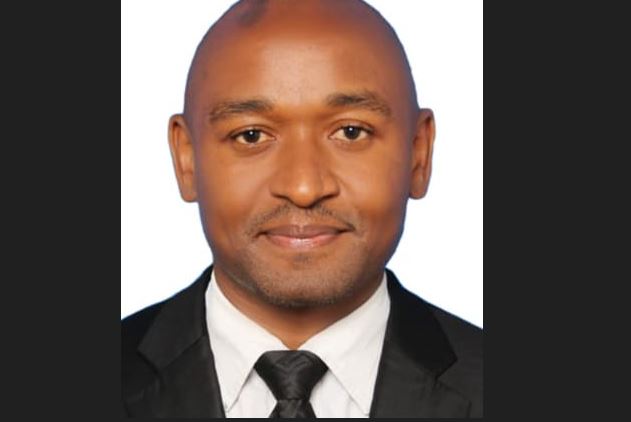
Novatus Igosha is an Advocate of the High court of Tanzania and contributor on the Daily News: Mobile: +255747130688 Email: norvum728@gmail.com