

GTBank Tanzania posts loss as expenses soar
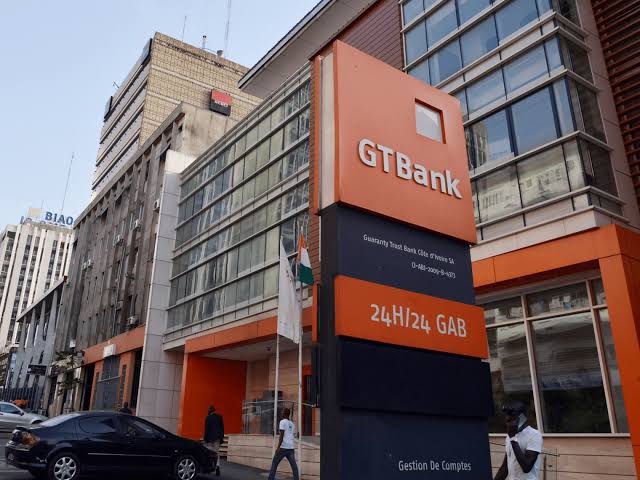
DAR ES SALAAM: Guaranty Trust Bank (Tanzania) Ltd., a unit of Nigeria’s Guaranty Trust Holding Co., saw its bottom-line plunge into the red in 2024 as a sharp spike in operating costs overwhelmed gains in its core lending and fee-based businesses, according to the firm’s audited financial statement.
The Dar es Salaam-based lender reported a net loss of 1.91bn/-, a stark reversal from the prior year’s modest 10m/- profit. The results highlight the challenges facing some financial institutions in the East African nation despite a generally improving economic outlook.
While it managed to increase its net interest income by a robust 20.87 per cent to 4.14bn/-, fueled by higher interest income and reduced interest expenses, and also boosted its non-interest income by 21.36 per cent to 3.80bn/-, these revenue drivers were eclipsed by a dramatic 55.79 per cent surge in non-interest expenses, which ballooned to 9.58bn/-.
A detailed examination of the expense ledger reveals significant increases in key areas. “Fees and Commissions” soared to 1.80bn/-, more than tripling the previous year’s figure of 590m/-.
“Other Operating Expenses” also saw a substantial jump, climbing to 4.86bn/- from 2.93bn/-. The specifics behind these sharp increases were not immediately apparent in the financial statement.
The impact on profitability metrics was significant. The bank’s Return on Average Total Assets (ROAA), a key measure of how effectively a company uses its assets to generate profit, plummeted to -2.67 per cent from -0.01 per cent.
Similarly, its Return on Average Shareholders’ Funds (ROAE), indicating the return generated on shareholders’ investments, tumbled to -10.89 per cent from -0.05 per cent.
The ratio of non-interest expense to gross income climbed alarmingly to 109.64 per cent, signifying that operating costs now exceed the bank’s total income.
Adding to the headwinds, GTBank Tanzania experienced a contraction in its deposit base, which shrank by 7.54 per cent, and its total assets declined by 4.04 per cent year-over-year.
This negative growth in core banking resources could limit the bank’s capacity for future lending and expansion in a competitive market.
There were some limited bright spots in the report.
The bank’s net interest margin, a measure of the profitability of its lending activities, remained relatively stable at 7.43 per cent.
Additionally, the proportion of non-performing loans to its total loan portfolio edged up only slightly to 3.76 per cent, suggesting that asset quality, while slightly weaker, has not drastically deteriorated.




825767 41501This really is a excellent subject to speak about. Generally when I locate stuff like this I stumble it. This write-up probably wont do properly with that crowd. I will likely be certain to submit something else though. 470686