Explore earthquake risks before fiscal emergencies
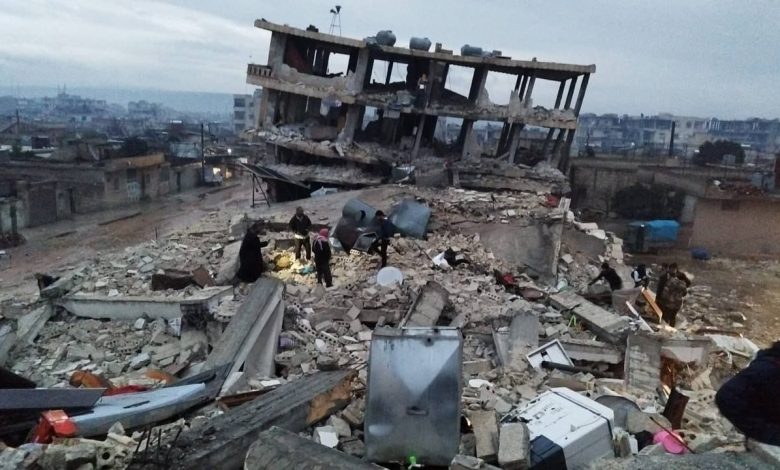
TANZANIA: THE earthquake many Tanzanians recall as occurring on 9 or 10 November was recorded at 1:07 am Tanzania time on 9 November: A magnitude 4.1 event, 10 kilometres deep, near Masumbwe in the Lake Victoria region. It followed a magnitude 5.1 earthquake near Masumbwe on November 5. A claims-led article would have too little verified damage data to work with. The stronger financial story is what a low-loss event exposes: Tanzania lacks a transparent, priced system for carrying earthquake risk before a larger shock becomes a household, banking and public-finance problem.
This is not alarmism. The 9 November aftershock was a reminder, not a fiscal crisis. Its modest magnitude does not support claims of widespread damage, nor does it prove a bigger earthquake is imminent. But earthquakes are balance-sheet events. The cost eventually lands on uninsured households, firms losing working capital, banks holding weakened collateral, insurers paying claims and Government budgets diverted from investment into relief and reconstruction.
Tanzania has already seen the expensive version of this story. The September 2016 Kagera earthquake, measured at magnitude 5.9, killed 17 people and injured 440. It destroyed more than 2,500 homes, partly damaged more than 14,500 and affected over 1,700 government buildings. About 117,700 people lost their homes. The African Development Bank put immediate shelter needs at about 20 million US dollars and education restoration at roughly 30 million US dollars. These figures are not a forecast for Geita; they show how quickly a moderate quake becomes a financing event.
The best financial-column angle, therefore, is not “How much did this week’s quake cost?” It is “Who would pay if the next one cost more?” That question can be answered with current data and it points to a clear protection gap.
Tanzania’s insurance market is larger and better capitalised than it was a few years ago, but size is not earthquake readiness. The Tanzania Insurance Regulatory Authority reported gross written premiums of 2.55tri/- in 2025, up 68.4 per cent from 1.52tri/- in 2024. General insurance accounted for 1.15tri/- and penetration reached 2.11 per cent of GDP. The industry reported 26.8 million people covered, but that includes health cover and does not show how many homes, small businesses, warehouses, mines, schools or rental buildings carry earthquake protection.
That distinction matters. An insurance market can post strong premium growth while exposed physical assets remain uninsured. A cracked shop wall, collapsed stock room or broken machine can turn a geological event into a credit default. For a bank, that becomes a collateral and repayment problem; for a local authority, pressure to restore markets, roads, clinics and schools.
The financial sector’s present buffer is encouraging but should not be overstated. TIRA reports that general insurers held 1.80tri/- in assets in 2025 and had a solvency ratio of 39.6 per cent, above the 25 per cent regulatory minimum. That is an important foundation. Yet aggregate assets and solvency are not a catastrophe-loss estimate. What matters in a concentrated disaster is how much exposure insurers have accumulated in the same location, how much is protected by reinsurance, how quickly reinsurance recoveries would arrive, and whether policy wording includes earthquake cover. Those are the figures investors, lenders and policyholders need to see.
This is where Tanzania can turn a warning into reform. First, TIRA should publish an annual catastrophe-risk dashboard for general insurance. It need not reveal company portfolios. It should show aggregate probable maximum loss, regional property concentration, reinsurance protection, earthquake exclusions and catastrophe-claim settlement times. That would let regulators spot accumulation risk and businesses ask whether their policies cover the hazard.
Second, lenders should treat seismic risk as a credit-quality variable in clearly identified zones. New commercial buildings, hotels, warehouses, fuel depots and financed housing developments need site-specific ground assessment and appropriately designed structural details, particularly where a collapse would disrupt jobs or essential services. This is not a call for banks to stop lending in affected regions. It is a call to price risk properly: Use stronger construction standards, staged construction inspections and insurance requirements where warranted. A slightly higher upfront construction cost can be cheaper than writing off a building, a loan book and a local tax base after one event.
Third, the Government should connect hazard science directly to finance. Tanzania Geological Survey’s programme covering monitoring stations in Arusha, Dodoma, Geita and Mbeya, plus updated epicentre mapping, should produce information usable by planners, insurers and banks, not only post-event reports. Open, standardised hazard layers would improve land-use, infrastructure design, underwriting and disaster-cover pricing.
ALSO READ: Powerful 7.7-magnitude earthquake kills at least 38 in Indonesia
Public finance is part of the answer, but it cannot be the whole answer. In 2025, the World Bank approved 300 million US dollars in financing to strengthen Tanzania’s disaster preparedness and response, including 200 million US dollars through a Catastrophe Deferred Drawdown Option. This is valuable contingent financing: It can help the government respond without immediately cutting development spending or scrambling for expensive emergency borrowing. But public contingent credit should complement, not replace insurance, resilient construction, local contingency reserves and clear risk transfer for public assets.
Fourth, disaster finance needs a public-asset strategy. Central and local governments should identify critical schools, clinics, bridges and water systems, estimate their replacement values, then decide whether each risk should be reduced, retained in a budget reserve, insured or transferred through a regional or reinsurance solution. That choice is more credible when made asset by asset, with prices and funding sources disclosed, than when it is made in a disaster emergency.
The data-led conclusion is straightforward. Tanzania should measure financial exposure before the next event does it by force. Within the next budget cycle, it can inventory high-value public assets in seismic zones, require catastrophe-risk disclosure from insurers, map mortgage and commercial-property exposure and pilot parametric cover for low-income households and small firms. These products pay when a pre-agreed physical trigger, such as local ground shaking, is met; they can be fast but need careful design to limit mismatch with real loss.
The 9 November quake may leave no visible macroeconomic mark. That is precisely why it is useful. The best time to build a financial shock absorber is when no one is yet demanding that it pay out. Tanzania’s next resilience test will not be whether it can count cracks after an earthquake. It will be whether it had already counted the risk.