

Japan-backed project strengthens climate resilience and disaster preparedness in Kigoma
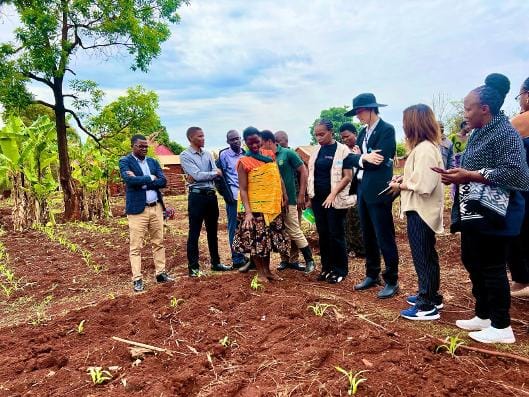
Women farmers in Kigoma Region are increasingly adopting climate-smart agricultural practices as local authorities strengthen disaster preparedness and advance measures to ensure that women’s experiences, needs and priorities are incorporated into disaster risk reduction and climate resilience planning.
The developments emerged during a joint field visit by representatives of the Government of Japan and UN Women to Kigoma Region on November 11 and 12 to assess progress under an initiative aimed at strengthening gender-responsive disaster preparedness and climate resilience.
Implemented by UN Women in partnership with the Government of Tanzania and Kigoma regional authorities, with funding from Japan, the project seeks to improve communities’ capacity to anticipate, prepare for and respond to climate-related disasters. It also aims to ensure that women participate meaningfully in decisions affecting their livelihoods, safety and wellbeing.
The initiative recognises that climate-related disasters do not affect everyone equally. Women, particularly those whose livelihoods depend on agriculture, often face additional challenges because of limited access to resources, information, economic opportunities and decision-making platforms.
Lilian Mwamdanga, Programme Specialist for Women’s Economic Empowerment at UN Women Tanzania, said addressing these inequalities was essential to strengthening household livelihoods and building communities capable of withstanding and recovering from disasters.
She noted that women play an important role in helping families and communities prepare for emergencies and recover from their consequences. However, their contribution could be limited when they lack access to information, resources and opportunities to influence decisions.
“Addressing the barriers that limit their access to information, resources and decision-making is therefore not only a gender equality issue, but also an important investment in community resilience,” she said.
During the visit, the delegation travelled to Kasulu District, where it engaged women farmers, local leaders and project implementing partners to assess how interventions were being translated into practical activities. Discussions centred on progress, emerging challenges and the support required to sustain resilience-building initiatives amid increasingly unpredictable weather conditions.
One of the project’s major interventions is improving agricultural livelihoods through climate-resilient farming methods. This is particularly important in communities where agriculture remains a primary source of household income and food.
Through collaboration with the Ministry of Agriculture Training Institute (MATI) Mubondo, more than 700 farmers from 20 wards have been identified and supported through training programmes. The training covers climate-smart agriculture, soil and water conservation, post-harvest management and community disaster preparedness.
Women constitute a significant proportion of the participating farmers, reflecting the importance of their involvement in agricultural development and efforts to protect rural livelihoods against climate-related shocks.
Beyond training, the project has supplied participating farmers with seeds and other agricultural inputs to help them apply the knowledge acquired during the current planting season. This practical support is intended to bridge the gap between agricultural training and actual improvements in farming methods.
At demonstration plots and family farms in Msambara Ward, the delegation observed farmers applying conservation techniques as they prepared for the challenges associated with changing weather patterns. The practices are intended to improve soil and water management while strengthening agricultural production under increasingly uncertain climatic conditions.
The importance of such interventions is particularly evident among households that have experienced substantial agricultural losses following extreme weather events.
One woman farmer, who lost her entire harvest during last year’s floods, has returned to farming after receiving training and agricultural inputs through the project. Her experience illustrates how climate-related disasters can undermine household food security and income, while also demonstrating the importance of providing affected farmers with practical support to resume production.
Across Kigoma, floods, droughts and changing rainfall patterns continue to threaten agricultural activities. Without appropriate adaptation measures, these conditions can deepen household vulnerability, particularly among families that depend on seasonal farming.
However, agricultural support represents only one aspect of the initiative. Its broader objective is to strengthen communities’ ability to anticipate and manage disasters before they occur, rather than concentrating efforts solely on responding after damage has been experienced.
To achieve this, the project is supporting local disaster management committees and promoting women’s participation in community planning and decision-making. These committees play an important role in coordinating preparedness activities, identifying potential hazards and supporting responses when emergencies arise.
Women’s participation is particularly important because their experiences during disasters may differ from those of men. Limited access to resources, information and decision-making opportunities can increase their vulnerability during emergencies.
Involving women in local disaster planning therefore helps ensure that preparedness measures reflect the circumstances of the entire community. It can also improve early warning communication, evacuation arrangements and recovery interventions by taking into account the different needs of women, men, girls and boys.
Another important development is the preparation of a draft Gender-Responsive Disaster Risk Reduction Framework for Kigoma Region. The proposed framework is intended to provide guidance on incorporating gender equality into disaster preparedness, response and recovery across the region’s eight councils.
Its development involved consultations with communities, government institutions and technical stakeholders to ensure that the proposed measures respond to local challenges and reflect the experiences of people directly affected by disasters.
The framework identifies seven priority areas: disaster risk data, governance, women’s leadership, financing, early warning systems, economic recovery and protection against gender-based violence.
Under these priorities, the framework seeks to improve the availability and use of disaster-related information, strengthen women’s participation in leadership and decision-making, and promote early warning systems that reach different groups within communities.
It also emphasises the need for gender-responsive financing, enabling women to access resources required to protect their livelihoods and recover economically after disasters. Integrating the prevention of and response to gender-based violence into disaster planning is another priority, recognising that emergencies can expose women and girls to additional protection risks.
The framework further seeks to improve accountability and coordination among institutions responsible for disaster risk management, ensuring that gender considerations are incorporated into policies, planning and implementation rather than treated as separate concerns.
During a validation exercise held in Kigoma earlier this month, stakeholders reviewed and refined the draft to ensure that its provisions reflected local realities and addressed challenges identified through community consultations.
Once adopted, the framework is expected to guide more coordinated and inclusive disaster risk reduction interventions across the region, providing local authorities and other stakeholders with a common basis for integrating gender considerations into their work.
According to Mwamdanga, progress observed during the field visit demonstrates how investments in gender-responsive preparedness can translate into practical improvements in community resilience.
She said improved livelihoods, more inclusive disaster planning and stronger local capacities were important foundations for ensuring that communities could withstand and recover from climate-related shocks.
She also described the proposed framework as an important step towards sustaining these interventions and incorporating gender-responsive disaster risk reduction into regional systems and institutional arrangements.
The Kigoma initiative is part of a broader regional programme involving Tanzania, Rwanda and Malawi. The programme seeks to advance gender-responsive approaches to disaster risk reduction and climate resilience through capacity-building, knowledge-sharing and stronger women’s leadership.
The participation of the three countries also provides opportunities to exchange experiences and identify approaches that can improve disaster preparedness while addressing inequalities that expose women and other vulnerable groups to greater risks.
For communities in Kasulu and elsewhere in Kigoma, the initiative demonstrates the importance of connecting disaster preparedness with everyday economic activities. Strengthening agricultural livelihoods, improving local disaster management and ensuring women’s participation in planning are complementary interventions that can reduce vulnerability.
By and large, building climate-resilient communities requires more than responding to emergencies. It calls for investment in livelihoods, reliable information, inclusive institutions and preparedness systems that recognise the different circumstances of those affected.
By placing women’s experiences and leadership within these efforts, Kigoma is advancing an approach in which women are not merely recipients of disaster assistance but active participants in determining how their communities prepare for, respond to and recover from climate-related disasters.


“NEW88 – Nền tảng giải trí trực tuyến với nhiều trò chơi hấp dẫn, đa dạng, số 1 hiện nay.
THÔNG TIN LIÊN HỆ NEW88
– Thương hiệu: NEW88
– Website: https://k1storek.za.com
– Địa chỉ: 1319 Đ. Phan Văn Trị, Gò Vấp, Hồ Chí Minh, Việt Nam.
– Điện thoại: 098.6666.888
– Email: cskh@new88.com“
“NEW88 – Nền tảng giải trí trực tuyến với nhiều trò chơi hấp dẫn, đa dạng, số 1 hiện nay.
THÔNG TIN LIÊN HỆ NEW88
– Thương hiệu: NEW88
– Website: https://chefschoicecuisine.in.net
– Địa chỉ: 1319 Đ. Phan Văn Trị, Gò Vấp, Hồ Chí Minh, Việt Nam.
– Điện thoại: 098.6666.888
– Email: cskh@new88.com“
“NEW88 – Nền tảng giải trí trực tuyến với nhiều trò chơi hấp dẫn, đa dạng, số 1 hiện nay.
THÔNG TIN LIÊN HỆ NEW88
– Thương hiệu: NEW88
– Website: https://chennaihighspeedbroadband.in.net/
– Địa chỉ: 1319 Đ. Phan Văn Trị, Gò Vấp, Hồ Chí Minh, Việt Nam.
– Điện thoại: 098.6666.888
– Email: cskh@new88.com“