African Court Colloquium traces its 20-year journey in leveraging the continent’s justice
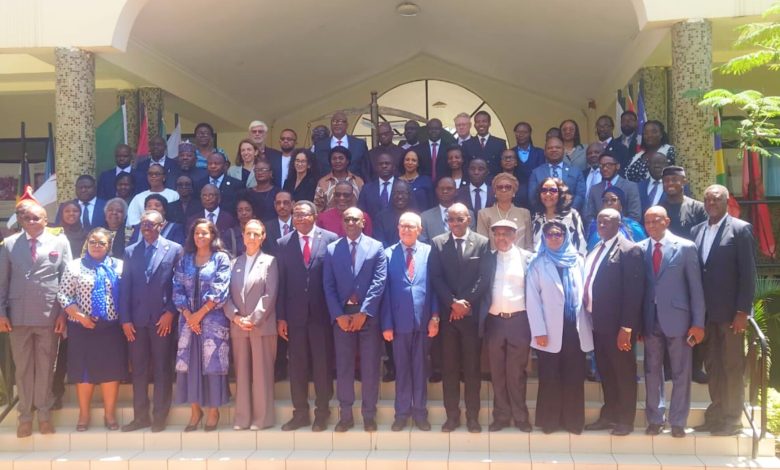
ARUSHA: THE African Court on Human and Peoples’ Rights held its 20th Anniversary Colloquium at its seat in Arusha, Tanzania, to examine the Pan-African court’s contribution to human rights protection over the past twenty years and consider priorities for its third decade.
“There have been achievements, albeit small but suffice to say they have made a big impact on the continent,” said Justice Imani Daud Aboud, one of the institution’s Judges and the former President of the African Court.
The Colloquium, held under the theme “Reflecting on the Past, Assessing the Present and Reimagining the Future of Human Rights Protection in Africa” is part of the Court’s 20th Anniversary celebrations and took place in a hybrid format.
The event included current and former Judges of the Court, current and former Commissioners of the African Commission on Human and Peoples’ Rights, representatives of the African Union and its organs, and judges from regional and international courts.
Academics, legal practitioners, civil society representatives, representatives from national human rights institutions, national focal points, publishers and development partners.
The Colloquium revisited defining moments in the Court’s 20 -year journey and examined how its landmark judgments and advisory opinions have shaped human rights law, influenced national laws and strengthened accountability across Africa.
Discussions focused on the challenges the Court must overcome in its third decade including expanding ratification of its founding Protocol, widening access for individuals and non-governmental organisations, securing implementation of its judgments, and strengthening its resources and public visibility.
The programme further examined the role of legal scholarship, publishing and law reporting in making the Court’s decisions more accessible and widely understood. Participants will consider emerging human rights issues and the priorities that should guide the Court’s future work.
The Colloquium is expected to produce recommendations to strengthen the Court’s effectiveness, accessibility and impact, as well as the wider African human rights system.
Its discussions will also contribute to a report of proceedings and a commemorative publication on twenty years of the Court’s work.
Meanwhile three judicial institutions operating on the African continent previously gathered in Tanzania for their third tripartite dialogue, held in the Northern Tanzanian city of Arusha.
The African Court on Human and Peoples Rights (AfCHPR), the East African Court of Justice (EACJ), and the Community Court of Justice, ECOWAS (CCJ) will convene for their 3rd Tripartite Judicial Dialogue, from 9-11 November 2026, in Arusha, United Republic of Tanzania.
The 3rd Tripartite Judicial Dialogue builds on the 1st and 2nd Tripartite Judicial Dialogues which aimed at enhancing cooperation among Africa’s Continental and Regional Courts.
The 1st Tripartite Judicial dialogue took place from 27-29 June, 2022, in Zanzibar, United Republic of Tanzania during which the three Courts agreed to hold such Dialogues every two years.
The 2nd Dialogue was subsequently held from 18 to 20 September 2024 in Arusha, United Republic of Tanzania.
The 3rd Tripartite Judicial Dialogue will be held under the theme “Strengthening Institutional Cooperation in Africa”, marking the continuation of collaboration among the three Courts through the bilateral Memoranda of Understanding (MoUs) and commitments made during the previous Dialogues.
Under these agreements, the three Courts committed to holding regular consultative forums to discuss common challenges, strengthen cooperation and promote the continuous exchange of information and expertise.
ALSO READ: African court clears 29 human rights cases
The 3rd Tripartite Judicial Dialogue provides an opportunity for the Courts to assess progress made in implementing recommendations from the previous Dialogues, address challenges affecting the implementation of judicial decisions and identify practical measures to strengthen institutional cooperation.
It serves as a platform for exchanging best practices and experiences in justice delivery, including the implementation of judicial decisions, access to jurisprudence and institutional cooperation.
This year’s Dialogue will bring together Judges and Registry staff from the three Courts, representatives of partner institutions, including United Nations human rights treaty bodies, and other stakeholders to exchange experiences, discuss common challenges and explore practical solutions to strengthen justice delivery across Africa.
The Dialogue will cover a wide range of topics, including the implementation and monitoring of judicial decisions, institutional cooperation, environmental rights and climate justice, and the future development of the African Jurisprudence DataBase (AJUDATA), aimed at improving access to African jurisprudence and legal resources.
The events are expected to eventually produce practical recommendations to strengthen cooperation among the three Courts, improve the implementation of judicial decisions and identify opportunities for future joint initiatives.
The Dialogues take place as the African Court marks its 20th anniversary and the East African Court of Justice celebrates its 25th anniversary. Immediately following the Dialogue, the two Courts will hold their respective commemorative activities, a colloquium and a ceremony, back-to-back in Arusha, Tanzania, to mark these milestones.
The events were organised jointly by the three Courts in collaboration with partners, including the Raoul Wallenberg Institute for Human Rights and Humanitarian Lawf (RWI), the Swedish International Development Cooperation Agency (Sida), Konrad-Adenauer-Stiftung (KAS), the Office of the United Nations High Commissioner for Human Rights (OHCHR) and the United Nations Development Programme (UNDP).