How Zanzibar confronts rising seas and drug abuse
ZANZIBAR: ZANZIBAR is facing two increasingly pressing challenges that threaten the wellbeing of its communities and future development: rising seawater that is swallowing land and damaging homes, and drug abuse among young people, which is placing growing demands on rehabilitation and support services.
The two concerns emerged prominently during a four-day inspection tour by Zanzibar First Vice-President Othman Masoud Othman from November 2 to 5, 2026, when he visited government institutions, rehabilitation facilities, environmentally affected communities and innovative waste-recycling projects in Unguja.
From the coastal villages of Uroa, Chwaka and Fungurefu to the drug treatment centre at Kidongochekundu, the tour brought into focus the need for coordinated government intervention, stronger community participation and new approaches to tackling problems that cannot be addressed by public institutions alone.
At the heart of Othman’s message was a call for collective responsibility, urging government institutions, professionals, communities, religious leaders, investors and young people to play their part in protecting society and the environment.
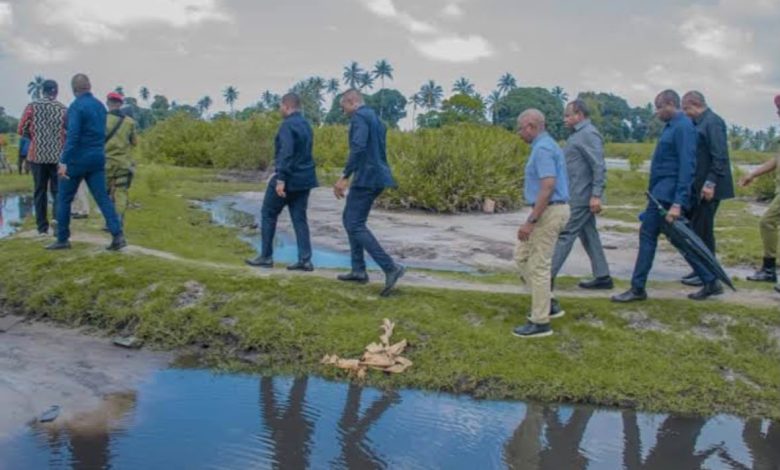
The scale of the environmental problem was particularly visible in Fungurefu, in northern Unguja, where seawater has entered land and affected community activities. Othman said an assessment by experts showed that the number of areas affected by seawater intrusion in Unguja and Pemba had increased from 125 to 148.
He attributed the problem to a combination of human activities and global climate change, citing uncontrolled construction, farming practices, cutting of mangroves and destruction of coral reefs.
Rising global temperatures and melting ice were also contributing to sealevel rise, while warmer waters threatened marine ecosystems and important marine species.
“Zanzibar is facing a serious challenge from the effects of climate change, and the government is making efforts to take appropriate measures to reduce the impact on communities,” he said during visits to Chwaka and Uroa, where seawater has been entering residential areas and disrupting social and economic activities.
For Uroa residents, the government has promised a practical intervention through construction of a sea wall to prevent seawater from reaching homes. Director of Environment Farhat Mbarouk said the area experiences flooding twice annually and that, with World Bank support, a 500-metre wall would be constructed in two phases.
Othman said the government would provide funds for the project and was considering a special plan to address the problem across all 148 affected areas in Unguja and Pemba.
However, he emphasised that infrastructure alone would not solve the problem. Minister of State in the First Vice-President’s Office, Ms Anna Athanas Paul, urged residents to cooperate with the government by planting and protecting trees, particularly mangroves, and avoiding destruction of coral reefs.
Othman also directed the Environmental Management Authority and the Ministry of Blue Economy to develop a coordinated strategy, ensuring that appropriate policies, technologies and guidelines are in place for investors operating in environmentally vulnerable areas.
He said the government was also considering sea reclamation as a possible way of creating additional land for community activities, an approach adopted in other countries. Beyond environmental protection, the tour highlighted opportunities to turn waste into economic resources.
ALSO READ: Tanzania warns its youth against excessive consumption of alcohol, drug abuse
At Mndo, Othman visited Chako, a factory producing various items from discarded glass bottles and plastic waste collected from hotels. Its owner, Suleiman Ali Mohammed, said the factory produces glassware and other products, with women accounting for 65 per cent of its workforce.
He appealed for technical support to modernise production and increase output. At Matemwe, he visited Mungu Tuafiki cooperative, which produces organic fertiliser from food leftovers, palm leaves and cattle manure collected from hotels.
Its chief executive, Suluhu Kidombo Amour, said experts from mainland Tanzania had assessed the fertiliser and confirmed its high quality, but the cooperative needed greater production capacity and access to wider markets.
Othman said such initiatives deserved government support through favourable policies, training and skills development, particularly because they could create employment for young people while improving environmental conservation.
The challenge of drug dependence was another major focus. At Kidongochekundu Hospital, Othman urged professionals responsible for treatment and rehabilitation to develop additional approaches to help people affected by drug use.
He described them as an important part of the national workforce who should not be abandoned, insisting that institutions, professionals and society must work together to help them recover. “Not everyone who has become involved in drug use has lost hope or direction,” he said.
He also questioned whether the existing arrangements for distributing methadone were achieving their intended purpose, advising relevant institutions to consider a new approach. He expressed concern that the current system appeared to encourage some people to seek the medication without a genuine intention of overcoming drug dependence.
Dr Makame Haji Pandu, the mental health doctor overseeing treatment at Kidongochekundu, said the methadone programme had helped more than 350 people recover from addiction. However, he noted that stigma remained a challenge and called for increased public education to prevent discrimination against people receiving treatment.
Othman also visited HIV counselling and prevention services at Mnazi Mmoja and Mwembeladu, as well as the proposed site for a new drug treatment and rehabilitation centre at Kidimni. His message throughout the inspection was that lasting solutions require more than government intervention.
Coastal communities must protect mangroves and coral reefs, investors must respect environmental regulations, and society must support people struggling with drug dependence rather than stigmatise them.
He also challenged government officials to abandon routine approaches, seek development funding and use their professional expertise to improve service delivery.
Ultimately, the inspection underscored the importance of shared responsibility in protecting Zanzibar’s environment, supporting vulnerable communities and ensuring that young people and other affected citizens have opportunities to rebuild their lives.