COP31; BEYOND THE PROMISE: TZ carries zero-waste agenda, as cities face mounting climate pressures
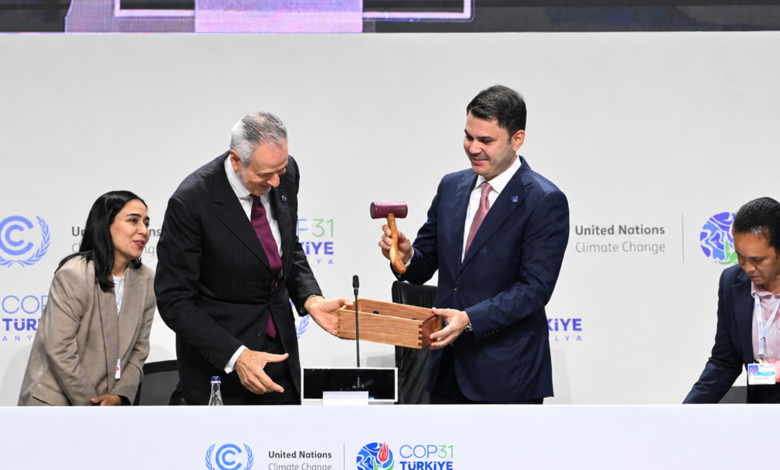
DAR ES SALAAM: TANZANIA is using COP31 to push for stronger action on sustainable waste management, climateresilient infrastructure and greener urban development, as it steps up efforts to cut waste and expand recycling.
The Zero Waste campaign, supported by the National Waste Management Strategy (2025–2030), forms part of the government’s efforts to address mounting environmental pressures through improved waste collection, segregation, recycling and resource recovery.
The initiative comes as rapid population growth and urbanisation increase demand for infrastructure and public services in Tanzania’s cities, putting greater pressure on drainage networks, water supplies, sanitation facilities and waste management systems.
The issue goes beyond keeping urban areas clean. Poor waste management poses growing risks to public health, climate resilience and economic productivity, while better waste practices are increasingly important to sustainable urban development.
Poorly managed waste can obstruct drainage channels, increase flood risks, contaminate water sources and contribute to environmental degradation. Organic waste disposed of in poorly managed sites can also generate methane, a greenhouse gas associated with climate change.
The government’s approach therefore seeks to move beyond conventional waste collection and disposal towards a system that recognises discarded materials as potential economic resources.
The campaign promotes separation of waste into four principal categories – glass, paper, metal and plastic – as part of efforts to improve recycling, encourage responsible consumption and strengthen the country’s waste recovery chain.
The initiative also provides an opportunity for Tanzania to demonstrate how environmental policies can support climate action at the local level, complementing international commitments with practical measures involving households, businesses, industries and local authorities.
As COP31 takes place in Antalya from November 9 to 20, Tanzania’s experience in urban development, environmental management and climate resilience forms part of the wider development context through which the country can engage international partners on climate-related challenges and opportunities.
The National Waste Management Strategy (2025–2030), developed under the Office of the Vice-President, provides the framework for the government’s efforts to strengthen waste management across the country.
Its focus on waste reduction, reuse and recycling reflects the principles of a circular economy, which seeks to keep materials in productive use for longer rather than allowing them to become waste after a single use.
Under this approach, materials such as plastic, glass, paper and metal can be collected, sorted and processed for reuse in manufacturing and other economic activities.
Biodegradable waste can also be recovered for composting and other productive uses, reducing the volume of material sent to disposal sites.
The strategy is significant because Tanzania’s expanding urban population is generating increasing quantities of household, commercial and industrial waste, requiring more effective systems for collection, transportation, processing and environmentally sound disposal.
Government estimates as of January 2025 put Tanzania’s annual solid waste generation at between 14.4 million and 20.7 million tonnes.
The estimates indicated that although about 70 per cent of the waste generated could be recycled, only between 5 and 10 per cent was being recovered through recycling.
The figures highlight a significant gap between the potential to recover valuable materials and the country’s existing capacity to collect, process and recycle waste.
They also indicate the scale of the opportunity available to investors and businesses interested in recycling, waste processing and resource recovery.
The government has consequently placed greater emphasis on private-sector participation, improved infrastructure and public awareness as essential elements of the transition.
The Zero Waste campaign seeks to reinforce this direction by encouraging waste separation at source, making it easier for recyclable materials to be recovered before they are mixed with other waste.
The colour-coded collection system promoted under the campaign identifies separate containers for glass, paper, metal and plastic.
The principle is straightforward: waste that is properly separated can be more efficiently collected, transported and directed to recycling facilities, reducing the volume requiring final disposal.
However, the effectiveness of the approach will depend on the availability of collection services, sorting facilities and processing capacity, as well as the willingness of households and businesses to adopt the recommended practices.
Tanzania’s waste management agenda is closely connected to its broader efforts to strengthen the resilience of urban areas to climaterelated risks.
The country’s rapidly expanding cities face growing pressure from population growth, changing weather patterns and infrastructure deficits.
Dar es Salaam illustrates the challenge, with recurrent flooding, inadequate stormwater drainage, unplanned settlements and pressure on water and sanitation infrastructure exposing vulnerabilities in urban development.
The problem extends beyond the commercial capital to other growing centres, including Dodoma, Mwanza, Arusha, Mbeya and Morogoro, where demand for housing, transport, water and public services is increasing.
The World Bank’s Tanzania Urban Resilience Programme identifies inadequate climate-risk information, weaknesses in land-use planning and enforcement, and infrastructure gaps among the factors contributing to urban vulnerability.
Its assessment points to shortages of stormwater drainage and wastewater treatment facilities, ineffective solid-waste systems and inadequate flood-management infrastructure.
These challenges are interconnected.
When waste is improperly disposed of, it can accumulate in drainage channels and waterways, restricting the movement of stormwater and increasing the likelihood of flooding during heavy rainfall.
Plastic materials are particularly problematic because they can remain in the environment for long periods, obstruct water channels and eventually enter rivers and marine ecosystems.
Effective waste management therefore contributes to climate adaptation by helping cities maintain functioning drainage systems, protect water sources and reduce exposure to environmental hazards.
It also supports public health by limiting pollution and reducing conditions that encourage the spread of disease.
The government’s urban resilience agenda recognises that infrastructure investment must be accompanied by stronger environmental management, effective planning and community participation.
Under Dira 2050, Tanzania aspires to develop sustainable, smart, green and liveable cities supported by reliable water, sanitation, energy and transport systems.
The vision also emphasises the protection of environmental assets, improved access to decent housing and stronger capacity to withstand climate-related shocks.
The zero-waste campaign complements these ambitions by addressing one of the everyday environmental pressures associated with urban growth.
Investment in resilient urban infrastructure
Government efforts to strengthen climate resilience are already reflected in investments in roads, drainage, flood management and other urban services.
The first phase of the Dar es Salaam Metropolitan Development Project (DMDP), implemented between 2015 and 2023, benefited more than four million people through improvements in urban infrastructure and services, according to the World Bank.
The project supported the construction of 207 kilometres of roads equipped with street lighting, sidewalks and roadside drainage.
t also delivered 75 kilometres of trunk and secondary drains across five river basins, alongside the city’s first stormwater detention basins.
The drainage interventions helped protect 406 hectares of land, including low-income neighbourhoods, against one-in-10-year flood events.
In December 2023, the World Bank approved 385 million US dollars for the second phase of the programme, which focuses on climate-smart infrastructure, integrated solid-waste management and stronger urban institutions.
The programme includes resilient transport infrastructure, green drainage systems, public spaces, riparian and coastal landscapes, and area-based urban development.
The inclusion of integrated solid-waste management reflects growing recognition that waste services are part of the infrastructure required to make cities more resilient.
A separate Msimbazi Basin Development Project is also designed to address chronic flooding through infrastructure investment and improved river-basin management.
These interventions demonstrate the importance of combining physical infrastructure with environmental protection.
Drainage improvements, for example, can have limited long-term impact if rivers, wetlands and natural water channels continue to be obstructed by construction, waste disposal and unplanned settlement expansion.
The Tanzania Urban Resilience Programme has supported initiatives aimed at improving flood-risk information, community mapping and land-use planning.
One of these, Ramani Huria, uses community-based mapping to identify flood-prone areas and provide information for urban planning and disaster management.
Another initiative, Adopt a Drain, uses information and communication technology to improve transparency around solid-waste blockages affecting drainage channels.
Such initiatives demonstrate how community involvement and digital tools can complement infrastructure investment.
They also reinforce the importance of addressing waste management as part of a wider strategy for protecting urban populations and economic activities from climaterelated disruptions.
The relationship between waste management and climate resilience also extends to water security.
As urban populations and economic activities expand, demand for reliable water supplies increases, while water sources face pressure from pollution, changing rainfall patterns and competing uses.
Dar es Salaam’s dependence on the Ruvu River system illustrates the importance of protecting water sources and strengthening supply infrastructure.
The government is pursuing interventions that include improvements to the Ruvu water treatment plants, the Kidunda Dam project and expansion of groundwater sources.
In December 2025, the Ministry of Water identified the Kidunda Dam, increased production at the Lower Ruvu plant and the second phase of the Kimbiji-Kigamboni borehole project among measures intended to address water shortages.
The government has also announced investment in new pumps for the Upper and Lower Ruvu plants to improve production and distribution capacity.
However, increased water supply must be matched by effective wastewater management.
Untreated wastewater can contaminate rivers, groundwater and coastal ecosystems, undermining public health and the quality of water resources.
The Ministry of Water’s 2024 sector status report recorded progress in sanitation projects in Dar es Salaam, including completion of the Mbezi Beach sewerage network and pumping stations.
The report also identified ongoing work on decentralised wastewater treatment systems and other sewerage infrastructure.
The government’s Water Policy Implementation Strategy 2025– 2035 reports that the national sewer network increased from about 652 kilometres in 2010 to approximately 1,478 kilometres in 2024.
However, sewered sanitation coverage in regional headquarters averaged only 13 per cent in 2024, highlighting the need for continued investment.
The figures underline the importance of integrating waste management, sanitation and water infrastructure into a coordinated environmental protection programme.
This is particularly relevant for the East African nation as it seeks to develop cities that can support growing economic activity while protecting the natural resources on which communities and industries depend.