Ndejembi’s appointment highlights constitutional continuity
DODOMA: PRESIDENT Dr Samia Suluhu Hassan’s first year in her second term has been marked by an important leadership transition, following the resignation of Vice-President Dr Emmanuel Nchimbi and the subsequent appointment of Mr Deogratius Ndejembi to fill the position.
The transition brought renewed public attention to the constitutional procedures governing vacancies in the country’s second-highest office, with the appointment process highlighting the role of the President, Parliament and constitutional provisions in ensuring continuity of government.
President Samia and Dr Nchimbi were sworn in as President and Vice-President, respectively, on November 3, 2025. Following Dr Nchimbi’s resignation, political analysts, lawyers and members of the public engaged in discussions about the circumstances under which a Vice-President can leave office and how a successor is appointed.
The Constitution of the United Republic of Tanzania, 1977, provided the legal framework for addressing the vacancy. During the Fourth Session of the 13th Parliament in Dodoma, President Samia submitted the name of then Minister for Energy, Mr Deogratius Ndejembi, for parliamentary consideration and approval.
The nomination was presented through Ambassador Ali Jabir Mwadini, accompanied by the President’s Military Aide-de-Camp. The process was guided by Article 50(4) of the Constitution, which provides that where the office of Vice-President becomes vacant under the circumstances specified in subsection (3), including removal from office by Parliament, death or resignation, the President shall appoint a successor as soon as possible and within 14 days.
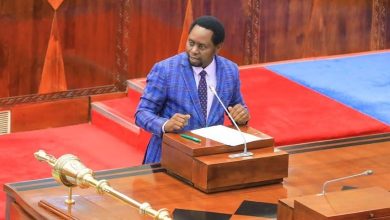
The appointment must subsequently be confirmed by Parliament through a majority vote of its members. Prime Minister Dr Mwigulu Nchemba moved a motion in the National Assembly seeking approval of Mr Ndejembi’s appointment, pursuant to Article 50(4) of the Constitution and Rule 42 of the National Assembly Standing Orders, 2025.
Presenting the motion, Dr Mwigulu said Mr Ndejembi’s leadership experience, understanding of government operations and ability to work closely with the President were among the qualities that made him suitable for the position.
He also cited his academic background, judgement in handling national matters and ability to coordinate responsibilities, as demonstrated during his tenure as Minister for Energy. “I have no doubt… I have no doubt that the Honourable House will agree with me that the position has been given to the right person to assist the President in carrying out major national responsibilities,” said the Prime Minister.
Lawmakers subsequently endorsed Mr Ndejembi unanimously, with all 324 votes cast in his favour, making him the youngest person to hold the country’s second-highest office.
According to Dr Mwigulu, the 43-year-old had participated in Chama Cha Mapinduzi (CCM) activities for many years, beginning at the grassroots level before eventually becoming a member of the party’s National Executive Council (NEC).
Explaining the responsibilities of the Vice-President, the Prime Minister cited Article 47(1), which establishes the office-holder as the principal assistant to the President in all matters concerning the United Republic. The Vice-President assists the Head of State in overseeing the implementation of Union matters, performs duties assigned by the President and discharges presidential functions whenever the President is absent or outside the country.
Under Article 47(8), the Vice-President exercises these powers under the direction and supervision of the President and remains accountable to the Head of State for assigned responsibilities.
During the parliamentary debate, several lawmakers expressed confidence in Mr Ndejembi’s ability to support President Samia in discharging her responsibilities. Mr Joseph Musukuma (Geita Rural-CCM), who served with Mr Ndejembi on the Parliamentary Standing Committee on Energy, described him as a disciplined and honest leader.
“He has never undermined anyone. You cannot secure a position by undermining your colleagues. A position should come to you on merit, not by bringing someone else down,” he said.
Mr Musukuma said Tanzania needed young leaders with practical and innovative ideas, urging the new Vice-President to support President Samia in addressing national challenges.
Mr Kenneth Nollo (BahiCCM), who said he had known Mr Ndejembi since 1993, also described him as a compassionate and caring person.
Attorney General clarifies constitutional provisions Before the nomination was put to a parliamentary vote, Attorney General Hamza Johari explained the constitutional procedures governing the vacancy, addressing questions that had emerged following Dr Nchimbi’s resignation.
Mr Johari said the former Vice-President had specified September 4 as the effective date of his resignation in his letter, subject to the President’s acceptance. Citing Article 50(2), he explained that the date of resignation is either the date on which the notice is received or a later date specified in the resignation letter.
“That is the scenario. It means he will continue to remain in office until September 4,” the Attorney General told the House. He, however, raised the question of whether other constitutional circumstances affecting a person’s eligibility to remain in office could arise before the specified resignation date.
“Now we come to the question: as life continues, if other constitutional circumstances arise under which he loses his qualifications, does that mean we continue waiting until that date? That is where the explanation comes in,” he said.
Mr Johari noted that Article 50(4), which had attracted considerable public attention, primarily outlines the procedure for filling a vacancy in the office of Vice-President.
He explained that subsection (3) identifies the circumstances of parliamentary removal, death or resignation, while subsection (4) provides for the appointment and parliamentary confirmation of a successor.
He said some people had focused on the fact that loss of party membership was not specifically mentioned in Article 50(3), raising questions about whether such circumstances could result in a vacancy.
ALSO READ: Dr Samia joins Chamwino residents in electing their new MP
The Attorney General explained that constitutional provisions must be interpreted together rather than in isolation, citing the doctrine of harmonious construction. The principle requires different constitutional provisions to be read consistently so that one provision does not undermine the application of another.
He therefore advised lawmakers to consider not only Article 50, which governs vacancies, but also provisions establishing the qualifications required to hold the office of Vice-President.
In particular, he cited Article 47(4), which outlines the constitutional qualifications for a person to be nominated or hold the office. His explanation highlighted the relationship between the provisions governing resignation, eligibility and the appointment of a successor.
Oath completes the transition Following parliamentary approval, Mr Ndejembi was required to take the prescribed oath before assuming the responsibilities of the office.
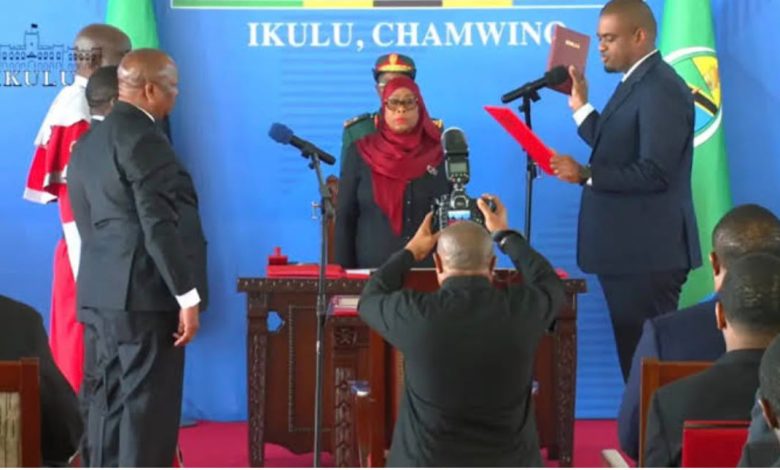
Article 49 of the Constitution requires the Vice-President to take an oath of allegiance before the Chief Justice of the United Republic, together with any other oath relating to the performance of official duties as prescribed by law.
On August 29, 2026, Chief Justice Professor George Masaju swore in Mr Ndejembi as Vice-President at State House in Chamwino, Dodoma.
President Samia, government leaders, religious leaders, diplomats and representatives of local and international organisations witnessed the ceremony, which was broadcast live.
The appointment and swearing-in marked an important development during President Samia’s first year in her second term, bringing the constitutional process of filling the country’s second-highest office into focus.
Beyond the leadership change, the episode highlighted the importance of constitutional provisions, parliamentary participation and clearly defined responsibilities in maintaining continuity within government.
As President Samia continues her second term, the VicePresident’s role as her principal assistant remains central to the coordination of Union affairs and the execution of responsibilities assigned by the Head of State.