Congo did not invent our dansi; they just wear it better: Time to learn from Bongo Flava

DAR ES SALAAM: LET me begin with a confession that may cost me some friends at the next Msondo Ngoma show: Congolese musicians are not better than ours. They are simply better at acting as if they are.
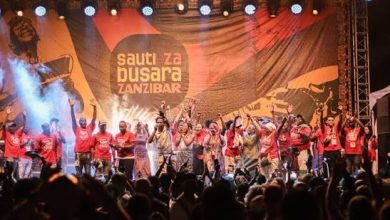
Watch a Congolese band walk onto a stage.
The lead singer arrives as though the hall was built for him, and the audience has been waiting since independence.
The guitarist holds his instrument like a family heirloom. The dancers move as if their hips have signed an exclusive contract with the rhythm.
Even the man carrying the speakers walks with a certain swagger.
Before a single note is played, the crowd has already concluded: These people are serious.
Now watch some of our muziki wa dansi bands arrive.
The singer checks the microphone three times, clears his throat like a district officer about to read a circular, and opens with a song about the importance of paying taxes.
Ndugu zangu, that is not a concert. That is a seminar with a bass guitar.
First, let’s have a history lesson, so nobody accuses me of jealousy.
Tanzanian urban music did not wait for Kinshasa’s permission to exist.
Under German rule, our people watched military brass bands and created Beni Ngoma, complete with ranks, commands and uniforms, partly in admiration and partly in mockery.
When the British took over Tanganyika, they banned Beni music both for fear of its popularity that threatened law and order, as well as erase German influences.
But by the 1930s, young people in our towns were forming dance clubs and bands.
Tanga is where the early dance clubs were formed, as people migrated from other parts of the country to work in sisal plantations there.
Legend has it that they formed the clubs and at first used gramophones before starting the bands.
Dar es Salaam was also part of that early scene, at roughly the same time modern Congolese rumba was taking shape in Congo Léopoldville (now Kinshasa) and Brazzaville.
Both countries were listening to the same Cuban records. Both took those sounds and made them their own. Congo did not hand us the guitar; we were both strumming at the same party.
After independence, we built a remarkable band culture.
NUTA Jazz, later Juwata, OTTU and Msondo Ngoma, appeared in 1964.
Salum Abdallah of Cuban Marimba in Morogoro was so determined to equip his band that, the story goes, he quietly sold one of his father’s houses to buy instruments.
Yes, Congolese musicians came to Dar es Salaam in large numbers between the late 1960s and the 1980s.
Remmy Ongala arrived in 1978 and gave this country unforgettable songs. Orchestra Maquis Original became part of our musical furniture.
They influenced our guitars, our dancing and our stage habits. But influence is a conversation, not a title deed.
So why do we bow? Because the Congolese mastered something we neglected: the business of being admired. They understood early that music is also theatre.
The clothes, the dance routines, the nicknames, the shouting of sponsors’ names in the middle of a song (the famous atalaku and the mabanga shout-outs), the drama: all of it sells.
They do not merely play music. They perform importance.
Meanwhile, many of our dansi musicians took a different road.
After independence, bands owned by unions, parastatals and government institutions were tasked with mobilising wananchi for Ujamaa, unity and development.
It was honourable work. But somewhere along the way, some musicians decided that entertainment was a minor hobby and education was the main job.
So, we got songs advising us to boil water, plant cassava, avoid corruption and respect the five-year plan. All worthy causes. But a man who has worked all week does not put on his best shirt on Saturday night to attend a refresher course.
He wants to dance. He wants to forget his boss. He wants a chorus that will follow him home.
Enter Bongo Flava, the cheeky younger brother…
While Muziki wa Dansi was busy writing public notices, Bongo Flava walked in wearing sunglasses at night and stole the audience.
Diamond Platnumz, Ali Kiba, Harmonize, Zuchu, Nandy and their colleagues did not ask anyone’s permission to be entertaining.
They understood the assignment: catch the ear, move the body, create a moment people want to share.
Their songs carry messages too, about love, struggle, ambition and life in the city, but the message arrives dressed for a party, not for a board meeting.
And here is the part that should make every dansi bandleader sit up: Bongo Flava artists do not wait for the radio presenter to discover them.
They build their own audiences on YouTube, Instagram, TikTok and streaming platforms.
A new song is teased before release, launched with a video, pushed through dance challenges and then turned into a live tour.
The fans become the marketing department. Their phones are the billboards.
Meanwhile, some of our dansi veterans still believe promotion means printing a poster, glueing it to an electricity pole and praying the rain stays away.
Swallow the pride, wazee! I say this with love and respect: dansi must swallow its pride and start copying Bongo Flava. Not the sound necessarily, but the attitude and the methods.
First, entertain without apology.
Your first duty on stage is to make people happy. If you want to teach, hide the lesson inside a sweet melody, the way a good mother hides medicine in a spoon of honey.
Second, use the internet for marketing.
Every band should have a YouTube channel, active social media pages and short clips from rehearsals and shows.
Let the young people see the guitar solos, the dance routines and the jokes backstage.
A twenty-second video on TikTok can introduce a 40-year-old band to a 19-yearold fan.
Third, use the internet for research.
Platforms now tell you who is listening, from where, at what age and to which songs.
A band that knows its audience is in Mwanza, Nairobi and Muscat can plan tours, collaborations and releases intelligently instead of guessing.
Fourth, use the internet for business.
Put your catalogue on streaming platforms. Register with collecting societies so royalties reach you. Sell merchandise. Livestream concerts for the diaspora.
Our old classics are sitting in archives like gold in a locked drawer while the world pays for nostalgia elsewhere.
Seif Kisauji aka Babu wa Tik Tok is showing the way. Using his singing talent and modern equipment with a whiff of AI, he has become a super star in his own right.
Belting old Marijani Rajabu, Sikinde and Msondo numbers he has single-handedly managed to conquer the youth. They all sing along with him now.
Back to where we paused, fifth tip to Muziki wa Dansi artists is collaborate.
Why not a Msondo Ngoma veteran with a Bongo Flava star?
Why not a dansi guitar line under an Amapiano beat?
The Congolese never feared reinvention. Rumba became soukous, soukous became ndombolo. They kept the roots and changed the clothes.
My final verse is that, of course, let us keep enjoying Congolese music, even if we don’t know Lingala and French.
It is sweet, it is proud, and it knows how to sell itself. That last skill is precisely what we should borrow.
Tanzanian music has the history, the talent and the stories. What it needs now is confidence, showmanship and a smartphone with a good data bundle. So, to our muziki wa dansi bands I say: stop apologising for entertaining us.
Stop lecturing us between choruses. Walk on stage like Kinshasa, market yourselves like Bongo Flava, and sing like Tanzania.
The guitar does not need a passport. It only needs an audience, and thes