Mineral survey funding goes local
DODOMA: THE government has launched a major mineral exploration project fully financed by domestic revenues, marking a significant step towards strengthening the country’s geological knowledge and reducing reliance on external funding.
Minister for Minerals Anthony Mavunde announced the initiative in Dodoma yesterday, while presenting a report on the implementation of Mining Vision 2030 to the Parliamentary Standing Committee on Energy and Minerals.
He said the project followed President Dr Samia Suluhu Hassan’s strategic decision to approve legal amendments requiring 10 per cent of non-tax revenues collected by the mining sector to be allocated specifically to geoscientific research.
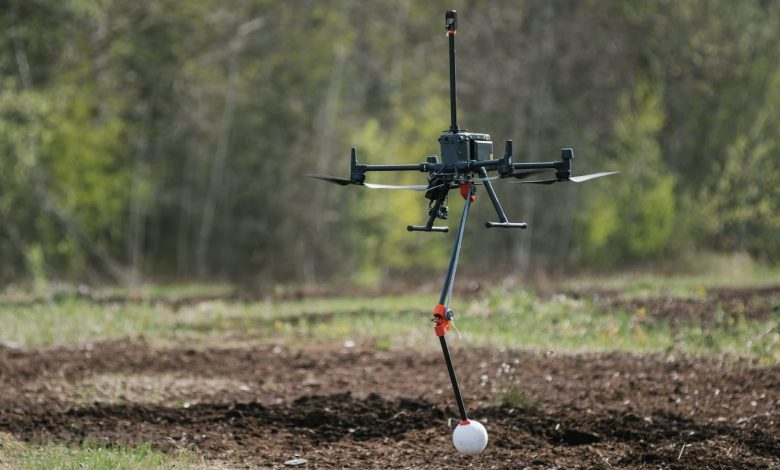
Mr Mavunde said the initiative was part of the government’s efforts to implement the Mining Sector Vision 2030, dubbed “Minerals are Life and Wealth”, by expanding high-resolution airborne geophysical surveys across the country. He explained that the surveys would provide accurate scientific data to guide mineral exploration, reduce speculative mining and help investors identify areas with promising mineral deposits. “The research will enable the Geological Survey of Tanzania (GST) to obtain extensive and accurate geoscientific information,” he said.
ALSO READ: STAMICO plans three new mines
“Through this data, we will accurately identify areas suitable for investors, largescale miners and, particularly, small-scale miners who have been losing capital due to lack of scientific information.” According to the minister, only 16 per cent of Tanzania’s total land area has undergone detailed geophysical surveys, leaving the remaining 84 per cent largely unexplored using the technology.
The government aims to increase the surveyed area to at least 50 per cent by 2030 through domestic financing. The initiative is also expected to improve the allocation of mineral-rich areas, attract investment and strengthen the contribution of mining to the national economy.
The Parliamentary Standing Committee on Energy and Minerals, through its Vice-Chairperson, Mr Simon Songe, commended the government for committing domestic resources to the research programme. Mr Songe said the move would reduce dependence on external funding while strengthening Tanzania’s control over strategic geological data.
He added that access to reliable scientific information would help smallscale miners make informed investment decisions, improve mining efficiency and reduce losses associated with exploration based on guesswork. The research is also expected to attract more investment, expand mineral production and increase government revenues as Tanzania pursues its Vision 2030 targets.