IPU touts better governance
ARUSHA: THE 153rd Inter-Parliamentary Union (IPU) Assembly, which concluded in Arusha on Friday, has called on parliaments worldwide to strengthen good governance, accountability and public participation to build trust in institutions and ensure equal development opportunities for all.
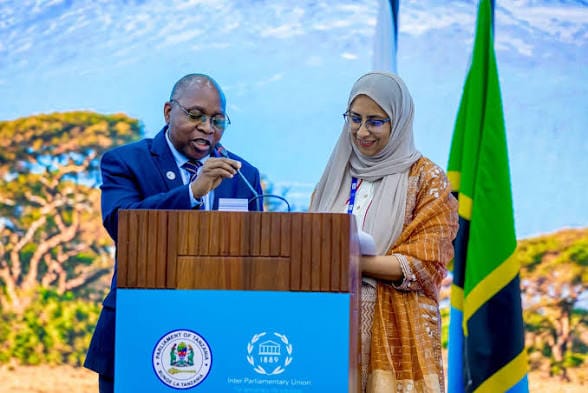
The commitment is outlined in the Arusha Communiqué, jointly presented by Tanzanian parliamentarian Dr Damas Ndumbaro and Bangladesh’s Jahrat Chowdhury, who urged legislatures to make governance more inclusive, transparent and responsive to citizens’ needs.
The communiqué stresses that effective governance and empowered communities are essential for strengthening democracy, protecting human rights and promoting sustainable development.
Presenting the document on Friday evening, the parliamentarians said communities, particularly marginalised and underrepresented groups, should have meaningful opportunities to influence decisions affecting their lives.
They added that citizens’ knowledge, experiences and innovations are vital in helping public institutions formulate policies reflecting people’s needs and priorities.
“Democracy begins in communities and is strengthened when their voices inform decision-making at every level,” the communiqué stated.
The parliamentarians said legislatures have a responsibility to bridge the gap between citizens and public institutions by promoting participation in policymaking and ensuring governments remain accountable for their decisions.
The resolutions align with the United Nations Sustainable Development Goals (SDGs), particularly Goal 16, which seeks to promote peaceful and inclusive societies, ensure access to justice and build effective, accountable and inclusive institutions.
However, the communiqué acknowledges that achieving the objectives remain challenging amid violence and conflict, widening inequalities, setbacks in human rights and gender equality, and mounting social, economic, climatic and environmental pressures.
To address these challenges, the parliamentarians identified four priority areas for action to empower communities and improve parliamentary performance.
The first priority calls for evidence-based and people-centred policymaking, urging parliaments to draw on scientific research, official statistics, local knowledge and community experiences when developing laws, policies and development strategies.
Legislatures are also encouraged to assess how their decisions affect different population groups, particularly women, young people and those facing multiple forms of exclusion.
The communiqué calls for innovative approaches to public engagement and greater transparency on how citizens’ contributions influence parliamentary decisions.
It further urges lawmakers to address the root causes of vulnerability, including discriminatory laws, unequal access to resources and services, and exclusionary social norms.
The second priority focuses on strengthening accountability, transparency and integrity in public institutions.
Parliamentarians committed to reinforcing anti-corruption measures, upholding standards of conduct and enhancing parliamentary oversight of government activities.
The communiqué also calls for closer cooperation among parliaments, relevant institutions, local authorities and civil society organisations to improve governance.
Making information about parliamentary decisions and the use of public resources accessible to citizens is identified as a key measure for building public trust.
The document further emphasises civic education to improve public understanding of democracy, citizens’ rights and responsibilities, while encouraging participation from an early age.
It also calls for stronger media and information literacy to help communities identify and resist misinformation and disinformation, particularly in fragile and conflict-affected settings.
The third priority seeks to make parliaments more inclusive by identifying and removing barriers that prevent women, young people, persons with disabilities and other underrepresented groups from participating fully in political and public affairs.
The parliamentarians pledged to strengthen parliamentary procedures and develop skills in dialogue, mediation and partnership-building to improve engagement with communities.
They also called for sustained public consultations; communication tailored to different groups and greater outreach to people in remote and underserved areas.The communiqué encourages the responsible use of digital technologies to expand public participation and access to information.
However, it cautions that digital initiatives must address unequal access, bias, misinformation and human rights risks through appropriate safeguards, oversight, personal data protection and respect for data sovereignty.
It further stresses the importance of involving local communities, particularly marginalised and conflict-affected populations, in recovery, reconciliation and efforts to strengthen social cohesion.
The fourth priority urges parliaments to adopt a longterm approach to governance by anticipating future challenges and considering the interests of future generations in policymaking, budgeting and oversight.
The communiqué encourages legislatures to establish or strengthen parliamentary committees dedicated to future-oriented planning.
It also calls for greater cooperation among parliaments to exchange experiences, share best practices and develop effective approaches to community engagement and accountable governance.
The parliamentarians said implementing the commitments would require sustained political will, institutional cooperation and meaningful citizen participation.
They thanked Tanzania’s National Assembly for hosting the assembly in Arusha and pledged to take the communiqué back to their respective parliaments for wider dissemination at national and local levels.
The document seeks to translate the assembly’s resolutions into practical action to strengthen democratic institutions, restore and sustain public trust and expand opportunities for all communities.