Kondoa Rock Art: Where Tanzania’s ancient stories still live on stones
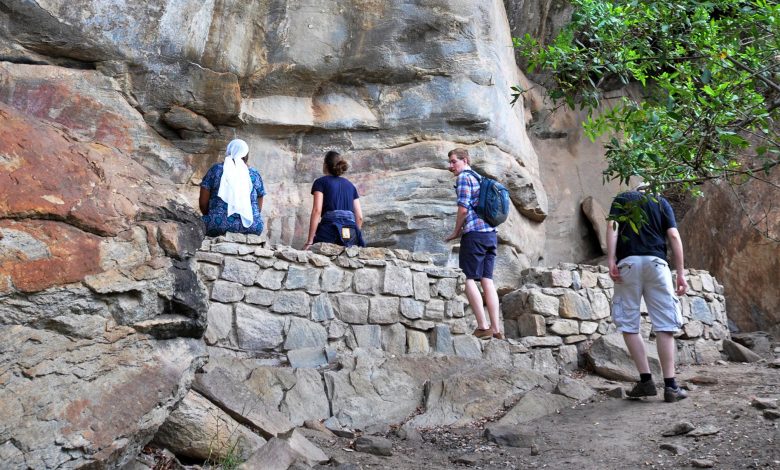
KONDOA: THERE are places in Tanzania where history is preserved in museums, old buildings and archaeological objects, but in the hills of Kondoa in central Tanzania, history remains remarkably close to the landscape itself, painted onto the walls of natural rock shelters where generations of people left behind images that continue to offer clues about how earlier communities lived, hunted, travelled, worshipped and understood the world around them.
Hidden among the rocky slopes of the Maasai Escarpment along the eastern side of the Great Rift Valley, the Kondoa Rock-Art Sites form one of Tanzania’s most important cultural heritage landscapes and, since their inscription on the UNESCO World Heritage List in 2006, have become an important destination for travellers interested in archaeology, history, culture and the deeper human story of East Africa.
The first impression of Kondoa is not necessarily that of a conventional tourist attraction, because the landscape is made up of hills, woodland, exposed rock formations and winding paths rather than grand monuments, yet it is precisely within these natural formations that the significance of the area begins to reveal itself, as the rock shelters and overhanging slabs provided natural surfaces on which people painted figures of human beings, animals and geometric forms over a period of at least two thousand years.
UNESCO estimates that the wider Kondoa area contains between 150 and 450 decorated rock shelters, caves and overhanging cliff faces, although the exact number remains uncertain, making the area not simply a single archaeological site but a vast cultural landscape spread across approximately 2,336 square kilometres.
The paintings themselves vary considerably in colour, style and subject, with reddish-brown and red images particularly associated with earlier hunter-gatherer traditions, while later paintings include white and black figures, geometric symbols and representations connected with pastoralist and agricultural communities, creating a visual record of changing societies rather than a single moment in history.
Among the images are elongated human figures, antelope and other wild animals, elephants, giraffes and scenes that have been interpreted in relation to hunting, ritual and other aspects of community life, while some of the shelters contain layers of paintings placed over earlier images, suggesting that the same spaces continued to hold meaning for people across different periods.
This layering is one of the reasons Kondoa is so fascinating, because the paintings do not simply tell visitors what people looked like in the distant past; they provide evidence of changing relationships between people, animals, landscapes and belief systems, allowing researchers to examine how societies in the region changed from hunter-gatherer communities to communities whose livelihoods increasingly included farming and pastoralism.
UNESCO describes the sites as exceptional testimony to the lives of hunter-gatherers and agriculturalists who occupied the region over several millennia, while also noting that the paintings reflect the beliefs and ideas associated with different societies that lived in the area.
The story of Kondoa’s rock art also demonstrates how archaeological knowledge develops over time, because although the paintings attracted scholarly attention more than a century ago, researchers still do not have complete answers about their chronology, authorship and meaning.
The existence of the paintings was reported as early as 1908, while archaeologists and anthropologists, including Louis and Mary Leakey, surveyed numerous sites in the 1950s, with Mary Leakey later documenting and reproducing many of the paintings in her work on Tanzanian rock art.
Despite decades of research, however, scholars continue to debate aspects of the artistic sequence and the identities of the people who created particular groups of paintings, demonstrating that Kondoa is not a finished archaeological story but a continuing field of research.
For a visitor, however, Kondoa is more than a place to observe ancient drawings from behind a museum display, because reaching many of the shelters involves travelling through the surrounding landscape and walking along rocky paths before arriving beneath the natural overhangs where the paintings are found.
At Kolo, one of the bestknown areas of the Kondoa complex, visitors can explore several shelters, including Kolo 1, also known locally as Mongomi wa Kolo, a large rock shelter reached by a winding path from the end of a dirt road, where fine-line red paintings of people and animals can still be seen on the rock surface.
The journey to the shelters is therefore part of the experience, because the surrounding hills provide a sense of the physical environment in which earlier communities lived, while the elevated position of many of the shelters creates wide views across the landscape and helps visitors understand why these places could have carried practical, spiritual and cultural significance.
Some shelters were not merely places where paintings happened to survive; several continue to have connections with local communities, and UNESCO records that certain sites are still associated with rituals involving rainmaking, healing, divination and initiation, creating an unusual continuity between ancient archaeological heritage and living cultural traditions.
UNESCO has emphasised that some of the sites retain ritual associations with local people, while traditions connected with initiation, healing and weather-related practices demonstrate an intangible relationship between the paintings, the landscape and contemporary communities.
This connection also makes conservation more complicated, because protecting the physical paintings must be balanced with respecting the cultural practices that give some of the sites their continuing significance.
Conservation is particularly important because the paintings exist in an environment that is vulnerable to both natural and human pressures, with UNESCO identifying threats associated with farming, livestock grazing, harvesting of forest resources and changes to the woodland surrounding the shelters.
The vegetation around the rock-art sites plays an important protective role by reducing the direct effects of sunlight, wind and dust while also helping to control soil erosion and retain groundwater, meaning that protecting the paintings cannot be separated from protecting the wider landscape in which they exist.
ALSO READ: How ancient ruins have become ‘arks’ for wildlife
The challenge is therefore not simply to preserve a collection of drawings on stone, but to protect an entire cultural landscape in which archaeology, nature, community traditions and tourism intersect, and this requires cooperation among heritage authorities, local governments, communities, researchers and visitors.
UNESCO has supported conservation planning for Kondoa, including assistance for reviewing and updating the site’s management plan, while the wider management approach has recognised the importance of working with village governments and communities around the heritage area.
For travellers, Kondoa also offers a different experience from Tanzania’s betterknown wildlife destinations, because the attraction here is not a spectacular animal encounter but the opportunity to stand beneath a rock shelter and look at marks created by people who lived thousands of years ago.
A visitor may arrive expecting simply to see old paintings, only to discover that the experience involves walking through a landscape that still supports communities, meeting local guides who interpret the images, learning about archaeological research and considering how much human history can survive in a single rock shelter.
The location also makes Kondoa suitable for travellers interested in exploring Tanzania beyond the country’s famous safari circuits, particularly because Kolo lies along the central Tanzanian route between Dodoma and the northern parts of the country, while the surrounding landscape offers a combination of cultural heritage, geology, rural life and outdoor exploration.
Yet perhaps the greatest attraction of Kondoa is the feeling of connection that comes from seeing evidence of human creativity in its original setting, because unlike an artefact removed from its landscape and displayed behind glass, these paintings remain attached to the rocks, hills and environment that formed the backdrop to the lives of the people who created them.
Their survival allows today’s visitors to look at the same landscape, stand beneath some of the same shelters and encounter images that have endured through changing societies, climates and generations.
Kondoa therefore deserves to be understood not simply as a collection of ancient paintings, but as a living archive of Tanzania’s human past, where archaeology and contemporary culture meet beneath the same rocky shelters.
Its significance lies not only in the age or artistic quality of the paintings, but in what they reveal about the ability of communities to communicate ideas, record experiences and give meaning to their surroundings across generations.