

HEET project boosts ARU capacity
DAR ES SALAAM: ARDHI University (ARU) will admit an additional 2,000 students in the 2026/2027 academic year following the completion of a 36bn/- Higher Education for Economic Transformation (HEET) project that has expanded its teaching and learning facilities.
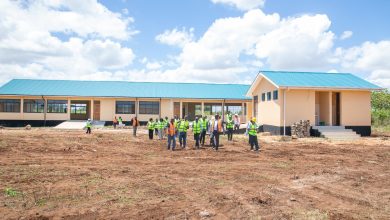
The project has delivered seven laboratories, 15 studios, 10 workshops and 26 classrooms with a combined capacity of 7,039 people, significantly increasing the university’s capacity to accommodate students.
Speaking on Thursday during a working visit to inspect the project, Parliamentary Standing Committee on Education, Culture and Sports Chairperson Ms Husna Sekiboko commended ARU management for effectively overseeing its implementation.
Ms Sekiboko described the project as strategic, given ARU’s critical role in producing professionals needed to drive national development.
“This is a strategic project for a strategic university. You cannot talk about development without talking about Ardhi University,” she said.
She recalled visiting the university three times during the project’s implementation and witnessing its progress from the early stages of construction to its current advanced stage.
“When we first came, construction had just started. Today, the buildings are more than 90 per cent complete. This is something worth commending,” Ms Sekiboko said.
She said the new facilities, including modern classrooms, laboratories and studios, would significantly improve the teaching and learning environment at the university.
ALSO READ: 20bn HEET project: UDOM pushes for early completion
ARU Deputy Vice Chancellor for Academic, Research and Consultancy, Professor Makarius Mdemu, said only minor works remained before the facilities could become fully operational, with the university planning to start using them in October 2026, the beginning of the new academic year.
“The project is now 99 per cent complete. The contractor has handed over the buildings to the university and we are now in the one year defect liability period,” Prof Mdemu said.
He said implementation of the HEET project at ARU started in 2023 under an 18-month contract, but was extended by about 13 months due to various challenges, including inadequate funding that had to be increased.
Prof Mdemu said the expanded infrastructure would enable ARU to increase admissions by about 2,000 students, but warned that accommodation remained a major challenge.
“The buildings can accommodate over 7,000 people but we now have another challenge of accommodating the additional students,” he said.
He said the university was seeking resources to expand hostel facilities to cope with the expected increase in enrolment.
ARU Board Chairperson Ambassador Salome Sijaona said the increase in admissions was a major milestone, particularly because the university currently has about 7,000 students.
“Adding 2,000 students in one year is a very big step for the university,” she said.
Amb Sijaona said the new facilities could eventually enable ARU to accommodate about 14,000 students, potentially doubling its current student population when operating at full capacity.
She thanked the government for providing funds to expand access to higher education and improve the quality of learning at the university.


Finding tailored graphics for milestone events is straightforward with a custom digital birthday flower generator that renders vibrant flowers suited for greetings.
Creative teams curious about automated workflows can try an AI picture word modifier free on sample marketing graphics. This trial offers a way to explore direct wording adjustments without long commitments.