Agroforestry emerges as a green investment path for Tanzania’s youth
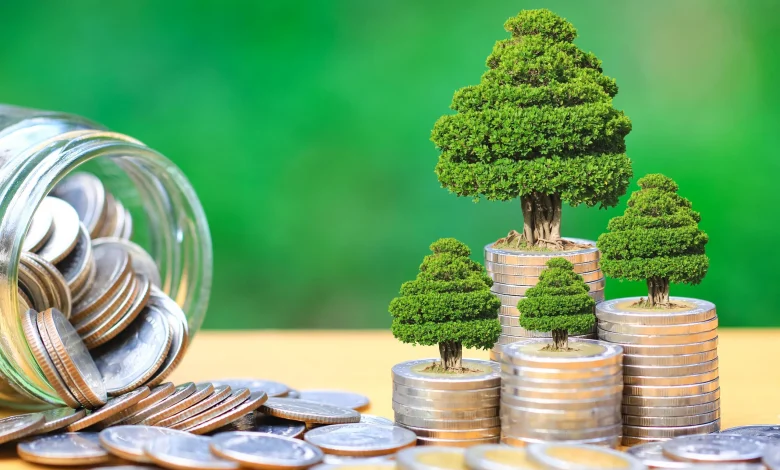
DAR ES SALAAM: FOR a young person looking at a piece of land, a tree may appear to be a long-term investment whose returns are years away.
But when that same tree is combined with crops, livestock, markets and modern financing, it can become part of a productive enterprise capable of generating income, creating jobs, improving food security and restoring the environment.
This is the opportunity that Tanzania is being urged to explore as agroforestry increasingly finds its place within the country’s wider development ambitions, particularly the newly launched Tanzania Development Vision 2050.
The Vision, which began guiding the country’s development from July 2026, seeks to transform Tanzania into a prosperous, just, inclusive and self-reliant nation, with economic transformation, agricultural productivity, investment, skills development and sustainable growth among its priorities.
Against this national ambition, the 11th National Agroforestry Symposium is expected to bring together thousands of stakeholders to examine how trees can move beyond environmental conservation and become part of commercially viable agricultural systems and green investments.
Organised by Vi Agroforestry, the symposium will take place from October 19 to 21, 2026, at the Agroforestry Training Centre in Bweri, Musoma, under the theme, “Agroforestry for Youth and Green Investment.”
The event is expected to attract about 8,000 participants physically, alongside a wider virtual audience, including government representatives, farmers, researchers, investors, financiers, development partners, businesses and young people.
Vi Agroforestry Country Manager, Ms Martha Olotu, said the meeting was intended to help transform the opportunities presented by agroforestry into investments that can generate livelihoods while contributing to food security and landscape restoration.
“This Symposium will turn agroforestry opportunities into scalable investments that create youth livelihoods, strengthen food security and restore landscapes. We invite government, investors, partners, researchers, farmers and youth to move from dialogue to action,” she said.
Her call comes at a time when the government is seeking to translate the ambitions of Vision 2050 into practical investments and economic opportunities.
The National Planning Commission has recently stressed that agriculture transformation, food systems, youth employment and private-sector participation are important components of implementing Vision 2050.
The Commission has also said the Vision seeks to increase agricultural productivity, promote commercial production and expand the use of technology.
This places agroforestry at an important intersection between agriculture, climate action and investment.
Unlike conventional farming systems that may separate agricultural production from environmental conservation, agroforestry integrates trees with crops and livestock, allowing farmers to pursue production while improving the sustainability of their land.
ALSO READ: Agroforestry Conference to promote youth investment and economic opportunities
For Tanzania, where agriculture remains a major source of employment and food, such approaches have the potential to contribute to both rural livelihoods and national economic transformation.
The government says agriculture provides employment opportunities for more than 75 per cent of Tanzanians and remains an important source of food, exports and industrial raw materials.
It also links agricultural development with processing, domestic markets and exports.
The challenge, therefore, is not simply to encourage people to plant trees, but to develop value chains that make sustainable land management economically attractive.
That is where the symposium’s focus on investment becomes significant.
The first day will focus on agroforestry enterprises, investment opportunities, financial inclusion and market linkages, allowing participants to examine where capital can enter the sector and how young entrepreneurs can participate.
The second day will turn to climate action, food security, biodiversity conservation and landscape restoration, while the third day will focus on policy coherence, institutional coordination, budgeting and implementation.
For young Tanzanians, the Youth Townhall is expected to provide a direct platform to discuss some of the barriers that have traditionally limited participation in agricultural enterprises.
Young people will engage with policymakers, financiers, investors, farmers and businesses on access to finance, land, markets and technical support.
This approach is closely aligned with the Vision 2050 call for young people to become active participants in economic transformation rather than simply beneficiaries of development.
The National Planning Commission has recently urged young Tanzanians to use innovation, technology, research and entrepreneurship to contribute to the country’s transformation, describing them as a key workforce for achieving the Vision’s ambitions.
For agroforestry, this could mean a shift from viewing youth participation through the traditional lens of farming to opening opportunities across the wider value chain from production and nurseries to processing, marketing, technology, finance and environmental services.
The symposium is expected to support this shift through enterprise pitches, investment roundtables, exhibitions, an innovation marketplace and business-to-business networking.
Organisers expect the discussions to identify investment-ready agroforestry models, youth enterprises, financing gaps and priority actions for developing market-oriented and inclusive agroforestry value chains.
The emphasis on finance is particularly important because turning climate-friendly ideas into businesses requires capital.
In May this year, the Tanzania Agricultural Development Bank launched its Green Agri-Finance Strategy 2025–2027, aimed at accelerating climate-smart, resilient, inclusive and sustainable agricultural transformation.
The bank linked the strategy directly to national priorities under Vision 2050, demonstrating growing attention to climate-focused agricultural finance.
Such developments create an opportunity for agroforestry enterprises to move into conversations about bankable green investment rather than remaining largely within environmental programmes.
The symposium will also connect investment discussions with action on the ground through the Green Futures Tree Planting Campaign.
The campaign will culminate on October 20 at Morembe Secondary School, where organisers plan to plant trees as part of a wider target of about 150,000 agroforestry trees benefiting public institutions and community spaces across five councils in Mara Region.
For Ms Olotu, such activities are part of a broader effort to connect policy, investment and practical implementation.
The symposium builds on more than a decade of national dialogue and four decades of field experience by Vi Agroforestry, with organisers seeking to ensure that recommendations do not remain in conference documents.
The event will also strengthen coordination through the Tanzania Agroforestry Stakeholders Platform (TASP), which is expected to follow up recommendations between symposium cycles, identify implementation gaps and channel priorities into policy, planning, budgeting and investment processes.
This follow-up mechanism could prove important for Vision 2050, whose success depends not only on long-term aspirations but on translating them into programmes, projects, investments and measurable results.
By 2050, Tanzania aspires to become an industrialised, knowledge-based upper-middle-income country with a diversified and globally competitive economy.
The Vision also places emphasis on boosting agricultural productivity, developing a skilled workforce, improving the investment climate and building a sustainable and resilient nation.
Agroforestry offers one practical space where these ambitions can converge.
A tree planted today can support a farmer’s production, protect soil and biodiversity, contribute to climate resilience and, when connected to the right market, become part of a commercial value chain.
For young Tanzanians, it can also represent something more immediate, a business opportunity.
The challenge now is to ensure that the investment, policy, technology, land access and market systems needed to make such opportunities viable are developed alongside the trees.
That is the conversation expected to take centre stage in Musoma when the government, investors, farmers, researchers and youth gather for the 11th National Agroforestry Symposium.
The ultimate test, however, will be what happens after the three days: whether ideas become enterprises, partnerships become investments, recommendations enter budgets and policies, and young people become active owners of Tanzania’s green economic transformation.