Tanzania seesn a new dawn pollination technology as it hots global beekeepers in Arusha
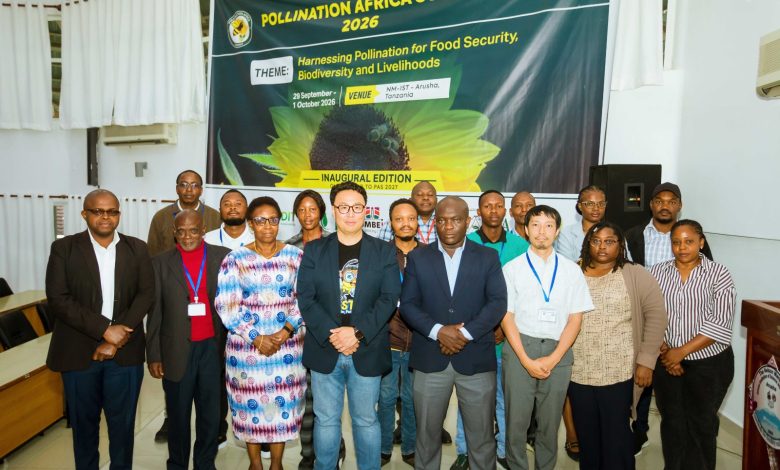
ARUSHA: OVER 250 East African delegates gathered at the Nelson Mandela African Institute of Science and Technology (NM-AIST) in Arusha for the first ever summit on Pollinators in Africa.
During the event Australia’s BeeSTAR Technology delivered a groundbreaking live IoT showcase for beekeeping and precision pollination.
Following weeks of massive anticipation, Tanzania has successfully hosted the first-ever Pollination Africa Summit.
The high-profile gathering, which concluded at the modern campus of the Nelson Mandela African Institution of Science and Technology (NM-AIST) in Arusha, marks a historic milestone for the continent’s agricultural and apiculture sectors.
The inaugural summit drew a massive turnout of over 250 delegates representing a powerful cross-border alliance of policy experts, researchers, and large-scale crop growers from several African countries, including Kenya, Rwanda, Uganda, Ethiopia, and the host nation, Tanzania.
The landmark event, founded by the Sustainable Agricultural and Agribusiness Development Initiatives Tanzania (SAADIT), was convened in partnership with Worker Bees Africa, Innovative Community Solutions, and the Sustainable Earth Foundation, under the formal backing and endorsement of the Ministry of Industry and Trade.
The intensive sessions successfully focused on the critical convergence of modern beekeeping and precision pollination as the fundamental pillars for regional food security and agricultural productivity.
A major highlight of the summit was the highly anticipated technical track anchored by Australia’s agtech giant, BeeSTAR Technology.
In a groundbreaking session, BeeSTAR’s Founder and CEO delivered an incredible live demonstration of their smart hive sensors, showing regional leaders how real-time IoT tech streams hive weight, temperature, and colony health data from remote forests straight to a smartphone.
His presentation gave the attending delegates a real, eye-opening look at what happens when precision pollination meets African agriculture.
Reflecting on the milestone, the Summit Founder and Director of SAADIT, Malulu Martin Igobeko, emphasized that the event represents a turning point for continental food systems.
“The widespread adoption of precision pollination is what will unlock the next era of African agricultural productivity.
ALSO READ: Tabora beekeepers gain from modern hive shelters
By transitioning from traditional practices to data-backed, managed pollination services, our farmers are not just managing bees; they are deploying a precise biological infrastructure that directly enhances crop quality, secures food supply chains, and maximizes export values across Africa,” Igobeko stated.
The visual evidence and data models presented by the BeeSTAR CEO provided immediate clarity on how precision pollination directly optimizes the farming activities of large-scale crop producers.
The farming community delegates learned how tracking real-time hive metrics allows agribusinesses to scientifically maximize the biological impact of bees to boost crop yields significantly, lower field logistics costs, and generate the digital farm-to-table traceability data required to clear strict international export audits.
For the beekeeping sector, the modern technology layout showcased a practical path toward commercial scaling. By shifting the conversation from traditional honey gathering to structured, managed pollination services, the summit demonstrated how local beekeepers can establish a new, highly lucrative stream of commercial income by lending their hives to large agribusinesses, while using remote sensor data to eliminate hive theft and prevent colony swarming.
The overwhelming success of the event has established a bulletproof proof of evidence on the ground for SAADIT’s flagship framework, the 1 Million Hive Impact Pollination Initiative (HIPI2030).
With active producer groups already running successfully in Arusha and the leading apiculture hub of Tabora, the initiative’s roadmap for cross-border integration into Kenya and Uganda is officially underway.
By gathering strong institutional validation from premier research bodies and delegates, the organizers have laid down an immutable, data-backed baseline as they officially transition toward the grand Africa Pollinator Conference (APC) scheduled for June 2027.