Tanzania, Algeria translate presidential directives into practical cooperation across five strategic areas
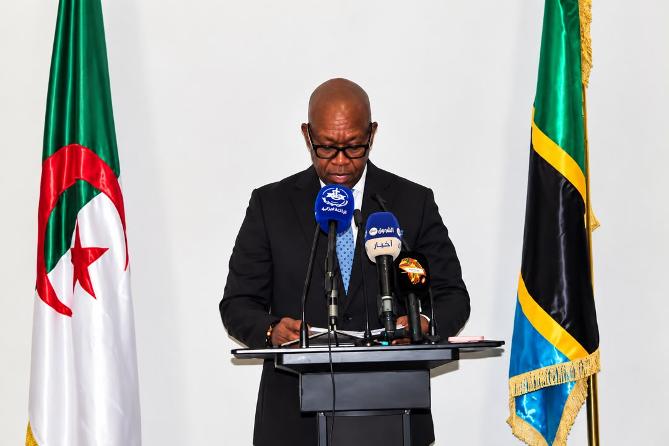
ALGERIA: For years, Tanzania and Algeria have described their relationship in the language of friendship, solidarity and strategic partnership. Now, that relationship is increasingly taking a practical form.
From medicines and electricity to university scholarships, cashew nuts and beekeeping, the two countries are opening new channels of cooperation designed to turn established diplomatic ties into tangible opportunities for their people.
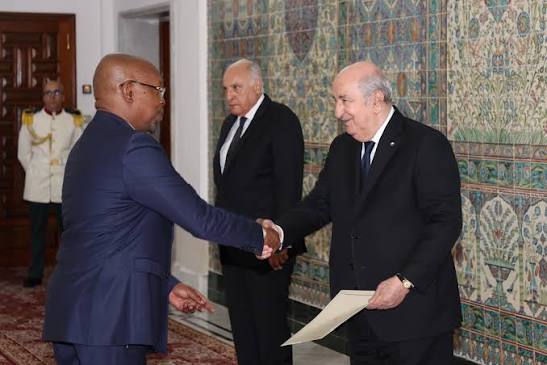
The shift gained fresh impetus on June 10, 2026, when Tanzania’s Ambassador to Algeria, Mobhare Matinyi, presented his Letters of Credence to Algerian President Abdelmadjid Tebboune.
President Tebboune’s message was direct: with areas of cooperation already identified, the time had come to move from identifying possibilities to implementing them.
That message closely echoed an instruction from Tanzanian President Dr Samia Suluhu Hassan to Ambassador Matinyi before his departure for Algeria. As strategic partners, she emphasized, Tanzania and Algeria should now begin reaping the benefits of their long-standing relationship.
For the Embassy, this has meant placing implementation at the centre of its diplomatic engagement.
Ambassador Matinyi says the Embassy will use regular monthly press briefings to keep Algerians informed about developments in bilateral cooperation, while highlighting areas where businesses, institutions and citizens can identify opportunities for engagement.
Five sectors already illustrate the direction of travel: pharmaceuticals, energy, higher education, agricultural trade and beekeeping.
Building a pharmaceutical bridge
Perhaps nowhere is the potential for cooperation more apparent than in pharmaceuticals.
Algeria has developed one of Africa’s largest pharmaceutical manufacturing industries. About one-third of the continent’s approximately 690 pharmaceutical factories are located in Algeria, which has achieved more than 80 percent self-sufficiency in essential pharmaceutical products.
Tanzania brings a different but equally important strength.
In 2018, it became the first African country to attain Maturity Level 3 under the World Health Organization’s Global Benchmarking Tool, recognizing the strength of its pharmaceutical regulatory system.
Put together, these achievements provide a foundation for technical cooperation and industrial development.
Tanzania is seeking to establish itself as a regional pharmaceutical hub, and its geographical position gives it access to markets across East, Central and Southern Africa, representing more than 500 million people.
The two governments are therefore pursuing technical cooperation that could strengthen pharmaceutical production, regulation and trade.
Earlier this month, Ambassador Matinyi met Algerian Minister of Pharmaceutical Products Wassim Kouidri to discuss implementation of an agreement already concluded between the two governments.
The next stage will take place in October, when a high-powered Algerian delegation, including officials from the National Pharmaceutical Products Authority and representatives of state-owned Saidal Group, is expected to visit Tanzania at the invitation of the Tanzania Medicines and Medical Devices Authority.
The purpose will be to explore practical areas of technical cooperation.
Private companies are also entering the conversation.
Algerian pharmaceutical company Frater-Razes is expected to visit Tanzania to examine potential trade and investment opportunities, including engagements with government institutions, pharmaceutical manufacturers, distributors and medical centres.
Meanwhile, Hikma Pharmaceuticals, with support from the Tanzanian Embassy, is finalizing an agreement with MSD Medipharm, a subsidiary of the Medical Stores Department, to facilitate trade and future investment.
The ambition is larger than individual transactions. Tanzania wants to develop a pharmaceutical export base capable of serving markets across the region, while Algeria brings substantial manufacturing experience to the partnership.
Learning from Algeria’s energy experience
The same practical approach is emerging in the energy sector.
Algeria has made considerable progress in expanding energy access, reporting 99 percent electricity access, 26,000 megawatts of generation capacity and gas-network connections reaching 70 percent of households.
For Tanzania, which is pursuing expanded electricity access and connectivity by 2030 while preparing to become a natural-gas producer, Algeria presents an important source of experience.
In July, a delegation from Tanzania’s Electrical Transmission and Distribution Company, a subsidiary of TANESCO, travelled to Algeria following arrangements between the Embassy and Algeria’s Electricity and Gas Company, SONELGAZ.
The delegation examined Algeria’s experience in electricity transmission and distribution and explored possibilities for institutional cooperation.
It also visited GISB Electric, a major Algerian private manufacturer of electrical equipment in Mostaganem, gaining exposure to technologies supporting the country’s energy sector.
The visit also opened discussions on possible cooperation with Sonelgaz International, the international arm of SONELGAZ involved in energy projects in several African countries.
For Tanzania, such exchanges are particularly relevant as the country works toward greater electricity access and prepares to expand its role in natural gas production.
Algeria, already a major African and global player in natural gas, offers valuable experience that can contribute to this emerging area of cooperation.
Scholarships turn cooperation into opportunity.
While infrastructure and industry often dominate discussions about international cooperation, education offers perhaps the most direct investment in people.
In August 2026, Algeria announced 176 university scholarships for Tanzanian students.
Tanzania responded by selecting 150 outstanding students under the Samia Scholarship Extended programme to pursue higher education in Algeria during the 2026/27 academic year.
The programme aligns with Tanzania’s emphasis on developing skills in science, technology, engineering and health sciences.
For the students involved, the cooperation means access to higher education and specialized training. For both countries, it creates a new generation of people with academic and professional links to one another.
Ambassador Matinyi expressed Tanzania’s gratitude to Algeria, describing the scholarships as a reflection of the country’s commitment to African solidarity and human-resource development.
The educational partnership consequently adds a human dimension to the wider economic relationship.
Cashews create a commercial connection
Agricultural trade is providing another tangible example of the relationship moving from diplomatic discussions to commercial activity.
In September, Algerian company Sarl Anacard’Or, based in Oran and specializing in cashew processing, acquired a warehouse in Tanzania’s Mtwara Region to facilitate imports of Tanzanian cashew nuts into Algeria.
The investment followed successful shipments in July and August.
During a visit to the Embassy in August, the company reported having imported six containers in July and seven in August, with a further 14 containers expected to arrive in Oran in two shipments before the end of October.
Tanzania produces about 620,000 tonnes of cashew nuts annually and remains among the world’s leading cashew-producing countries.
The emerging trade relationship is therefore creating room for greater commercial engagement between producers and buyers in the two countries.
But the focus is not limited to exporting raw commodities.
Tanzania is seeking to increase value addition before agricultural products reach international markets. In pursuit of that objective, the Embassy has engaged CAM SARL, an Algerian company that manufactures processing and packaging machinery for agricultural and pharmaceutical products.
The discussions are exploring whether the Algerian company can produce machinery suited to Tanzania’s agricultural sector.
The potential is considerable. Tanzania produces a wide range of agricultural commodities, including coffee, tea, cocoa, cashew nuts, sesame, peanuts, spices, vegetables, bananas, pineapples, mangoes and coconuts.
For Algerian businesses, these products offer opportunities for trade and investment. For Tanzania, cooperation in processing technology could support greater value addition and strengthen the competitiveness of its agricultural exports.
Bees, technology and shared expertise
A less conventional but promising area of cooperation is beekeeping.
In September, Tanzanian government experts and private-sector stakeholders from the beekeeping industry visited Algeria to exchange knowledge and explore technical and commercial opportunities.
The delegation visited a beekeeping cooperative and a beehive manufacturer in Blida, a government honey-analysis laboratory in Tipaza, and honey farms, beekeepers and specialists in Algiers.
The discussions covered both technical knowledge and commercial possibilities.
Under the proposed cooperation, Tanzania could export beeswax and softwoods used in beehive manufacturing to Algeria, while Algeria could supply modern beehives to Tanzania.
The partnership could eventually encompass a broad range of apicultural products, including honey, beeswax, propolis, royal jelly, pollen, honey wine and bee venom, many of which have nutritional, medicinal and cosmetic applications.
Tanzania is the second-largest honey producer in Africa and the tenth-largest globally, producing about 35,000 tonnes of honey and 2,000 tonnes of beeswax annually.
Algeria, meanwhile, has extensive experience in the sector.
The two countries therefore have an opportunity to combine production potential with technical expertise.
Beyond trade, an invitation to Tanzania
As economic and institutional cooperation develops, the Embassy is also seeking to strengthen the people-to-people dimension of the relationship.
Ambassador Matinyi has invited Algerians to discover Tanzania beyond its commercial opportunities.
The country is home to the Ngorongoro Conservation Area and its famous crater, a unique ecosystem supporting diverse wildlife, including Africa’s Big Five: lion, leopard, elephant, buffalo and rhino.
Ngorongoro is also associated with important evidence of early human history, including fossils and footprints dating back millions of years.
Nearby Serengeti National Park offers expansive wildlife landscapes and the annual Great Wildebeest Migration, while Mount Kilimanjaro rises as Africa’s highest mountain and the world’s highest free-standing mountain.
Further east, Zanzibar offers white sandy beaches, blue Indian Ocean waters and a distinctive cultural heritage.
Yet Tanzania’s tourism story extends beyond its most famous destinations. Its diverse cultures, traditional cuisines, historical sites and wildlife experiences provide additional reasons for Algerian visitors to explore the country.
For the Embassy, tourism can also become a gateway to investment.
A visitor who discovers Tanzania as a tourist may also encounter opportunities in hospitality, conservation, transport and other tourism-related ventures.
From goodwill to implementation
The developments across these five sectors point to a broader transformation in Tanzania-Algeria relations.
The two countries have already established diplomatic ties and identified areas of common interest. The current effort is to give those commitments practical expression through institutional exchanges, technical cooperation, trade, investment, education and private-sector engagement.
Pharmaceutical cooperation is linking Algerian manufacturing expertise with Tanzania’s regulatory capacity and regional market access.
Energy cooperation is creating opportunities to exchange experience and technology.
Scholarships are strengthening human-resource development and people-to-people relations.
Agricultural trade is connecting Tanzanian production with Algerian markets while opening discussions on value addition.
Beekeeping is bringing together Tanzania’s production capacity and Algeria’s technical experience.
The Embassy’s monthly engagement with the media is intended to keep these developments visible and encourage more institutions and companies to explore what the partnership can offer.
For Ambassador Matinyi, the central message is straightforward: the time for identifying opportunities has been followed by the time for pursuing them.
As Tanzania and Algeria continue building on their strategic partnership, the emerging cooperation shows how diplomatic goodwill can be translated into practical engagement—and how cooperation between two African countries can create opportunities across industries, institutions and communities.
Issued by the Embassy of Tanzania in Algiers-Algeri.