Fed rate hike sends ripples through Tanzania
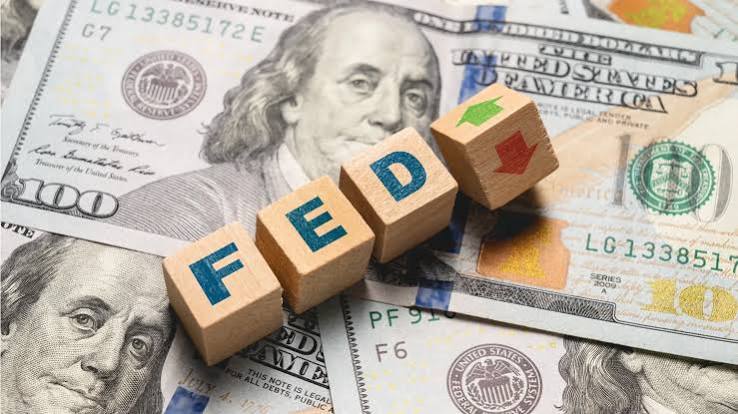
TANZANIA: FOR a Tanzanian investor holding a Treasury bond, shares in a listed bank, or simply shillings in a bank account, the latest decision by the US Federal Reserve may seem like something happening far away.
In reality, the consequences can travel from Washington to Dodoma and Dar es Salaam through the dollar, the shilling, interest rates, capital flows and asset prices.
On September 16, the Federal Reserve raised its federal funds target range by 25 basis points to 3.75–4.00 per cent, saying inflation in the United States, reported at 3.4 per cent in August, remained elevated and that the move would support a return towards its two per cent inflation objective.
For Tanzania, therefore, the important question is not whether the Fed raised rates by 25 basis points. It is how this change in the global cost of money could affect Tanzania’s financial and capital markets.
The first transmission channel is the US dollar. Higher US interest rates can make dollar-denominated assets more attractive to global investors.
When returns on US assets rise, investors may become more selective about investing in emerging and frontier markets.
This can affect capital flows into markets such as Tanzania and, at the margin, increase demand for dollars.
For Tanzania, that matters because exchange-rate movements affect imported inflation, external debt servicing, corporate costs and investment returns.
The shilling has already experienced some depreciation over the past year. The Bank of Tanzania’s published data shows the mean exchange rate at 2,645.72/- per US dollar, compared with 2,442.85/- a year earlier.
Tanzania nevertheless enters this period with important buffers. Inflation was 4.3 per cent in August, first-quarter GDP growth was 6.0 per cent and the Central Bank Rate is currently 6.25 per cent, while foreign reserves cover more than four months of imports.
These conditions provide room for Tanzania’s monetary authorities to respond according to domestic circumstances rather than mechanically following the Federal Reserve.
But global financial conditions cannot simply be ignored. For the Bank of Tanzania, the challenge is to balance domestic growth and inflation objectives with pressures that may emerge through the exchange rate, liquidity and external financing conditions.
The second major transmission channel is Tanzania’s government securities market. When US yields rise, international investors reassess the returns they require from other markets.
A Tanzanian Treasury bond therefore competes not only with other Tanzanian securities but, indirectly, with global fixed-income opportunities, especially following the recent opening of the sovereign debt market to global investors by the Bank of Tanzania.
If global yields remain high, investors may demand a higher risk premium for holding Tanzanian assets. This can put upward pressure on domestic yields.
Because bond prices move inversely to yields, existing fixed-rate bonds can lose market value when comparable new securities offer higher yields.
This distinction is particularly important for investors who trade bonds before maturity. Tanzania’s government bond market is now substantial.
The Dar es Salaam Stock Exchange reported outstanding listed government bonds of 33.47tri/- on September 25, up from 28.56tri/- a year earlier.
The Exchange also reported outstanding corporate bonds of 513.15bn/-, sustainable bonds of 531.39bn/- and Sukuk of 320.73bn/-.
This expanding market means that global interestrate movements increasingly matter to a larger universe of Tanzanian investors.
Yet higher rates are not necessarily bad news for every investor. For someone buying a new Treasury bond and holding it to maturity, higher yields can actually improve the income opportunity.
The challenge is deciding whether today’s yield adequately compensates for the risks associated with maturity, inflation, reinvestment and potential changes in market rates.
The equity market presents another transmission channel Higher interest rates can increase the return investors require from shares.
They can also raise companies’ financing costs, particularly for highly leveraged businesses. Companies with substantial foreign-currency borrowing may face additional pressure if the shilling weakens.
But the impact will not be uniform across the Dar es Salaam Stock Exchange. The latest DSE data provide an interesting illustration. On September 25, the Exchange recorded equity turnover of 3.78bn/- and government bond transactions worth 18.91bn/-.
Local investors accounted for 100 per cent of equity purchases that day, while foreign investors accounted for only 6.22 per cent of equity purchases during the July-toSeptember quarter to date.
This growing importance of domestic investors is potentially significant. A market dominated by foreign portfolio flows can be highly sensitive to changes in global risk appetite.
A deeper domestic investor base provides a more stable source of demand because local investors are principally responding to Tanzania’s own economic prospects, corporate earnings and investment opportunities.
ALSO READ: Fed rate cut: Tanzania resilience strategy (Part 3)
For investors, this brings us to the practical question: what should one actually do? First, review the duration risk in fixed-income portfolios.
Do not assume that a bond is risk-free simply because it is a government security. If you may need to sell before maturity, changes in market yields can affect the price you receive.
Investors should match bond maturities with their liquidity needs rather than automatically choosing the longest available maturity because it offers a higher coupon. Second, look beyond the headline coupon.
A 12 per cent coupon does not by itself tell an investor whether a bond is attractive. Consider the purchase price, yield to maturity, inflation outlook, maturity period and opportunity cost.
The emerging sovereign yield curve should increasingly become a basic tool for making such comparisons. Third, pay attention to currency exposure. Investors with dollar-denominated assets may benefit when the shilling weakens, while those with dollar liabilities can face the opposite effect.
The important question is not whether the dollar will rise or fall, but whether the currency exposure in a portfolio is deliberate and understood. Fourth, be selective with equities.
In a higher-rate environment, investors should look beyond share-price momentum and pay closer attention to earnings quality, dividends, debt levels, cash generation and foreign-currency exposure.
A company capable of growing earnings while maintaining a strong balance sheet is fundamentally different from one whose prospects depend heavily on cheap borrowing.
Fifth, keep liquidity in mind. Global uncertainty can produce sudden changes in asset prices. Investors should avoid putting money needed for short-term obligations into assets whose prices may fluctuate significantly.
Finally, diversify rather than attempt to predict the next Fed or Bank of Tanzania decision. A combination of appropriately selected government securities, equities, collective investment schemes and other suitable assets can provide a more resilient portfolio than concentrating everything in one asset class.
The Fed’s decision is therefore neither a reason for panic nor something Tanzanian investors can afford to ignore.