EAC single currency could reshape regional economy
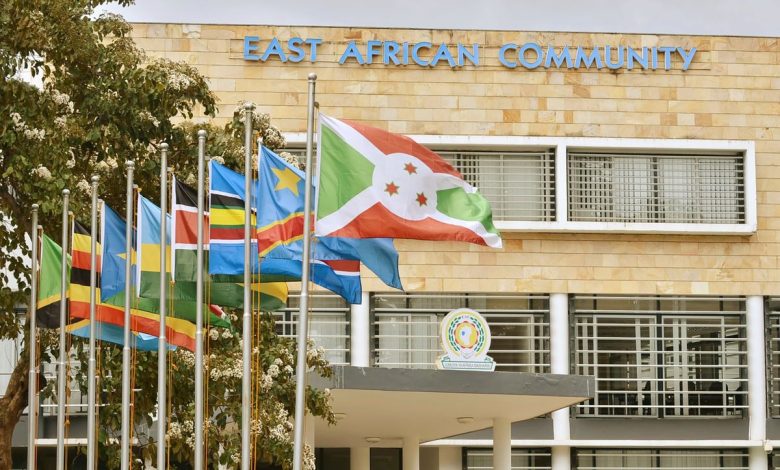
ARUSHA: THE East African Community (EAC) is stepping up efforts to align fiscal and monetary policies as Partner States move towards establishing a single currency by 2031, with stronger budget discipline, harmonised tax systems and closer economic coordination emerging as critical requirements for the planned monetary union.
For the region, monetary integration is intended to deepen economic ties, facilitate cross-border trade and investment, reduce transaction costs and strengthen the ability of Partner States to respond collectively to economic shocks.
But achieving those benefits will require countries to narrow differences in inflation, fiscal deficits, debt levels, foreign-exchange reserves and monetary-policy frameworks.
These issues were at the centre of a five-day meeting held in Arusha from September 21 to 25, 2026, where fiscal authorities and central bank officials examined measures to strengthen economic convergence and advance implementation of the East African Monetary Union (EAMU) Protocol and revised Roadmap.
The meetings began with separate sessions of the Committee on Fiscal Affairs (CFA) and the Economic Affairs and Coordination Subcommittee of the Monetary Affairs Committee (MAC), before the two bodies convened a Joint Session from September 23 to 25.
Addressing the Joint Session, EAC Director of Planning, Aime Uwase, called for practical arrangements to support implementation of the EAMU Protocol and revised Roadmap.
“The matters before us are central to strengthening monetary and fiscal policy coordination, supporting macroeconomic stability and advancing our shared regional integration objectives,” Mr Uwase said.
The Chairperson of the Joint Session, Dr Albert Musisi, Commissioner in Uganda’s Ministry of Finance, Planning and Economic Development, called for accelerated implementation of the EAMU Roadmap to meet the 2031 target for introducing the EAC single currency.
With about five years remaining, he urged Partner States to work within agreed timelines and reach consensus on outstanding issues.
ALSO READ: Z’bar urged to preserve culture, expand creative economy
“We therefore need to increase momentum to ensure that we deliver despite the global economic challenges that we are facing,” Dr Musisi said.
At the fiscal level, the CFA reviewed public financial management reforms aimed at improving budget credibility and execution.
These include stronger revenue and expenditure forecasting, improved cash management and tighter expenditure controls to prevent the accumulation of government arrears.
The meeting also considered establishing a Sub-Committee on Public Financial Management Modernisation and Harmonisation to monitor reforms and strengthen follow-up across Partner States.
Tax policy was another major area of discussion, with officials examining differences in excise duty rates, Value Added Tax (VAT) harmonisation and tax administration procedures.
The proposals include advancing excise-duty harmonisation on a product-by-product basis where consensus already exists, while continuing consultations on rates where differences remain.
The discussions also covered health-related taxes on tobacco, alcohol and sugar-sweetened beverages, as well as finalisation of the EAC Multilateral Agreement on Avoidance of Double Taxation.
A more harmonised tax environment could provide businesses operating across borders with greater certainty and reduce some of the complexities associated with regional trade and investment.
On monetary policy, the Economic Affairs and Coordination Subcommittee examined Kenya’s experience with risk-based credit pricing, which seeks to improve transparency in lending rates and strengthen their responsiveness to monetary-policy decisions.
The meeting also considered whether Partner States could synchronise the release of Monetary Policy Statements, while recognising differences in national policy frameworks, data availability and decision-making calendars.
Fiscal discipline and convergence The Joint Session is also considering national timetables for progressively phasing out central bank overdraft facilities and establishing mechanisms to manage temporary government cash shortfalls.
The proposed approach recognises differences in Partner States’ legal frameworks, fiscal positions and financial markets.
It also highlights the importance of stronger cash-flow forecasting and deeper government securities markets in supporting the transition.
A draft Framework for Coordinating Monetary and Fiscal Policy is under review.
The framework seeks to establish clearer institutional responsibilities, regular information sharing and joint assessments of economic developments, together with mechanisms for monitoring agreed actions.
The region is also working on arrangements that would allow Partner States to pay their annual EAC contributions in local currencies.
The initiative follows the adoption by the 25th Ordinary Summit of EAC Heads of State of a new financing formula, effective from July 1, this year.
Under the formula, 50 per cent of contributions will comprise equal contributions, while the remaining 50 per cent will be assessed according to each Partner State’s average Gross Domestic Product (GDP) per capita over the preceding five years.
Officials are examining exchange-rate references, valuation and settlement arrangements, as well as the management of foreign-exchange risks.
Mr Uwase said the arrangements were expected to improve the timely disbursement of contributions and support smoother budget execution. Another important element is the proposed peer-review mechanism for monitoring macroeconomic convergence.
The mechanism is expected to assess progress, identify emerging risks and track corrective actions across Partner States. This follows the 29th MAC meeting held in July 2026, which noted that no Partner State had met all four primary convergence criteria.
The criteria require headline inflation of no more than 8 per cent, foreign-reserve cover of at least 4.5 months of imports, an overall fiscal deficit including grants of no more than 3 per cent of GDP and gross public debt of no more than 50 per cent of GDP in net present value terms.
These benchmarks are central to the monetary-union project because a common currency requires participating economies to maintain a reasonable degree of macroeconomic stability.
For businesses and investors, successful monetary integration could reduce currency-related costs, simplify regional transactions and improve the predictability of cross-border investment.