Research collaboration key to climate solutions
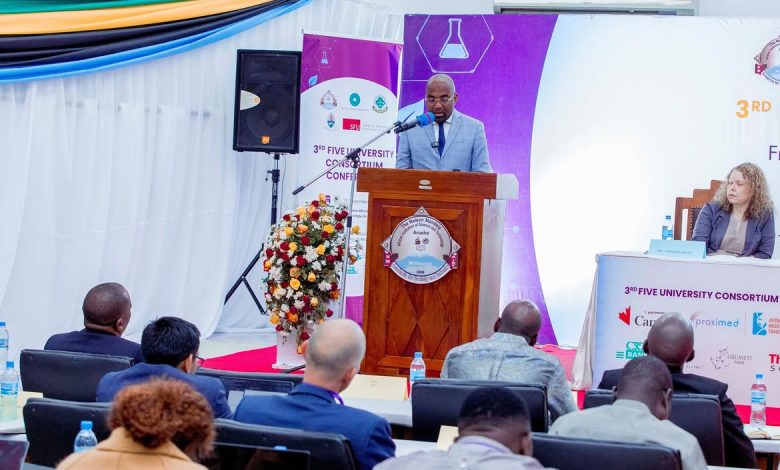
ARUSHA: MINISTER of State in the Vice-President’s Office (Union Affairs and Environment), Engineer Hamad Yussuf Masauni, has called for research and innovation to cross institutional and national borders to help Africa tackle climate change, food and water shortages, health threats and environmental degradation.
Speaking at the closing ceremony of Five Universities Consortium Conference at the Nelson Mandela African Institution of Science and Technology (NM-AIST) in Arusha yesterday, Eng Masauni called for stronger collaboration among universities, researchers and other stakeholders to develop practical solutions to increasingly interconnected global challenges.
He said no single university, country or continent can solve today’s complex problems in isolation.
“Global challenges require international knowledge networks. No university, country or continent can solve these challenges alone,” he said.
Eng Masauni said collaboration should focus on research and innovation in areas including changing energy systems, biodiversity loss, food and water shortages, emerging health threats, environmental degradation and widening socio-economic inequalities.
He also urged African countries to view climate change not only as a challenge but also as an opportunity to drive innovation, leadership and sustainable development.
“Africa should not look at the climate challenge only from the perspective of being a victim. We must also look at opportunities, innovation and leadership,” he said.
Eng Masauni further said the effects of climate change are already being felt across agriculture, water resources, ecosystems, health, infrastructure, energy and people’s livelihoods, making it necessary to integrate climate resilience into development planning, scientific research, technological innovation, investment and public policy.
He said African researchers have an opportunity to develop solutions ranging from climate-resilient agriculture and renewable energy technologies to stronger infrastructure and improved water management systems.
According to Eng Masauni, knowledge generated in Tanzania and across Africa has the potential to benefit communities beyond the continent if international research partnerships continue to expand.
Meanwhile, NM-AIST Vice-Chancellor, Professor Maulilio Kipanyula, said research should not remain confined to academic journals but must reach decision-makers, communities and the private sector to create meaningful change.
“Research alone is not enough. Research must be communicated, understood and used by stakeholders,” Prof Kipanyula said.
He said the consortium had agreed to strengthen efforts to translate research findings into practical knowledge products, including policy briefs and other accessible materials that can support evidence-based decision-making.
Prof Kipanyula said making research easier to understand and apply would help governments, communities and businesses use scientific evidence more effectively when planning and implementing development initiatives.
He also thanked the government for its continued support for research, science, technology and innovation, saying the partnership is helping ensure that research findings deliver practical benefits to society