Seed industry anchors agricultural productivity drive
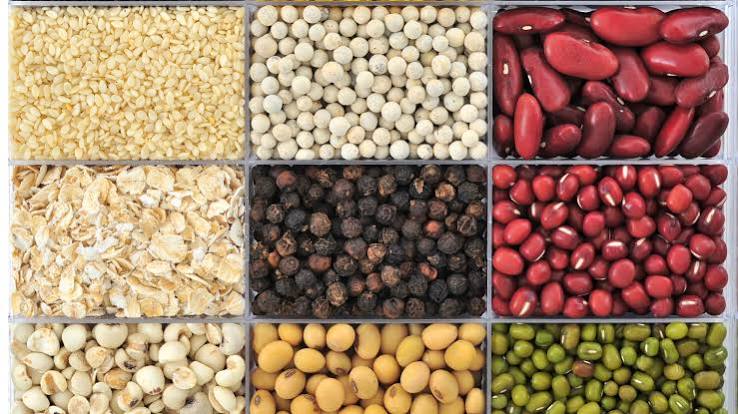
TANZANIA: THE next gains in agricultural productivity may begin long before crops reach the field, as investment in quality seed becomes increasingly central to efforts to raise yields, strengthen food security and build a more competitive agricultural economy.
The stakes are high in a country where more than 65 per cent of the population depends on agriculture for employment.
Higher yields from quality seed can translate into stronger farm incomes, greater food availability and increased demand across input, processing, transport and marketing businesses.
The shift is being demonstrated by Seed Co Tanzania’s new seed-processing facility at Kisongo, Arusha, an investment of about 18bn/-.
The plant adds processing, packaging and storage capacity while strengthening the company’s ability to serve the growing agricultural market.
Agriculture Minister Mr Daniel Chongolo, who opened the facility, said the investment demonstrated the potential of public-private cooperation to support agricultural development.
“Kilimo ni biashara, na sasa kazi inaendelea,” he told the gathering. The investment comes against a significant supply gap.
Tanzania estimates annual demand for quality seed at 127,650 tonnes, while available supply stood at 79,214.48 tonnes in 2025/26.
The government aims to raise availability to 127,650 tonnes in 2026/27, according to figures presented during the tabling of the ministry’s budget.
More significantly, domestic production is targeted to increase from 47,702.45 tonnes to 105,000 tonnes over the same period.
The figures underline the commercial opportunity facing seed producers. Rising demand for certified seed creates room for investment in multiplication, processing, storage and distribution, while reducing reliance on imported agricultural inputs.
For investors, however, processing capacity is only one part of the equation. The Kisongo facility occupies about 7,100 square metres and includes modern processing and packaging equipment, storage facilities and a colour-sorting system for removing damaged, discoloured and foreign seed.
The broader business question is how effectively such infrastructure can translate into higher domestic production and wider market access.
Seed Co says local production now accounts for about half of its seed requirements in Tanzania, up from 42 per cent two years ago, while sales volumes have grown by more than 10 per cent annually.
Seed Co Group Chairman Pearson Ngowero said the company’s strategy was built around local production and developing a stronger network of growers.
“We invest, produce locally, build up growers, strengthen profitability,” he said. He described the company’s commitment to Tanzania as long term, with emphasis on working with government to improve agricultural productivity, farmer incomes and food security.
The economic opportunity extends beyond replacing imported seed. Tanzania Seed Traders Association Executive Director, Baldwin Shuma said increasing domestic seed production could retain more economic value locally by creating demand for land, irrigation, labour, transport, testing, processing and distribution.
Every kilogramme of seed produced locally, he argued, represents economic activity that would otherwise occur outside the country.
This makes seed production part of a wider industrialisation story, linking agricultural inputs with multiple businesses across the economy.
Government policy is increasingly focused on developing the infrastructure and institutions required to support a competitive seed industry.
Mr Chongolo said the Ministry of Agriculture was working to strengthen early-generation seed production through the Tanzania Agricultural Research Institute and the Agricultural Seed Agency (ASA).
At the same time, the Tanzania Official Seed Certification Institute requires modern testing equipment to strengthen quality assurance. The objective extends beyond meeting domestic demand.
The government also wants Tanzania to eventually become a source of quality seed for markets in East and Central Africa.
Achieving that ambition will require reliable access to land and water, as well as a commercially viable network of seed growers. One example is Seed Co’s partnership with ASA involving Dabaga Farm in Iringa Region, where irrigation infrastructure has been installed across about 220 hectares.
Mr Ngowero said the project demonstrated how public resources, private capital and technical expertise ould be combined to expand domestic production.
“This demonstrates public resources, private investment and technical expertise can accelerate local seed production,” he said.
ALSO READ: Horticulture, potato platform to spur seed industry
Seed Co says it has supported irrigation infrastructure covering more than 1,000 hectares through its grower initiatives and plans to expand production into the Lake Zone and Southern Highlands.
The company is also planning additional processing and warehousing capacity, as well as a research station in southern Tanzania.
Taken together, the investments point towards a more integrated industry, where seed multiplication, research, processing, storage and distribution are connected across major agricultural regions.
The counterfeit challenge The growth opportunity, however, comes with a significant market risk: Counterfeit seed.
Mr Ngowero warned that illegally traded and counterfeit seed was undermining the formal market and exposing farmers to potentially substantial losses.
He said counterfeit seed “robs farmers of income, undermines productivity, weakens confidence in the formal seed system, and threatens food security.”
The economic consequences can extend far beyond the cost of the seed itself. Poor-quality seed can result in losses on land preparation, fertiliser, labour and an entire production season.
Mr Chongolo said the government would enforce regulations against manufacturers and distributors of counterfeit seed, including sanctions.
This places enforcement and quality assurance alongside investment as critical components of market development.
The government is also considering how agricultural extension services should evolve alongside the expanding commercial seed market.
Mr Chongolo urged Seed Co to formalise cooperation with the government’s new national agricultural extension agency rather than developing completely separate networks of field agents.
The proposed approach could connect commercial seed suppliers with public extension services while improving farmers’ access to information on seed varieties, agronomic practices and proper use.
For seed companies, stronger extension services could also support market development by improving farmers’ understanding of improved varieties and encouraging adoption. At Kisongo, the investment is already creating local economic activity.
Ward councillor Ms Violet Ngowo said the facility had created employment opportunities, including for women and young people.
Seed Co has also committed to rehabilitating about one kilometre of a community access road, providing scholarships for 10 disadvantaged students and supporting improvements at a local primary school.
While these initiatives are modest compared with the 18bn/- capital investment, they demonstrate the wider economic footprint of agricultural industrial projects.
Ultimately, the performance of Tanzania’s seed industry will be measured beyond the opening of individual processing plants.
The key indicators will be the volume of seed produced domestically, the amount of imports displaced, the number of farmers reached, the growth of commercial seed markets and the impact on agricultural yields.
Tanzania’s seed strategy has evolved alongside agricultural corridor programmes, with Seed Co participating in initiatives involving soybean and cereal production in the Southern Highlands and working with public institutions, development organisations, financial institutions and farmer groups.
That evolution reflects a broader shift in agricultural policy from supplying individual inputs towards developing complete commercial value chains. Research produces improved varieties.
Multiplication requires land, irrigation and growers. Commercial production requires certification and processing. Distribution depends on storage, transport and agro-dealers. Farmers then require extension services and functioning markets