Dangote IPO faces global growth valuation crossroads
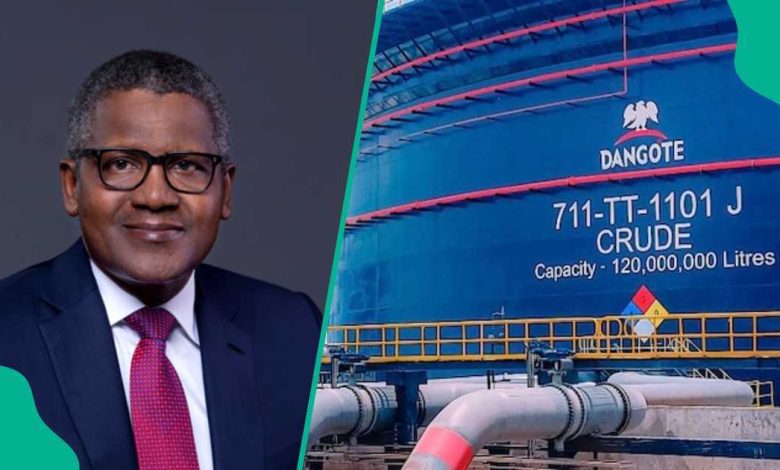
DAR ES SALAAM: DANGOTE Refinery is entering Nigeria’s public markets at a moment when the global economy is sending conflicting signals.
The United States is showing industrial softness while long-term financing costs remain elevated. China is maintaining strong industrial production even as domestic consumption and investment weaken.
Europe is dealing with weak industrial activity alongside renewed energy inflation. Africa remains dependent on imported refined petroleum products despite growing energy demand.
These forces influence crude costs, product prices, refinery margins, export markets, capital costs and valuation.
The US provides the clearest signal on financial conditions. Manufacturing output fell 0.3 per cent in August 2026 after seven months of expansion, while total industrial production was flat from July.
Capacity utilisation stood at 76.3 per cent, below its long-run average, although industrial production remained 1.4 per cent above its level a year earlier.
For Dangote, this is less a direct demand problem than a valuation issue. A company seeking a roughly 47.6 billion US dollars market value must compete for global capital where relatively safe dollardenominated assets offer increasingly attractive returns.
China presents a different challenge. Manufacturing PMI improved to 49.8 in August, while industrial output increased 5.2 per cent year on year and manufacturing output rose 6.1 per cent.
Yet retail sales grew only 0.4 per cent and fixed-asset investment fell 7.2 per cent in the first eight months.
Strong industrial capability combined with weak internal demand can encourage greater competition abroad, including in refined petroleum products.
For Dangote, that creates a potential margin threat if additional Asian supply enters international markets, but also an opportunity if African demand continues growing.
Europe adds another layer. Euro-area industrial production declined 0.1 per cent in July, while inflation accelerated to 3.2 per cent in August.
The European Central Bank raised its deposit rate to 2.50 per cent, even as it expects only 0.9 per cent economic growth in 2026.
Weak growth would normally imply softer fuel demand, but energy shortages can create the opposite effect for refiners.
Europe has therefore become commercially relevant to Dangote as refined-product supply remains constrained.
That connection becomes clearer in Nigeria. The country has historically exported crude while importing refined products. Dangote is helping reverse that structure.
Nigerian seaborne petroleum-product shipments averaged 561,000 barrels per day in the second quarter of 2026, compared with 79,000 b/d in 2023.
Exports reached about 350,000 b/d, while imports fell below 130,000 b/d.
The refinery has increased crude-distillation capacity to 700,000 b/d, making Nigeria a more important refining and petroleum-export hub.
The financial results reinforce this transition. Dangote generated more than 13 billion US dollars in revenue and approximately 1.82 billion US dollars in net profit in the first half of 2026, compared with a 476 million US dollars loss in the previous year.
The refinery is now a large operating business producing substantial earnings, making the IPO materially different from an offering based primarily on future expectations.
The IPO involves 4.1 billion shares at 525 each, raising approximately 2.15 trillion, or 1.6 billion US dollars. The implied equity valuation is roughly 47.6 billion US dollars. That valuation is where the investment debate becomes more demanding.
Investors are effectively valuing the future earnings of a business expected to expand beyond its current footprint.
Dangote plans to increase Nigerian refining capacity from 700,000 b/d to around 1.4 million b/d, with the expansion estimated at roughly 14.3 billion US dollars.
The market must consider whether the refinery can generate enough cash flow, obtain additional financing and execute the expansion without allowing the capital burden to undermine returns.
The geographic strategy makes the story broader. Dangote has selected Lamu in Kenya for a proposed refinery of approximately 700,000 b/d, estimated at 15–16 billion US dollars.
The project is intended to serve Kenya and potentially Uganda, Tanzania, Ethiopia, South Sudan, Rwanda, Burundi and the Democratic Republic of Congo.
If developed, Lamu would give Dangote an Indian Ocean platform alongside its Atlanticfacing Nigerian operation.
But East Africa introduces a major execution challenge. Unlike Nigeria, Kenya does not currently have a domestic crude supply base capable of supporting a refinery of that scale.
Feedstock would have to be sourced through regional producers such as Uganda and South Sudan or international markets, while pipelines, storage and port infrastructure would need to support the operation.
The proposed refinery is therefore a future growth option, with economics dependent on financing, crude availability and infrastructure.
Refinery economics depend on actual throughput and margins, not simply nameplate capacity. A 700,000-b/d refinery operating consistently at high utilisation is fundamentally different from one constrained by crude shortages.
Dangote has indicated that it requires roughly 13–15 crude cargoes a month and has at times received only about seven under local supply arrangements, forcing it to source additional barrels internationally. Its ability to secure competitively priced crude may therefore matter as much as headline capacity.
Dangote’s exceptional firsthalf profitability occurred during severe disruption in global fuel markets. Its exports of jet fuel into Europe expanded sharply as regional supply tightened.
If unusually strong margins persist, earnings could remain powerful. If geopolitical disruptions fade and global refining capacity normalises, margins could narrow even while Dangote continues operating successfully. Operational success and share-price performance may therefore diverge.
The next 12 months should be assessed through refinery utilisation, margins, crude availability, export demand, the naira-dollar relationship and expansion.
Higher global interest rates could raise required returns on Nigerian equities, while Africa’s structural fuel deficit could provide a durable demand base.
For investors, the central issue is whether Dangote can convert scale into durable cash flow while managing global commodity cycles. Its position will depend on reliable crude supply, sustained utilisation, disciplined capital allocation and financing.
The IPO, as it enters public markets, places current profitability against a larger, broader growth proposition, making valuation and execution as important as operating performance.