Shares everyone is buying, but no one is selling

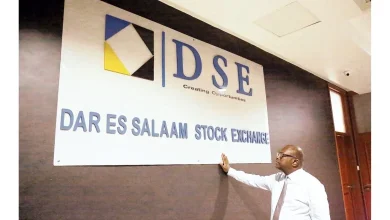
DAR ES SALAAM: TANZANIA’S stock market is having the kind of year that attracts headlines.
The benchmark All Share Index has climbed by roughly a third since January, market capitalisation has pushed past 36tri/- and the number of investor accounts opened last year alone jumped by more than 300 per cent.
On the surface, the figures suggest a frontier market coming of age. Beneath them, however, the behaviour of investors, the liquidity of individual counters and the sustainability of some dividend payments raise deeper questions about the quality of the market’s growth. Start with who is buying.
A large proportion of new accounts opened in the past year reportedly belong to younger investors, many of whom are entering the market through mobile platforms that allow users to buy shares using smartphones and banking applications.
The rapid growth of mobile trading represents a significant change for a market that historically depended heavily on institutional investors and a relatively small group of wealthy individuals.
Lower barriers to entry are helping broaden participation and create a new generation of retail investors. But the question is what happens after those investors buy.
Foreign investors, who have traditionally contributed significant liquidity and price discovery, have at times reduced their positions even as overall trading activity has increased.
Where sustained foreign selling coincides with rising domestic participation, the pattern deserves closer attention.
It raises an important market question: Is new retail money adding fresh demand and liquidity, or is some of it absorbing positions being reduced by more established investors?
The issue becomes more complicated when dividend payments are considered. Some of the exchange’s popular counters, including companies among the higher-yielding stocks, have recorded dividend payouts that in certain periods exceed annual earnings.
A payout ratio above 100 per cent does not necessarily mean a company is financially distressed. Companies can distribute accumulated reserves or use other sources of cash.
However, persistent payouts above earnings can raise questions about how much cash remains available for reinvestment, expansion and strengthening balance sheets.
This is particularly relevant in a market where dividend income remains an important consideration for investors.
ALSO READ: Rising, falling share prices why patience matters for stock market investors
Attractive payouts can draw investors seeking regular returns, but the longer-term sustainability of those payments depends on earnings, cash generation and the company’s investment requirements.
That brings the discussion to one of the market’s longstanding weaknesses: Liquidity.
Tanzania has a relatively small number of listed companies, while free-floating shares are concentrated in a limited number of counters. As a result, some shares can remain inactive for extended periods after investors purchase them.
Thin liquidity can create a market in which the latest transaction does not necessarily represent a broad consensus on a company’s value.
Where relatively few shares are available for trading, a large buy or sell order can produce a significant movement in the share price without a corresponding change in the underlying fundamentals. This creates challenges for both investors and the market itself.
Investors may find it difficult to enter or exit positions at predictable prices, while companies may struggle to attract a broad and continuously active shareholder base. None of this means the current optimism is misplaced.
The rapid increase in investor accounts, the expansion of mobile trading and growing interest in collective investment products demonstrate that Tanzania is building genuine participation and market infrastructure.
The regulator’s ambition to expand the number of investors substantially over the coming years is therefore supported by a growing pool of potential participants, particularly among younger Tanzanians becoming familiar with formal investment markets.
The bigger challenge is ensuring that growth in participation is accompanied by healthier market behaviour. A market can add hundreds of thousands of new accounts while individual shares remain thinly traded.
It can record strong price gains while liquidity remains concentrated in a handful of counters. Companies can attract investors through high dividends while simultaneously facing the need to retain cash for future investment.
These dynamics do not necessarily invalidate the market’s recent gains, but they make the headline numbers incomplete.
The next stage of Tanzania’s capital-market development should therefore focus not only on increasing the number of investors, but also on improving liquidity, broadening the range of listed companies, strengthening investor education and encouraging sustainable dividend policies.
Greater participation will be more meaningful if investors understand the risks associated with thinly traded securities, distinguish dividend yield from long-term value creation and make decisions based on company fundamentals rather than momentum alone.
Tanzania’s stock-market boom is real, and the expansion of retail participation is an important development.
But the durability of that growth will ultimately depend on whether more investors translate into deeper liquidity, broader ownership and stronger long-term investment behaviour. The index can show where the market has been.
The harder question is whether the underlying market structure is strong enough to sustain where it is going.