Inside Tanzania’s plan to transform itself into East Africa’s food basket
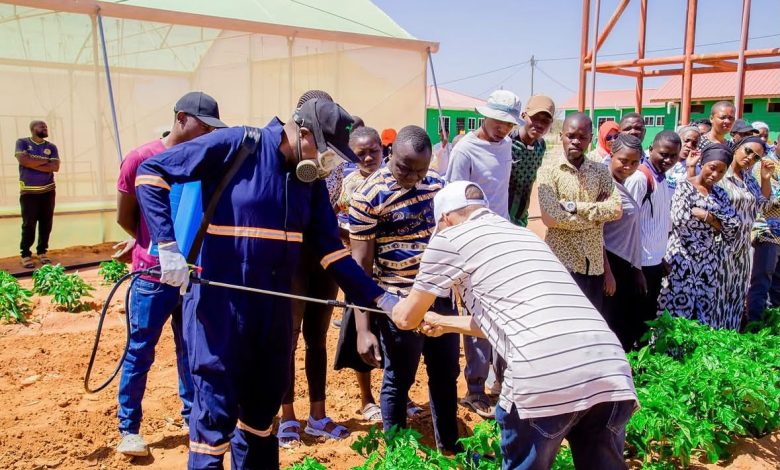
DAR ES SALAAM: TANZANIA’S agricultural sector has undergone remarkable transformation, evolving from a subsistence activity into a strategic commercial powerhouse that is positioning the nation as East Africa’s premier food basket.
Under President Dr Samia Suluhu Hassan’s leadership, the sectoral budget has jumped from a modest 294bn/- in 2021/22 to a record 1.105tri/- in 2026/27, enabling the government to fund irrigation schemes and infrastructure development and subsidise inputs.
Food crop production reached 23.78 million tonnes in the 2024/25 season, achieving a national food self-sufficiency ratio of 130 per cent, a surplus of over 5.5 million tonnes.
With ambitious targets of 10 per cent annual growth by 2030 and 3 billion US dollars in agro-processing value, Tanzania is attracting global investors through initiatives like the Agricultural Growth Corridors of Tanzania (AGCOT), which targets 100 billion US dollars in agricultural GDP by 2050.
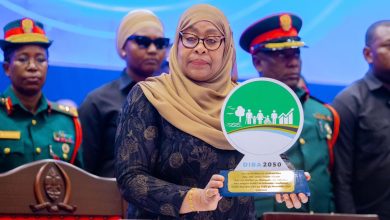
Speaking during her official visit to Moscow, Russia in June 2026, President Dr Samia placed agriculture at the heart of Tanzania’s expanding economic partnerships, describing it as a key driver for future trade and investment.
“There is a solid foundation already in place and we expect agriculture to drive a significant expansion in trade between our two countries,” she said. The Head of State’s global engagement reflects a broader vision for the sector.
A sector transformed
The numbers tell a compelling story. Agriculture currently contributes 26.3 per cent of Tanzania’s GDP and employs 61.4 per cent of the national workforce, while accounting for 23.6 per cent of the country’s exports of goods.
Strategic partnerships and investment
The AGCOT initiative, launched in 2025, represents a systems-level transformation. AGCOT Centre CEO Geoffrey Kirenga explained: “Tanzania is building the institutional foundations for a transformation that will quintuple our agricultural GDP, reshape our entire agricultural sector, crops, livestock and fisheries and ensure the benefits reach every Tanzanian, especially women and youth.”
The initiative builds on SAGCOT’s success, which attracted 6.34 billion US dollars in investments over 14 years.
Minister for Agriculture Daniel Chongolo assured farmers: “There shouldn’t be any fear or panic over the availability or supply of fertiliser, as we have plenty of stock in our warehouses. The government fertiliser subsidy programme launched five years ago will continue to enable increased food and cash crop output.”
Investment opportunities
Tanzania offers vast untapped opportunities. The country possesses 44 million hectares of arable land, yet only 10.8 million hectares (24 per cent) are currently under cultivation. Of the 29.4 million hectares suitable for irrigation, 2.3 million hectares have high potential.
Minister of State in the President’s Office for Planning and Investment Prof Kitila Mkumbo detailed how the administration is turning farming into an investmentready sector.
“The bilateral agreements we are signing cover agriculture, industries, transport, logistics, trade and investment. These strategic MoUs are part of the active implementation process to open up Tanzania to global powers, ensuring our agricultural revolution is backed by solid international capital,” he said.
Key investment areas
Commercial farming across 33.2 million hectares of uncultivated arable land, offering scale rarely available elsewhere. Major food crops include maize, rice, pulses, bananas and cassava, while cash crops include cashew nuts, coffee, cotton, tea, tobacco and sisal.
Agro-processing aligns with the Master Plan 2030 target of 3 billion US dollars in processing value, with gaps across grain milling, edible oils, dairy and horticulture. Tanzania currently spends billions on imported cooking oils, creating significant opportunity for sunflower, oil palm and sesame seed extraction plants.
Irrigation development covers 2.3 million hectares of high-potential irrigable land suited to staple and horticultural production.
Fertiliser manufacturing is an emerging opportunity. The government plans to use 1.5 million tonnes of fertiliser, with 400,000 tonnes supplied by domestic producers already exporting to Kenya, the DRC and Malawi.
Livestock and poultry offer strong potential. Tanzania has 36.6 million cattle, the second largest herd in Africa. Poultry and meat processing have been prioritised in national budgets.
Aquaculture under the National Blue Economy Policy 2024 opens entry points in fish cage farming, sea cucumber, crab and seaweed cultivation along Tanzania’s 1,424km coastline.
Benefits for citizens
The reforms are delivering tangible benefits. Average maize yields have jumped from 1.5 to 2.5 tonnes per hectare, doubling net household income for millions of rural families.
The International Institute of Tropical Agriculture (IITA) Director General, Dr Simeon Ehui reflected: “We’re excited about the focus on making agriculture attractive for the youth, creating jobs and empowering the next generation to thrive in agribusiness.”
Director General of the Cereals and Other Produce Regulatory Authority (COPRA) Ms Irene Madeje Mlola noted that produce volume rose significantly, demonstrating the success of technologydriven market systems.