BRICS builds an alternative path for global payments
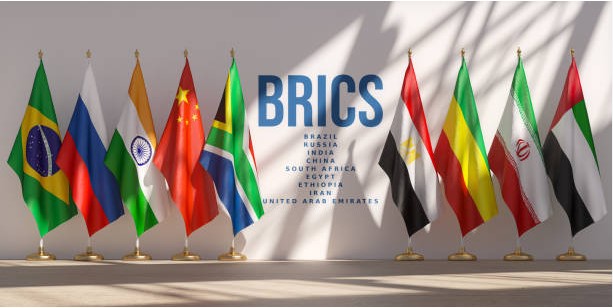
NEW DELHI: A GROWING debate about the future of international payments intensified following the 18th BRICS Summit in New Delhi from September 12-13, this year.
Held under the theme ‘Building for Resilience, Innovation, Cooperation and Sustainability’, the summit brought together the expanded 11-member BRICS grouping and produced the New Delhi Declaration, which includes commitments on cross-border payments, local-currency settlements, financial infrastructure and digital connectivity.
But the declaration requires careful interpretation. Claims that BRICS has already launched a fully operational replacement for SWIFT, created a common currency or ended the dollar’s central role go beyond what the document establishes.
The more significant development may be less dramatic: BRICS is building the foundations for greater diversification in international payments.
The key provision is paragraph 90 of the New Delhi Declaration, where leaders acknowledged the work of the BRICS Payment Task Force on practical solutions for cross-border payments.
The task force is studying interoperability between payment and messaging channels and promoting the use of BRICS local currencies for trade and investment settlements. Leaders encouraged continued work towards payment mechanisms that are faster, cheaper, more accessible, efficient, transparent and secure.
This matters because international trade depends on much more than currencies. A Tanzanian importer buying machinery from China, an Indian company paying a UAE supplier or a Brazilian firm purchasing Russian commodities needs financial institutions capable of communicating, verifying transactions, handling foreign exchange and settling payments.
For decades, much of this system has operated around the dollar, correspondent banking and financial infrastructure concentrated in Western markets.
BRICS is not currently replacing that system. Instead, its approach is to create additional channels that could reduce reliance on it where commercial and regulatory conditions allow.
The term ‘BRICS Pay’ is increasingly used to describe efforts to connect national payment systems and facilitate local-currency transactions. However, the New Delhi Declaration does not announce a fully operational BRICS payment system replacing SWIFT.
Instead, it refers to continuing work on interoperability and practical crossborder payment solutions. Creating such an ecosystem is considerably more complicated than connecting mobile-payment platforms.
It requires common technical standards, messaging protocols, settlement arrangements, foreign-exchange liquidity, cybersecurity, sanctions and compliance procedures, dispute-resolution mechanisms and compatible legal frameworks.
The diversity of BRICS financial systems and regulations makes this a substantial challenge. The dollar also remains deeply entrenched. IMF data show that the US dollar accounted for 57.13 per cent of global official foreignexchange reserves in the first quarter of 2026, up from 56.42 per cent in the previous quarter.
Its strength is supported by deep Treasury markets, extensive dollar liquidity, widespread trade invoicing and decades of network effects.
Replacing that system entirely would therefore be difficult. A more realistic possibility is gradual diversification.
The emerging model could allow Chinese companies to pay Indian suppliers in renminbi or rupees, Indian companies to settle some transactions with UAE partners in local currencies, and other BRICS members to bypass the dollar where practical.
This does not mean the dollar disappears. It means international commerce could increasingly operate through several interconnected payment channels.
SWIFT’s role also needs to be understood correctly. SWIFT is a member-owned cooperative based in Belgium that provides financial messaging services; it is not a bank and does not itself settle transactions.
Nevertheless, its central role in international financial messaging, combined with correspondent banking and dollar-clearing arrangements, gives financial infrastructure strategic importance.
Russia’s experience following its exclusion from parts of the Western financial system reinforced concerns among some governments about relying too heavily on external payment infrastructure.
The lesson is not necessarily that countries must abandon the dollar. Rather, governments and banks may seek alternative channels so that they are not dependent on a single system.
Geopolitical pressure adds urgency
The issue has gained additional importance amid growing US pressure on countries maintaining economic relations with Russia.
On September 18, 2026, President Donald Trump signed legislation authorising tariffs of up to 100 per cent on goods from major importers of Russian oil and gas and countries helping Russia evade sanctions.
Reuters reported that the measure could affect major Russian-energy buyers, including China and India. This should not automatically be interpreted as a response to BRICS Pay. A more cautious reading is that sanctions and trade restrictions can encourage affected countries to strengthen alternative financial and trading channels, while the United States seeks to preserve its economic leverage.
The interaction between these developments could become an important feature of international finance over the next decade.
The real opportunity is interoperability
India has its Unified Payments Interface (UPI), China has extensive digital-payment infrastructure, Brazil operates Pix, while Russia and the UAE have developed their own financial and digital-payment systems.
Connecting such systems could eventually allow businesses to conduct more crossborder transactions without relying on traditional correspondent banking for every payment.
There has also been discussion around connecting central-bank digital currencies, although significant technical, regulatory and political obstacles remain.
CBDC interoperability raises questions about cybersecurity, monetary sovereignty, capital controls, data governance, exchange rates and financial regulation.
The same applies to conventional payment systems: Interoperability is useful only if participating countries can agree on standards, security and regulatory rules.
What does this mean for commercial banks? For banks, the transformation presents both risks and opportunities.
Traditional correspondent banking generates revenue from foreign exchange, payment processing, trade finance and cross-border settlement.
If direct payment connections reduce some intermediaries and transaction costs, certain traditional revenue streams could come under pressure.
But banks could also become multi-rail financial institutions, offering customers several options: Conventional correspondent banking, local-currency settlement, digital payment systems and eventually CBDC-based channels.
The institutions best positioned for this environment will need the capacity to operate across multiple payment infrastructures while maintaining strong compliance, cybersecurity and liquiditymanagement systems.
Why Africa and Tanzania should pay attention For Africa, the implications could be significant. Many African economies face high cross-border payment costs, limited correspondent-banking relationships and foreign-exchange constraints.
Greater interoperability between African and BRICS payment systems could potentially reduce transaction costs and facilitate trade.
For Tanzania, this is particularly relevant because China, India, the UAE and other BRICS economies are important trading and investment partners.
A Tanzanian bank capable of connecting efficiently with Chinese, Indian, Emirati and other emerging-market payment networks could potentially offer exporters and importers faster and more affordable settlement services.
ALSO READ: BRICS pushes for new financing options for Africa
This could support trade in minerals, agriculture, manufactured goods, tourism and services. It also highlights the need for Tanzania to strengthen digital-payment infrastructure, cybersecurity, foreignexchange liquidity and regulatory capacity.
The New Development Bank could complement these efforts through greater local-currency financing and support for infrastructure and economic integration.
The New Delhi Declaration calls for continued work on development finance and economic cooperation, reinforcing the broader push for greater financial resilience.
The real test starts now
The New Delhi Summit should therefore be viewed as the beginning of a test rather than the completion of a financial revolution.
BRICS has demonstrated political support for greater payment diversification. The harder question is whether member countries can turn that political commitment into infrastructure that businesses actually want to use.
Companies ultimately care about cost, speed, reliability, liquidity and legal certainty. If alternative BRICS payment arrangements can deliver those benefits, adoption could grow naturally. If they cannot, businesses will continue to rely heavily on established dollar, euro and correspondent-banking channels.
The future of global finance is therefore unlikely to be determined by a single announcement declaring one currency or payment system the replacement for another. Instead, change may emerge gradually through millions of individual commercial transactions. The New Delhi Declaration does not signal the end of the dollar era, nor does it establish a BRICS substitute for SWIFT.
What it does demonstrate is that major emerging economies are investing political and institutional resources in developing additional ways to conduct, finance and settle international trade. For global banks, this points towards a more diversified financial landscape.
For Tanzania and other developing economies, the strategic priority may be less about choosing one system over another and more about developing the capacity to connect securely and efficiently with multiple systems. The real challenge has begun, not because BRICS has taken control of the existing global payments framework, but because it is working to ensure that international commerce has more than one route through which it can move.