

Digital technology takes centre stage in healthcare transformation
DAR ES SALAAM: FROM electronic medical records and digital health platforms to advanced diagnostic equipment and datadriven decision-making, technology is rapidly changing the way healthcare is delivered around the world.
What was once largely dependent on paper records, physical files and face-toface consultations is increasingly becoming a digitally connected system in which patient information can be captured electronically, health trends analysed in real time and healthcare professionals supported by technology in diagnosis, treatment and follow-up.
The transformation is particularly important for countries seeking to expand access to quality healthcare while dealing with growing populations, limited resources and shortages of health professionals.
Digital technology has created opportunities to make healthcare more accessible and efficient by improving the collection and use of health information, supporting communication between health workers and strengthening the ability of health systems to monitor diseases and respond to emerging health challenges.
At the global level, the World Health Organisation (WHO) has increasingly emphasised the importance of digital infrastructure and better use of health data in strengthening health systems. WHO’s work on health information systems highlights the need for countries to invest in digital infrastructure, integrate health data and promote evidence-based decision-making.
ALSO READ: Rapid diagnostics bring innovation closer to Tanzanian patients
Technology is also changing how healthcare workers interact with patient information. Electronic medical records can reduce dependence on paper files and make patient information easier to access and manage, while digital systems can support continuity of care and improve the availability of information needed by health professionals. For Tanzania, the digital transformation of healthcare is not a new concept.
The country has been developing digital health systems as part of broader efforts to strengthen health service delivery and health-sector planning. The Ministry of Health has established a range of digital health initiatives, including the District Health Information Software 2 (DHIS2), which is used for collecting, storing, analysing, reporting and disseminating health information.
The system provides tools for data analysis and visualisation, enabling health managers to use information in monitoring and decisionmaking. The country has also been moving towards greater use of electronic individual-level health information. Ministry of Health guidelines indicate a shift towards collecting electronic individual-level information rather than relying predominantly on aggregated health data.
Electronic Medical Records (EMR) are another important part of this transition. Government documents indicate that EMR systems have been integrated across tertiary hospitals, strengthening the digital management of patient information and healthcare services. The use of technology is also extending beyond individual hospitals.
Tanzania’s Data Use Partnership is designed to strengthen digital health and local capacity so that government officials, health workers and patients can have better access to data and make more informed decisions.
The country’s experience demonstrates that digital transformation in healthcare is not simply about introducing computers into hospitals. It involves creating interconnected systems that allow information to move more efficiently, enabling health workers and policymakers to make decisions based on reliable data.
In this environment, medical technology is also becoming increasingly important. Modern diagnostic equipment can help healthcare professionals identify diseases more quickly, while digital tools can support monitoring, communication, patient management and access to specialised knowledge.
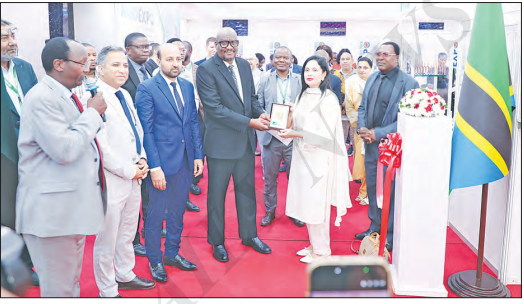
The growing importance of these technologies was reflected at the 27th MedExpo Tanzania 2026, where manufacturers, healthcare professionals, investors and technology providers from more than 20 countries gathered in Dar es Salaam to showcase medical innovations and explore partnerships.
Deputy Permanent Secretary in the Ministry of Health, Mr Ismail Hassan Rumatila, said digital health models, diagnostics, medical devices and other emerging technologies were becoming critical to improving healthcare.
“Technologies transforming healthcare globally, including digital health models, diagnostics, medical devices and other innovative solutions, are critical to improving the quality, efficiency, safety and accessibility of health services,” he said.
Mr Rumatila said the Government recognised the private sector as an important partner in advancing healthcare and was creating an enabling environment for investment in medical technologies, pharmaceuticals, diagnostics, healthcare infrastructure, research and development, logistics and digital health. He urged international investors, manufacturers and technology providers to establish partnerships with Tanzanian companies, particularly in technology transfer and knowledge sharing.
“Come and explore our opportunities, establish partnerships with Tanzanian companies, transfer technology and knowledge, and become long-term partners in our health sector transformation,” he said.
The emphasis on technology transfer is significant because the long-term value of digital transformation depends not only on importing equipment and software, but also on developing the local skills and systems required to operate, maintain and improve them.
The private sector’s role was also highlighted by Chargé d’Affaires of the Pakistan High Commission, Mr Muhammad Azeem Khan, who said Pakistani companies participating in MedExpo saw opportunities for deeper cooperation with Tanzania in pharmaceuticals, surgical equipment and related technologies. Nineteen Pakistani pharmaceutical and surgical equipment companies are participating in the exhibition, according to Mr Khan.
ALSO READ: Green technology, smarter systems drive Dar Port transformation
“I would particularly encourage pharmaceutical companies to look at Tanzania, not simply as a destination for exports, but as a strategic partner and gateway to the wider East African market,” he said.
He said cooperation between the two countries could create opportunities for technology transfer, joint ventures and improved access to quality and affordable healthcare products.
“We see Tanzania not only as an important market, but also as a partner in strengthening healthcare cooperation. Pakistan has significant manufacturing capacity, technical expertise and competitive pharmaceutical and surgical products, while Tanzania provides an important gateway to the wider East African market,” he said.
For Ms Adeela Younis, Trade and Investment Counsellor and Commercial Counsellor for East Africa at the Pakistan High Commission, the future of healthcare cooperation also lies in building stronger commercial and investment relationships. She said the participation of Pakistani companies at the exhibition demonstrated the country’s interest in expanding cooperation with Tanzania beyond conventional trade.
“We have 19 companies here, and we are very pleased to be participating in Tanzania with the largest pavilion at this exhibition,” Ms Younis said.
She said trade could serve as a bridge for investment, business partnerships and the movement of knowledge and expertise between the two countries. “Trade between Pakistan and Tanzania does not end with economic transactions. It goes beyond trade and beyond the economy. It is about connecting people,” she said.
Meanwhile, ExpogroupEast Africa Regional Director Mr Duncan Njage said Africa needed to strengthen its ability to produce medical supplies, diagnostic equipment and essential healthcare technologies locally and regionally.
“One of the key lessons we have learned in recent years is the importance of having reliable access to medical supplies, diagnostic equipment and essential healthcare technologies. Africa must therefore continue to encourage local and regional production while creating strong partnerships with international manufacturers and technology providers,” he said.
His argument points to another dimension of healthcare technology: resilience. Access to sophisticated technology is of limited value if countries cannot maintain equipment, obtain essential supplies or develop the technical capacity required to keep systems functioning.
Technology, however, must operate within a framework that protects patients. Registrar of the Pharmacy Council of Tanzania, Mr Boniface Magige, said regulation remained critical as innovation continued to expand in the pharmaceutical and healthcare sectors.
“Our role as a regulator is therefore not simply to enforce compliance, but also to work collaboratively with stakeholders to create an environment where innovation can thrive without compromising quality and patient safety,” he said.
The ultimate measure of technological transformation, however, remains its impact on people. Public Health Specialist at Medical Expert Organization, Mr Martin Mwakalinga, said members of the public should also take advantage of available opportunities to access health education, screening and professional guidance.
“We call upon the public and all stakeholders to take an active role in protecting their health through health education, awareness, prevention and screening,” he said.
His message reinforces the broader purpose of digital and medical innovation: technology should not exist simply as sophisticated equipment or computer systems, but should translate into earlier detection, better information, more informed decisions and improved access to healthcare. As Tanzania continues its digital health journey, the challenge will be to ensure that innovation reaches beyond major hospitals and exhibitions to become part of everyday healthcare delivery.
The future of healthcare is therefore increasingly being shaped not only by medicines and medical professionals, but also by data, connectivity, digital platforms, diagnostic technologies and the ability to turn information into timely action. MedExpo’s focus on technology, investment, innovation and partnerships reflects this wider transformation, bringing together the different players needed to move healthcare from traditional systems towards a more connected, data-driven and technology-enabled future.


ok9 cung cấp đa dạng các sản phẩm trò chơi giải trí như: bóng đá, bắn cá, nổ hũ… Cùng nhiều khuyến mãi ưu đãi hấp dẫn tại https://ok9599.com/