Idle mines put on notice
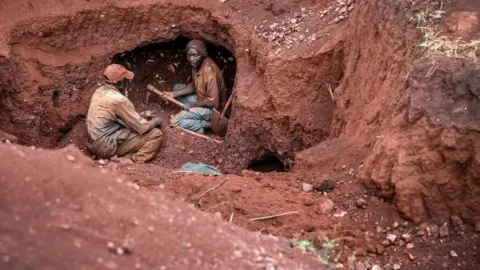
DODOMA: PRIME Minister Dr Mwigulu Nchemba has ordered firm action against holders of mining licences and permits who have failed to develop their areas for extended periods, including the cancellation of licences in accordance with the law.
He said undeveloped mining areas should be repossessed and allocated to Tanzanians, particularly young people seeking opportunities to engage in mining activities.
“I direct the Ministry of Minerals to take swift and firm action in accordance with the law, including cancelling permits and licences that have been held for a long time without being developed. Those areas should be allocated to Tanzanians, particularly young Tanzanians who need areas for mining,” the Prime Minister said.
Adjourning the Fourth Session of the 13th Parliament in Dodoma yesterday until October 27, 2026, Dr Mwigulu said that despite the mining sector’s positive growth, challenges persisted.
He cited the practice of some individuals holding multiple licences for extended periods without developing the areas, contrary to the requirements of the Mining Act. The practice, he said, denied Tanzanians, particularly smallscale miners, opportunities to participate in the sector.
Dr Mwigulu urged licence holders wishing to retain their licences to comply with the conditions attached to them and develop their mining areas. He also raised concerns over local government authorities imposing service levies exceeding the rate stipulated under the Mining Act.
The Act provides for a service levy of 0.25 per cent of the value of minerals. Meanwhile, the Prime Minister directed the Ministry of Finance, Ministry of Transport, Tanzania Railways Corporation (TRC) and contractors to work around the clock to ensure the timely completion of ongoing Standard Gauge Railway (SGR) projects.
He said the Isaka-Mwanza section was progressing well and could reach completion between now and December.
ALSO READ: ESAAMLG urges results in financial crime fight
“I direct the Ministry of Finance, the Ministry of Transport, Tanzania Railways Corporation and contractors responsible for constructing these sections to work day and night, specifically the Mwanza-Isaka, Isaka-Tabora, Tabora-Kigoma and Makutupora-Dodoma sections,” he said.
The Premier expressed optimism that, if all parties fulfilled their responsibilities, residents of Mwanza, Mara, Shinyanga, Geita and Kagera regions would be able to travel to the capital by SGR train by 2030. Drawing from experience gained in implementing other infrastructure projects, including the 2,115-megawatt Julius Nyerere Hydropower Station, Dr Mwigulu said Tanzania had demonstrated its capacity to implement major development projects.
He said the hydropower project was not merely an electricity-generation venture but also demonstrated the country’s ability to implement its development plans and objectives. On preparedness for El Niño rains, Dr Mwigulu said the government was taking precautionary measures, including strengthening disaster management committees and setting aside funds for emergency infrastructure repairs.
He also reminded leaders that from 2028, the number of children joining Form One annually was expected to triple to more than three million. To accommodate the growing enrolment, the government would need to construct more than 8,000 laboratory rooms and 16,000 classrooms, as well as recruit additional teachers.
“We must change our spending habits. If we do not change our spending habits, our children will return to studying under trees. We should not go back there,” he said.
The Prime Minister urged leaders to reduce unnecessary expenditure and prioritise investment in essential social services, particularly education.