Beyond banking: Why Africa’s next inclusion era requires expertise
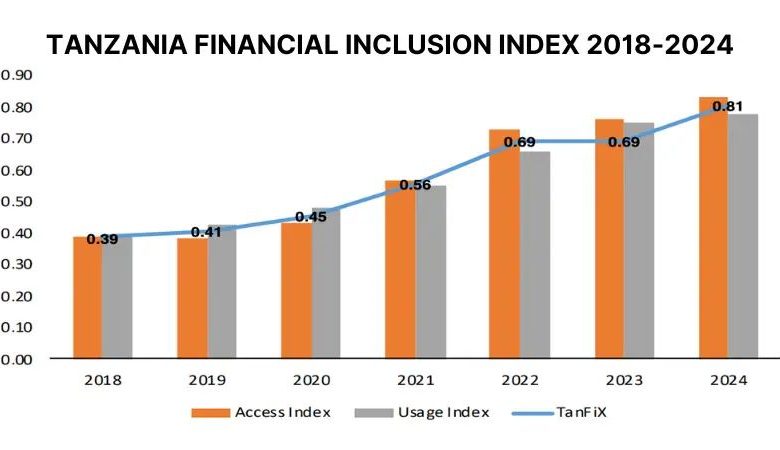
TANZANIA: AFRICA’S next financial inclusion challenge is not access to banking; it is access to expertise. Over the past two decades, the continent has rapidly expanded access to financial services.
Millions more individuals now operate bank accounts, execute digital transactions, and participate in formal banking channels than ever before. Yet financial access alone has not translated into broad-based wealth creation.
According to the African Development Bank, the continent faces an annual development financing gap exceeding $400 billion. While capital scarcity remains a key constraint, capital alone cannot close this deficit. Discussions surrounding Africa’s growth frequently center on funding shortages, while overlooking an equally critical structural bottleneck: the expertise gap.
Money alone does not guarantee enterprise survival or scale. Building a sustainable business requires disciplined capital allocation, precise market timing, strategic risk management, and operational adaptability.
If the first chapter of Africa’s financial inclusion story was access, and the second was connectivity, the third must be expertise.
The expertise gap
Consider a rural South African enterprise seeking market expansion. Securing debt or equity funding is rarely the sole hurdle. Assessing consumer demand, optimizing working capital, evaluating counterparty risk, and mapping growth channels are equally vital. Access to strategic advisory capabilities remains starkly asymmetric, concentrated heavily within primary economic hubs.
This asymmetry directly impacts broader economic performance. Micro, small, and medium enterprises (MSMEs) drive South Africa’s economy, generating roughly one-third of national GDP. Continent-wide, SMEs account for 40 per cent to 50 per cent of GDP and represent over 90 per cent of all business entities. Despite gains in basic financial access, operational decisionmakers still encounter severe headwinds when managing capital, evaluating market opportunities, and executing strategic plans.
Scaling expertise through technology
Public discourse surrounding Artificial Intelligence often highlights operational disruption and labor displacement. However, within banking and financial services, the primary opportunity lies in technology’s power to democratize high-grade advisory capabilities.
For decades, tailored financial advisory services were reserved for institutional entities and high-networth clients. AI alters this unit economic equation, enabling scalable distribution of high-tier analytics, strategic guidance, and decisionsupport infrastructure to broader market segments.
Whether assisting an SME owner with working capital forecasting, evaluating structured debt options, or delivering tailored wealth planning for emerging professionals, AI scales functional expertise across legacy cost structures.
Digital financial services proved technology’s capacity to drive transactional inclusion across Africa. The next strategic imperative is delivering advisory capabilities at the exact same scale.
Financial institutions are actively deploying these capabilities. At Standard Chartered, AI integration focuses on refining client analytics, expanding access to strategic insights, and sharpening decision support. The strategic objective is not replacing human judgment, but extending its operational reach and speed.
Client market behavior reinforces this evolution. Strong growth across our Wealth Solutions franchise reflects expanding demand for structured financial planning, targeted investment insights, and wealth creation framework design.
Leveraging the demographic dividend
By 2050, Africans will account for one in four people globally. The central question for global policymakers and market leaders is whether this demographic expansion will align with access to the analytical tools, institutional knowledge, and capital structures required for self-sustaining growth.
Africa’s primary asset is its human capital. Equipping the rising generation with advanced financial literacy, structured investment frameworks, and enterprise decision support delivers compound macroeconomic benefits. At scale, expanding strategic advisory capabilities builds institutional resilience and accelerates continental productivity.
Technological value extends beyond process automation and operational efficiency. Its highest-margin application is democratizing expert capabilities. When an early-stage founder in Johannesburg, Nairobi, or Lagos accesses analytics once restricted to multinational boardrooms, the economic dividend reaches deep into secondary and rural economic nodes like Lusikisiki, Ulundi, or Bushbuckridge.
Institutional trust and governance
Democratizing expertise is not merely a technical architecture problem; it is a governance and trust challenge.
South Africa’s ongoing policy dialogues on AI regulation demonstrate that technological access must be structured deliberately. Unregulated deployment carries systemic risk: without intentional governance, advanced AI tools threaten to widen income and capability gaps rather than narrow them. Responsible deployment, strict operational controls, and adaptive regulatory frameworks are imperative.
Africa must transition from being a passive recipient of foreign AI models to an active developer shaping system architecture, data models, and deployment protocols tailored to continental economic realities.
ALSO READ: Building stronger communities: How Exim Bank is transforming lives beyond banking in Zanzibar
A new chapter for financial inclusion
Relying on legacy growth models will not close Africa’s $400 billion financing gap. Mitigating this deficit demands institutional innovation, capital mobilization, and broad-based access to strategic expertise.
The ultimate benchmark for AI across African markets will not be measured by automated back-office workflows or marginal cost savings. It will be measured by its success in expanding market access, backing enterprise productivity, and widening formal economic participation.
The progression of African financial inclusion is clear: Access built the accounts, Connectivity built the networks, and Expertise will build the wealth.