What proposed pyrethrum law means
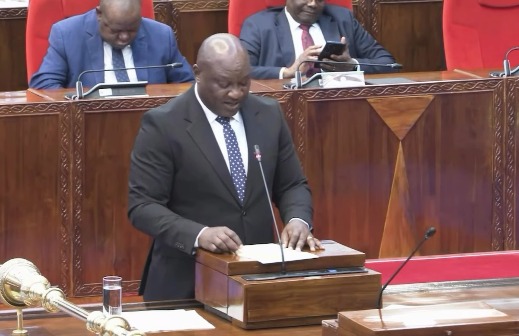
DODOMA: LAWMAKERS have passed the Pyrethrum Industry (Repeal) Bill, 2026, aimed at reducing government operational costs by streamlining regulatory institutions performing similar functions in the agriculture sector.
When presenting the Bill in the National Assembly on Friday, Agriculture Minister Daniel Chongolo said the proposed law provides for the transfer of the Pyrethrum Board’s functions, assets, liabilities and employees to the Cereals and Other Produce Regulatory Authority (COPRA).
“The move is intended to reduce the number of regulatory institutions performing similar functions, strengthen coordination, improve regulatory management and ensure productive use of public resources in the agriculture sector,” Mr Chongolo said.
He said the changes would reduce duplication among regulatory institutions and improve efficiency in sector management. The Bill seeks to repeal the Pyrethrum Industry Act No. 1 of 1997, which established the legal framework for regulating pyrethrum production and the Pyrethrum Board.
Mr Chongolo said the Bill had two parts, with the first covering preliminary provisions, including its short title and interpretation of terms, while the second provides for repeal of the Act and transitional arrangements following the abolition of the Board.
Presenting the views of the Parliamentary Standing Committee on Industries, Trade, Agriculture and Livestock, its Chairperson, Mr Deodatus Mwanyika, said the committee largely supported the Bill but raised concerns over transferring pyrethrum functions to COPRA, which regulates more than 120 crops.
Mr Mwanyika said the committee had advised the government to establish a dedicated directorate within COPRA to coordinate pyrethrum production, quality, markets and development of the crop’s value chain.
He said the recommendation was based on pyrethrum’s strategic importance to Tanzania, which is the world’s second-largest producer, requiring measures to protect, develop and strengthen the industry.
The committee also advised the government to safeguard the interests and employment rights of former Pyrethrum Board employees who would continue working under COPRA.
Contributing to the debate, Mr Dickson Lutevele (Mafinga Urban-CCM) supported the transfer of the Board’s functions to COPRA but urged the government to increase pyrethrum production and improve its quality.
He said Tanzania’s position as the world’s second-largest producer did not reflect the crop’s potential, noting that production remained below the requirements of local processing industries.
Mr Ernest Nollo (Bahi-CCM) supported the proposed dedicated directorate, saying it would enable COPRA to give greater attention to pyrethrum among the more than 120 crops under its mandate.
He said the directorate should undertake research, promote processing and explore pyrethrum’s potential as an organic pesticide amid growing global demand for environmentally friendly agricultural products.
Hadija Aboud (Special Seats-CCM) said the transfer should preserve the original objective of protecting and developing the industry by ensuring quality, reliable markets and better conditions for farmers and processors.
Dr Pindi Chana (Special Seats-CCM) said the move was consistent with calls by lawmakers to reduce the number of regulatory boards and eliminate duplication.
However, she urged the government to protect the legal rights and interests of employees affected by the abolition of the Board and ensure the new arrangement achieved the intended efficiency.
On her part, Yustina Rahhi (Special Seats-CCM) called for pyrethrum to receive special attention under COPRA, citing its strategic importance and potential to generate foreign exchange.
She said Tanzania produced high-quality pyrethrum and should capitalise on the advantage to expand production, strengthen processing and develop the crop’s value chain.