The future of diplomacy: Lessons from TZ’s High Commission in Mozambique
DAR ES SALAAM: DIPLOMACY is evolving rapidly. While political dialogue and bilateral cooperation remain central to international relations, diplomatic missions are increasingly expected to deliver economic results, embrace technology, engage citizens, build partnerships beyond government and respond to emerging challenges with greater speed and innovation.
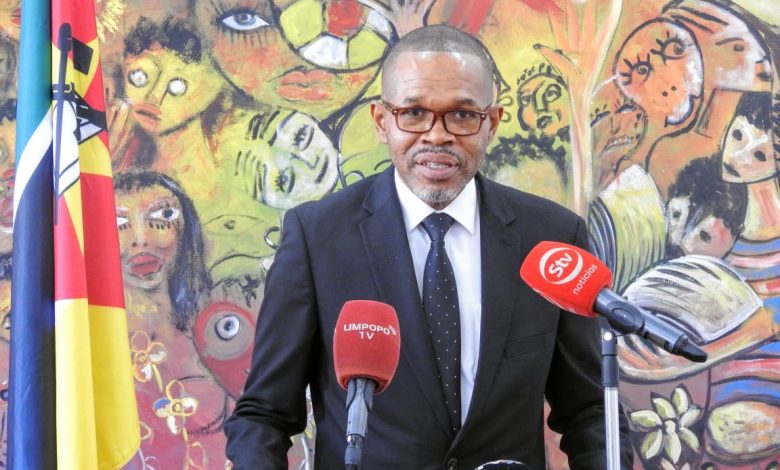
In the 12th part of this Daily News Diplomatic Bench Interview series, Tanzania’s High Commissioner to Mozambique, CP Hamad Khamis, reflects on lessons from the High Commission’s experience in implementing Tanzania’s foreign policy in Mozambique and explains how modern diplomacy can combine political trust, economic cooperation, institutional partnerships, citizen-centred services and technology to deliver practical results.
“The High Commission’s experience in implementing Tanzania’s foreign policy in Mozambique has generated several important lessons that may serve as best practices for other diplomatic missions,” he told the Daily News.
For the High Commissioner, successful diplomacy can no longer be viewed solely through the traditional lens of political engagement.
Missions must increasingly bring together political relations, economic cooperation, institutional coordination and services to citizens within a coherent and results-oriented approach.
Yet, despite the growing importance of economic diplomacy, he maintains that strong political relations remain the foundation of successful bilateral cooperation.
He says the experience of Tanzania and Mozambique demonstrates how good relations between national leaders can create an environment in which trade, investment and broader economic cooperation can flourish.
“First, strong political relations between national leaders provide the essential foundation upon which successful economic diplomacy can be built. High-level political goodwill creates opportunities for expanding trade, investment and broader bilateral cooperation,” he says.
According to the High Commissioner, this political goodwill has enabled the High Commission to pursue initiatives in investment promotion, trade facilitation, tourism, academic cooperation and cultural diplomacy with greater confidence and consistency.
It has also strengthened institutional cooperation and reinforced the mutual trust needed to deepen bilateral engagement.
Turning opportunities into results
One of the key lessons the High Commissioner draws from the mission’s experience is that identifying an investment opportunity is only the beginning.
Trade fairs, investment forums and business engagements can generate promising leads, but he says diplomatic missions need systems to follow those opportunities through until they produce tangible results.
“Participation in trade fairs, investment forums and business promotion events generates valuable opportunities, but meaningful results depend on systematic follow-up,” he says.
“Investment leads should be supported through structured monitoring, coordinated institutional engagement and continuous communication until they are translated into concrete investment projects.”
This approach underpins the High Commission’s investment monitoring and follow-up mechanism, which tracks opportunities from initial engagement through to implementation.
Rather than treating diplomatic events as isolated activities, the mission views them as the beginning of a longer process involving sustained engagement with investors and relevant government institutions.
For the High Commissioner, diplomacy delivers its greatest economic value when opportunities generated through diplomatic engagement eventually translate into projects that contribute to development.
Beyond government-to-government diplomacy
The changing nature of diplomacy also means that missions must build relationships beyond government institutions.
The High Commissioner points to universities, research institutions, chambers of commerce, cultural organisations, private-sector companies and civil society as increasingly important partners.
“Partnerships with universities, chambers of commerce, cultural institutions, research organisations and the private sector significantly broaden the reach and impact of diplomatic engagement by creating sustainable networks that extend beyond government-to-government relations,” he says.
Such partnerships, he adds, can strengthen education, innovation, entrepreneurship and people-to-people relations while complementing official diplomatic engagement.
The High Commissioner says these wider networks have become an increasingly important component of Tanzania’s diplomatic engagement in Mozambique and are likely to assume an even greater role in the future.
While economic diplomacy has become an important element of Tanzania’s foreign policy, the High Commissioner stresses that diplomatic missions must not lose sight of their responsibility to Tanzanian citizens abroad.
Responsive consular services and regular engagement with the diaspora, he says, help build public confidence in diplomatic institutions while ensuring citizens receive assistance when needed.
“Citizen-centred diplomacy strengthens public confidence in diplomatic missions. Responsive consular assistance, regular engagement with diaspora communities and effective communication enhance trust while ensuring that citizens receive timely support whenever required,” he says.
The High Commission therefore maintains contact with Tanzanians living in Mozambique through outreach programmes and diaspora meetings, while assisting with travel documentation and other administrative matters.
For the High Commissioner, supporting citizens abroad remains one of the most visible ways in which diplomacy translates into practical service. He also emphasises the importance of coordination among government institutions.
The High Commissioner argues that diplomacy produces stronger results when ministries, agencies and the private sector work towards shared national objectives rather than pursuing disconnected initiatives.
“Finally, diplomacy achieves its greatest impact when political engagement, economic diplomacy, public diplomacy, cultural cooperation and institutional partnerships are implemented through a coordinated whole-of-government approach supported by clear performance monitoring and effective inter-agency collaboration,” he says.
The High Commission maintains regular engagement with the Ministry of Foreign Affairs and East African Cooperation as well as institutions responsible for investment, trade, transport, agriculture and mining.
Such coordination allows investment opportunities identified through diplomatic engagement to receive technical assessment and institutional follow-up instead of remaining as isolated diplomatic initiatives.
ALSO READ: How Tanzania, Mozambique can build a regional tourism corridor
Preparing for a changing diplomatic landscape
The High Commissioner believes diplomacy will continue to undergo significant transformation as technology, digital communication and non-state actors reshape how missions interact with governments, businesses and citizens.
“Diplomacy is undergoing a significant transformation and diplomatic missions must continuously adapt to remain effective, relevant and results-oriented,” he says.
“Future diplomacy will increasingly combine traditional engagement methods with technology, data-driven approaches and broader participation from non-state actors.”
He stresses that embracing new technology does not mean abandoning established diplomatic values.
Rather, technology should strengthen diplomacy by making communication faster, improving decision-making and enabling more responsive public engagement.
Digital platforms, he says, will increasingly complement traditional diplomatic channels by allowing missions to communicate more efficiently with governments, businesses and citizens.
“Digital diplomacy will continue to complement traditional diplomatic engagement by enabling faster communication, wider public outreach and more efficient delivery of services to citizens, investors and other stakeholders,” he says.
“The High Commission will continue strengthening its digital platforms, virtual engagement mechanisms and online communication channels to improve accessibility, transparency and responsiveness.”
The High Commissioner says stronger digital engagement will also enable missions to respond more quickly to emerging issues and the needs of different stakeholders.
Artificial intelligence and data analytics are also expected to become more important in diplomatic work.
Rather than replacing diplomats, the High Commissioner believes these technologies can strengthen their capacity to analyse markets, identify investment opportunities and provide evidence-based advice.
“Artificial intelligence and data analytics will increasingly support diplomatic decision-making by strengthening market intelligence, investment promotion, policy analysis and early identification of emerging opportunities and challenges,” he says.
Building on initiatives such as the High Commission’s Economic Intelligence Desk, he says data-driven tools can improve the mission’s ability to provide timely information and evidence-based advice to government institutions and investors.
The future diplomatic mission, he argues, will therefore depend increasingly on timely information and strategic analysis to support national development objectives.
The High Commissioner also sees diplomacy becoming more inclusive, with diaspora communities, entrepreneurs, academics, innovators, women leaders and cultural ambassadors taking a more active role in strengthening bilateral relations.
“Citizen diplomacy will also become increasingly important as diaspora communities, entrepreneurs, academics, young innovators, women leaders and cultural ambassadors play a greater role in strengthening bilateral relations and advancing national development objectives,” he says.
“The High Commission will continue expanding engagement with Tanzanian citizens, professional networks and community organisations to build stronger people-topeople connections.”
He says diplomatic missions will increasingly serve as platforms connecting governments with wider society and encouraging public participation in advancing national interests abroad.
Economic diplomacy remains central
Despite the emergence of new diplomatic tools and technologies, the High Commissioner says economic diplomacy will remain at the heart of the High Commission’s work.
Investment promotion, trade facilitation, tourism development and institutional partnerships will continue to shape Tanzania’s engagement with Mozambique.
“Economic diplomacy will remain at the centre of the High Commission’s future work, supported by stronger digital capabilities, enhanced institutional coordination and strategic partnerships with the private sector, academia and civil society,” he says.
These priorities, he adds, will allow diplomacy to contribute more directly to Tanzania’s broader development agenda while strengthening bilateral relations.
Preserving Tanzania’s diplomatic values
While recognising the pace of technological change, the High Commissioner insists that Tanzania’s diplomacy must remain grounded in the principles that have historically shaped its foreign relations.
Innovation, he says, should reinforce rather than replace Tanzania’s longstanding commitment to friendship, solidarity and mutual respect.
“The High Commission’s vision is to combine Tanzania’s longstanding diplomatic values of friendship, solidarity and mutual respect with innovation, technology and measurable results-oriented diplomacy,” he says.
Ultimately, he believes diplomacy should be judged not simply by the processes it follows but by the benefits it delivers to people.
“The ultimate objective is not only to maintain excellent bilateral relations between Tanzania and Mozambique, but to ensure that diplomacy continues to deliver tangible benefits through increased trade and investment, knowledge exchange, cultural cooperation, regional integration and sustainable development for the people of both countries.”
As Tanzania continues to position its diplomatic missions as contributors to economic transformation, the experience of the High Commission in Mozambique illustrates how the role of diplomacy is changing.
Political trust remains the foundation, but success is increasingly reflected in the ability to translate that trust into investment, innovation, partnerships and practical benefits for citizens.
In that changing environment, the High Commission’s experience offers lessons for Tanzania’s diplomatic service on how diplomacy can remain relevant, responsive and results-oriented while adapting to a rapidly changing world.